Your message has been sent successfully. We will contact you soon!

Your message has been sent successfully. We will contact you soon!

An air conditioner removes moisture as a side effect of cooling, and only while the compressor runs. In this climate that creates a gap nobody designed for: on a mild, wet day the house reaches setpoint quickly, the system stops, and indoor humidity climbs with the compressor off. Shoulder seasons, rainy weeks and any evening after a storm are exactly when a house feels damp despite the thermostat reading correctly.
The gap widens as homes get tighter and equipment gets more efficient. A correctly sized modern system runs shorter cycles than the oversized machine it replaced, which is better for energy and worse for moisture removal. A whole-house dehumidifier closes that gap because it works on humidity rather than on temperature.
The band worth holding is the mid-forties to around fifty percent. Above roughly sixty, the consequences are not merely comfort: condensation appears on supply registers and interior surfaces, mold finds the conditions it needs on drywall, in closets and behind furniture, dust mite populations rise, and timber and adhesives in flooring and cabinetry absorb moisture. Every one of those is more expensive to correct than the equipment that prevents it.
A portable dehumidifier serves one room, needs emptying or a drain, and adds its own heat and noise to the space. A whole-house dehumidifier is ducted to the system, drains to the condensate line, controls from a humidistat and treats the entire conditioned envelope. It can also bring in and dry a measured amount of outside air where ventilation is required, which no portable can do.
Where the affected area is genuinely one room, the portable is the proportionate answer. Where the whole house reads high through a rainy week, it is not.
Placement decides whether the unit performs: it is ducted to return or supply depending on the configuration, with its own drain to the condensate system and a humidistat located where it reads the house rather than the duct. Where the equipment supports it, blower speed is set to favor moisture removal during cooling calls so the system and the dehumidifier work in the same direction instead of against each other.
A dehumidifier is added after the moisture sources are found, not instead of finding them. Return ducts pulling humid attic air, a blocked condensate line, an oversized system that short cycles, and unsealed penetrations at the ceiling plane all raise indoor humidity, and all four are correctable. Installing equipment on top of them means running a machine permanently to compensate for a fault.
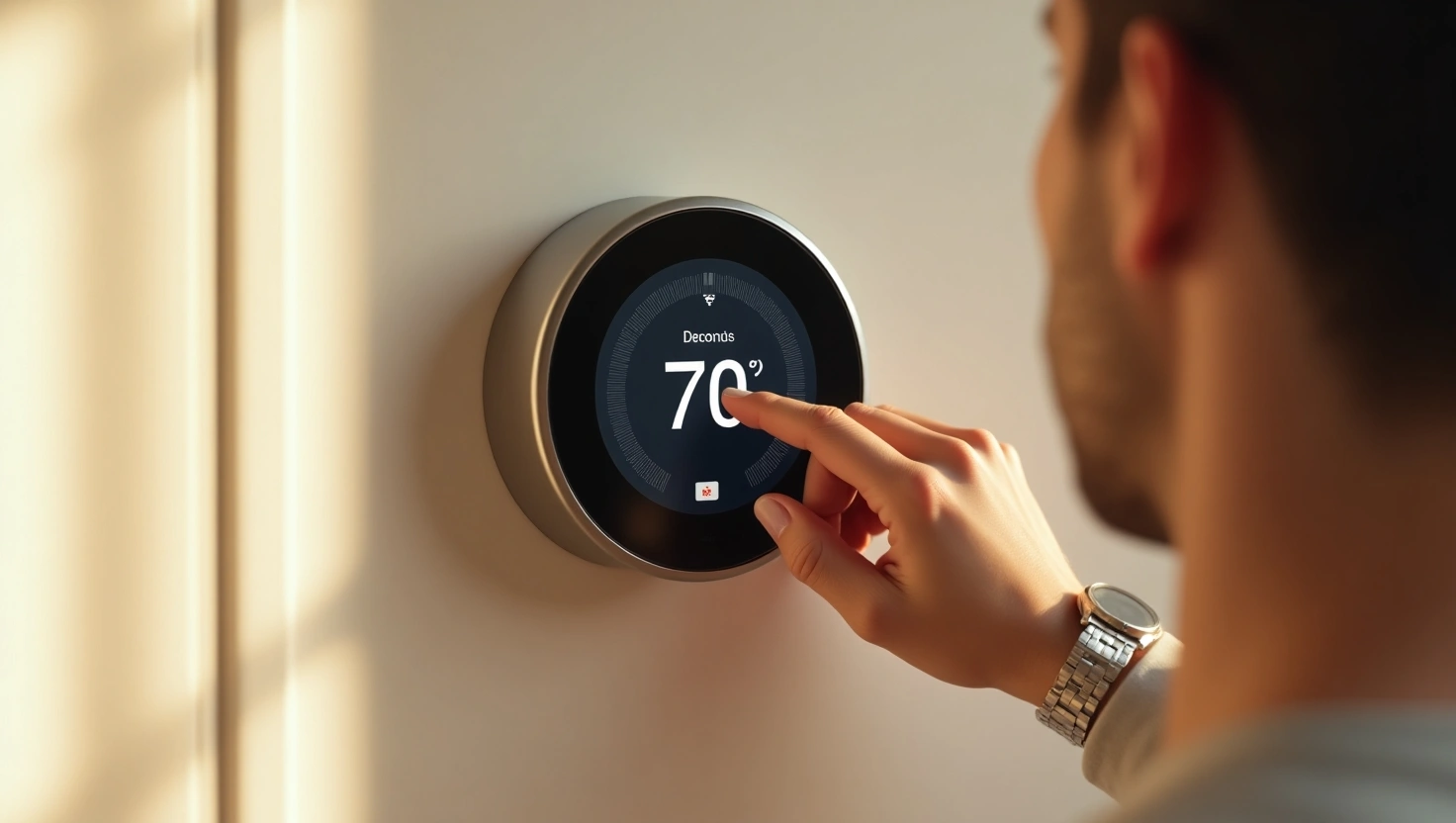
Humidity is the whole complaint in North Palm Beach and Miami Lakes, where canals and lakes keep the latent load up, and in Highland Beach, where the ocean is on one side and the Intracoastal on the other. A house at 74 degrees that still feels damp is a moisture problem, not a temperature one.
Damp air is rarely one fault: bringing humidity down and balancing the air between rooms usually come up in the same visit.
An air conditioner only removes moisture while the compressor runs. On a mild, wet day the house reaches setpoint quickly, the system stops, and humidity climbs with the compressor off. A dehumidifier works on humidity instead of temperature, which closes that gap.
Mid-forties to around fifty percent. Above roughly sixty you get condensation on registers and interior surfaces, conditions for mold on drywall and in closets, and moisture absorbed by flooring and cabinetry.
A portable is proportionate when one room is affected. When the whole house reads high through a rainy week, a ducted unit with its own drain and a humidistat treats the entire envelope and needs no emptying.
While it runs, yes. The problem in Florida is the hours it does not run: an oversized or lightly loaded system satisfies the thermostat quickly and leaves the moisture behind.
A level where the house feels dry without the system running constantly. We log it across a day before recommending equipment, because midday and midnight are different problems.
Whole-house, if the house is empty part of the year or the complaint is general rather than one room. A portable handles a room; it does nothing for the rest of the building.