Your message has been sent successfully. We will contact you soon!
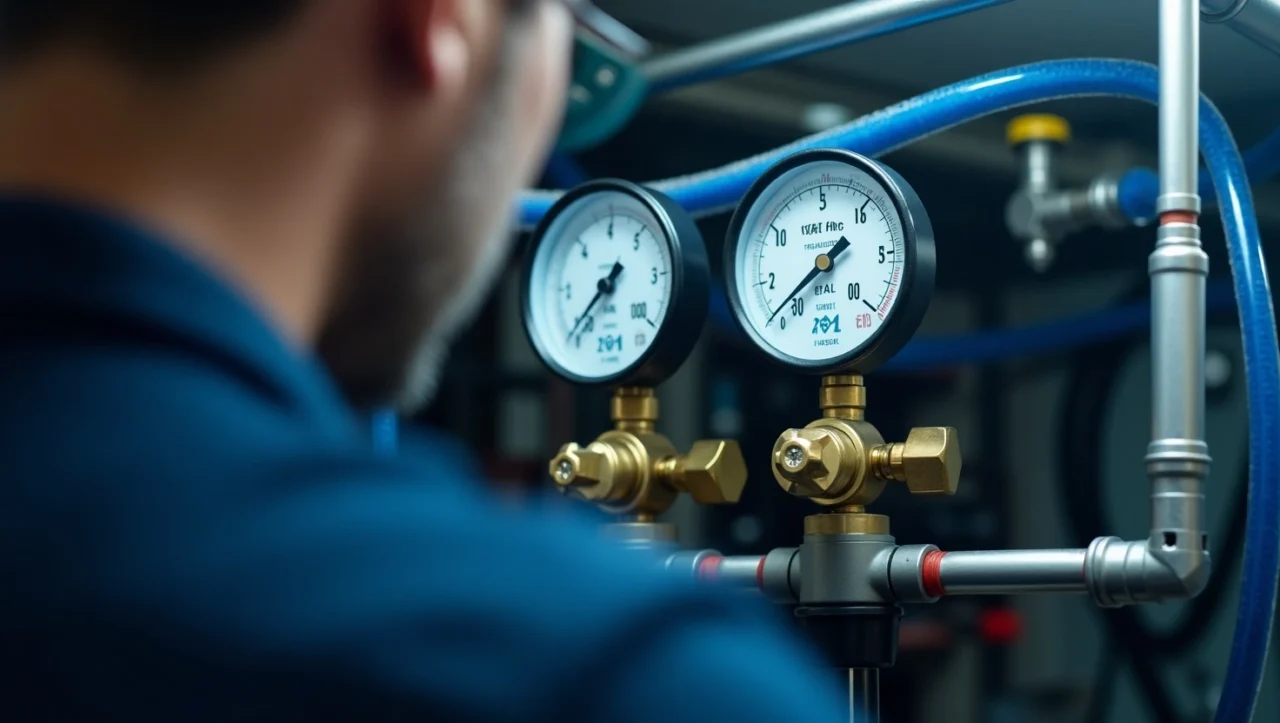
A refrigerant leak can quietly reduce the efficiency of your air conditioner, raise energy bills, and damage your HVAC system. Our refrigerant repair service quickly identifies and resolves leaks to restore full cooling performance. Whether it’s a small crack or a major refrigerant line leak repair, our trained technicians use advanced tools to pinpoint and fix the issue fast.
Signs you may need HVAC refrigerant leak repair include warm air from vents, hissing noises, ice buildup on coils, or rising electric bills. Ignoring leaks risks compressor failure-an expensive fix. Acting early keeps repair costs manageable. We provide clear, upfront refrigerant leak repair cost estimates so you know exactly what to expect.
In some cases, applying a freon leak sealer offers a temporary solution, but for lasting results, fixing the refrigerant leak properly is key. Our experts handle full leak detection, refrigerant line leak repair, recharge services, and sealing. Whether you require a simple air conditioning leak fix or a complex line replacement, we get your system back to optimal cooling fast.
Don’t let a refrigerant leak drain your comfort or wallet. Schedule professional HVAC refrigerant leak repair and enjoy reliable cooling and lower bills.
Your message has been sent successfully. We will contact you soon!
A refrigerant leak in AC systems can quickly reduce cooling efficiency and drive up energy bills. Professional refrigerant leak repair ensures leaks are accurately detected and fixed to restore your system’s performance and comfort.
Look out for these common signs indicating the need for refrigerant line repair:
If you notice these, fixing refrigerant leak early prevents bigger issues.
Our comprehensive refrigerant repair service covers:
From minor leaks to full refrigerant line repair, we ensure reliable, efficient fixes.
Our experienced technicians specialize in refrigerant repair and refrigerant line leak repair. We use advanced equipment and high-quality materials for long-lasting repairs. Whether you need a quick refrigerant leak fix or a full refrigerant line repair, we ensure dependable results with transparent pricing.
Don’t let a refrigerant leak in AC systems reduce your comfort. Contact us to schedule refrigerant leak repair or refrigerant line repair. Our experts provide fast, affordable fixing refrigerant leak services with guaranteed quality.

A sealed system does not use refrigerant the way an engine uses oil. If the charge is low, it left through a breach, and adding more without finding that breach is a temporary measure being sold as a repair. A system topped up two summers running has a leak nobody has located, and the third charge will follow the first two out of the same hole.
Running a system undercharged is not neutral either. Low charge means low suction pressure, a coil that ices, and a compressor returning liquid or running hot depending on where the restriction sits. The component that eventually fails is the expensive one, and it fails because of a leak that could have been found earlier.
Evaporator coils are the most common source in South Florida, through formicary corrosion driven by indoor air chemistry rather than by anything the homeowner did. Copper develops microscopic tunnels, the loss is gradual, and capacity drops slowly enough that people adapt to it before they report it. On the outdoor side, condenser coils near the coast corrode at the hairpin bends where salt collects. Line-set flare joints and service valve cores account for most of the rest, and on ductless systems the flares are the first place to look because torque at installation is so often wrong.
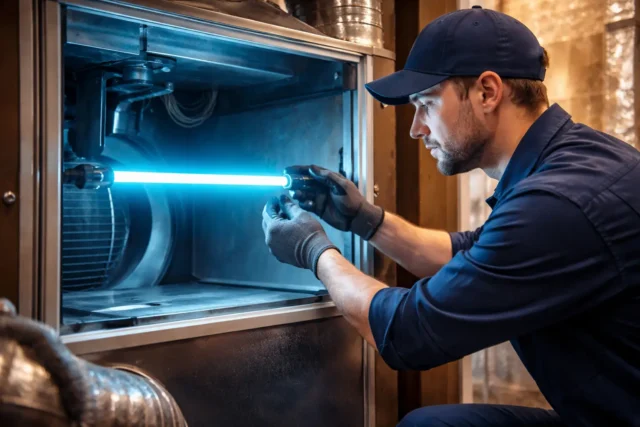
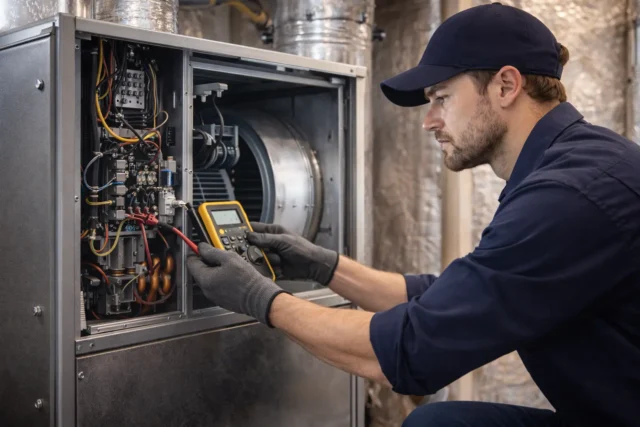
Detection is layered, because no single method is reliable on its own. An electronic detector sweeps the circuit, ultraviolet dye finds slow losses that a detector walks past, a nitrogen pressure test holds the system at a fixed pressure to confirm whether it holds at all, and bubble solution confirms the exact joint once the area is known. A coil that is leaking at multiple points reads differently from a single flare, and that distinction changes the recommendation.
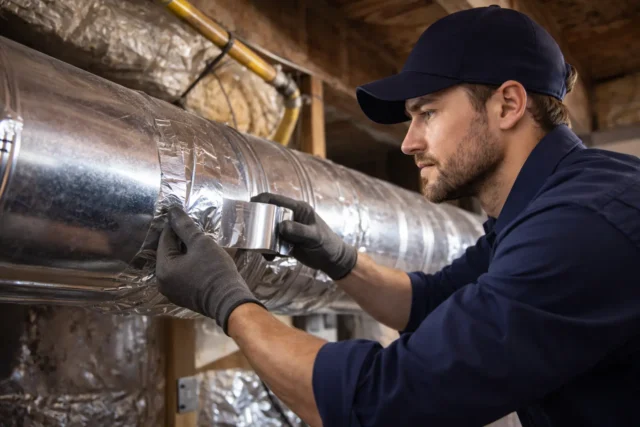
A flare joint, a valve core or a brazed joint is repaired, the system is evacuated to specification and recharged by weight, not by pressure gauge alone. A coil leaking through formicary corrosion is replaced rather than patched, because the corrosion is throughout the material and a repaired section simply moves the next failure along. Where the system runs on a phased-out refrigerant and the coil is gone, replacement of the system usually makes more sense than a coil for a circuit that is already obsolete, and that gets said plainly rather than left for the homeowner to work out.
After a repair the system is evacuated with a vacuum pump to a measured micron level and held, which proves both the repair and the absence of moisture. Recharge is by weight to the manufacturer's specification, then verified by superheat or subcooling depending on the metering device. Charging by pressure alone, on a hot afternoon, is how systems end up overcharged and running high head pressure for the rest of their lives.
We find slow leaks most often in Wilton Manors, where compact fifties houses have been renovated more than once and the line set has been moved with them, and along the coast in Dania Beach and Pompano Beach, where salt works on a coil from the inside.
A leak announces itself early and costs late: the signs of a low charge come first, and what a compressor costs to replace is what ignoring them buys.
That is a top-up, not a repair, and it is only reasonable as a stopgap with the leak search already scheduled. A sealed system does not consume refrigerant, so a low charge always means a breach somewhere.
Formicary corrosion runs through the material rather than sitting at one point. A patched section holds while the next tunnel opens somewhere else, so the repair buys weeks and the diagnosis has to be paid for twice.
The system is evacuated to a measured micron level and held to prove both the repair and the absence of moisture, then charged to the manufacturer's stated weight and verified by superheat or subcooling. Charging by gauge pressure on a hot afternoon is how systems end up overcharged permanently.
We can, and it is money poured into the air. A sealed system does not consume refrigerant.
Electronic detection, then nitrogen pressure testing where the reading is ambiguous. It takes longer than a sniff around the fittings and it is the difference between fixing it and repeating it.
Depends where it is. A flare fitting or a service valve is worth it at almost any age; a leaking evaporator coil on a fifteen-year-old system rarely is.
 English
  Français
  Español
  Русский