Your message has been sent successfully. We will contact you soon!
Your message has been sent successfully. We will contact you soon!

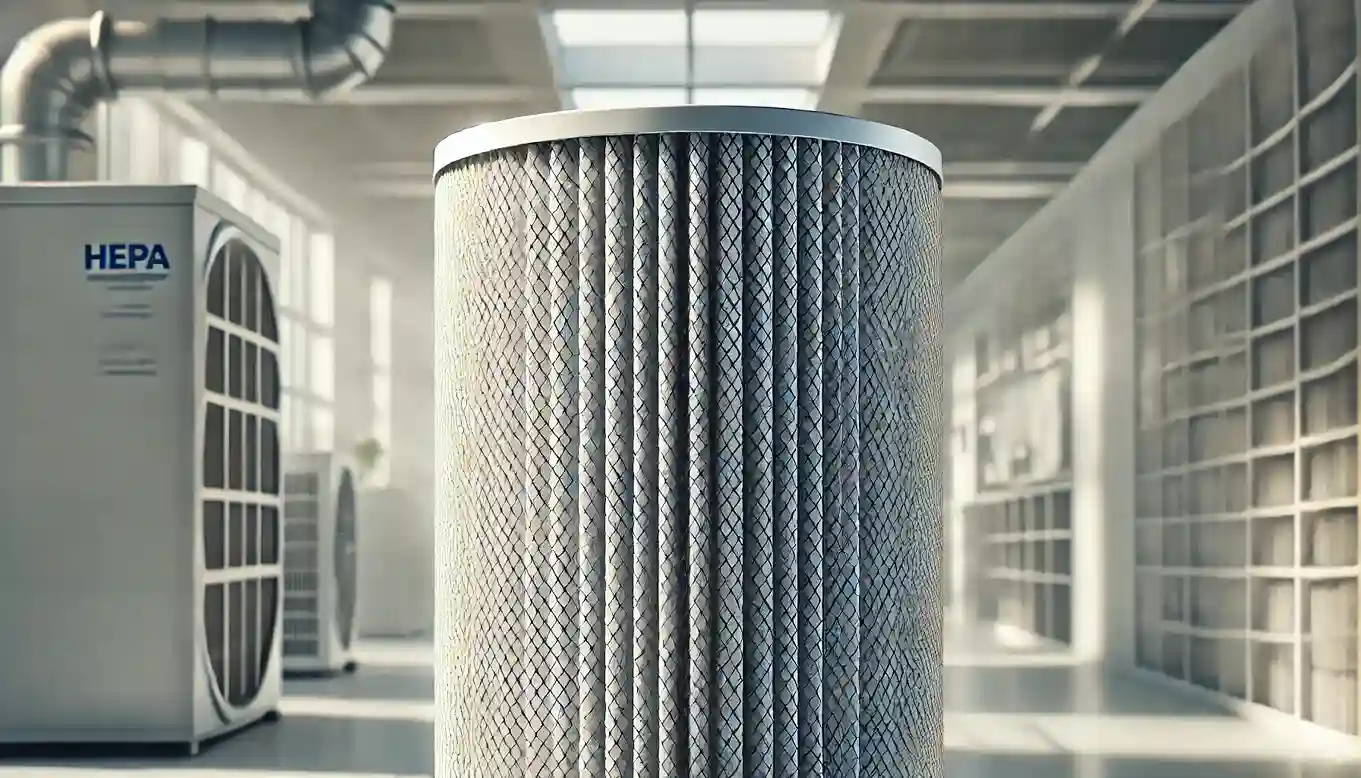
True HEPA is a defined performance standard, not a marketing word: capture of the most penetrating particle size at a stated efficiency. Media that dense carries a pressure drop far beyond what a residential air handler was designed to pull through, which is why a genuine HEPA filter cannot be slid into a standard one-inch filter rack. Anything that fits that rack and claims HEPA performance is describing something else.
The residential routes to HEPA-level filtration are a bypass configuration, where a portion of the return air is diverted through a dedicated HEPA cabinet with its own blower and returned to the stream, or a standalone unit serving a single room. Both are legitimate. Neither is a filter change.
For most households the honest comparison is between a HEPA bypass and a deep-pleat high-MERV media cabinet. The media cabinet installs in the main return, has a pressure drop the system can accommodate, holds its efficiency across a long service interval and captures the particle range that matters for most complaints. HEPA goes further on the smallest fraction and costs more to install and to run.
The deciding factor is the reason for asking. Documented respiratory sensitivity, an immunocompromised occupant or a specific contaminant justifies HEPA. General dust and pet dander do not, and a high-MERV cabinet correctly sized will deal with them without putting the system under strain.
Before any filtration upgrade, the system's static pressure is measured either side of the air handler and compared with the manufacturer's maximum. A large share of homes in this market already run above it, because returns are undersized and flex runs are long. On those systems the filtration conversation begins with correcting the restriction, not adding to it.
A bypass HEPA needs a location with service access, a power supply, ducted connections to the return and a controller that runs it sensibly with the main system. Filters are changed on schedule with the cabinet sealed properly afterwards, because a HEPA cabinet that leaks around the gasket is passing unfiltered air and reading as if it works.
HEPA belongs where the blower can carry it, which is not every house. We size it against static pressure in Aventura and Boca Raton, and in Highland Beach, where the units are often small and the ductwork short.
Two things decide whether HEPA belongs in a house: what you actually need filtered and how much pressure the blower can carry.
No. True HEPA media carries a pressure drop far beyond what a residential air handler can pull through a one-inch rack. Anything that fits that rack and claims HEPA performance is describing something else.
For general dust and pet dander, a deep-pleat high-MERV cabinet in the main return handles it without straining the system. HEPA is justified by documented respiratory sensitivity, an immunocompromised occupant or a specific contaminant.
Static pressure either side of the air handler, against the manufacturer's maximum. A large share of homes here already exceed it because returns are undersized, and on those systems the restriction is corrected before any filtration is added.
No. True HEPA is very restrictive and most residential blowers cannot pull through it without losing airflow. We measure static pressure and say plainly whether yours can.
A high-grade media filter in a deep cabinet, which gets most of the benefit at a fraction of the resistance. For most houses that is the right answer.
No. Filtration and moisture are separate problems, and a restrictive filter can make humidity slightly worse.
 English
 Français
 Español
 Русский