Your message has been sent successfully. We will contact you soon!
Your message has been sent successfully. We will contact you soon!

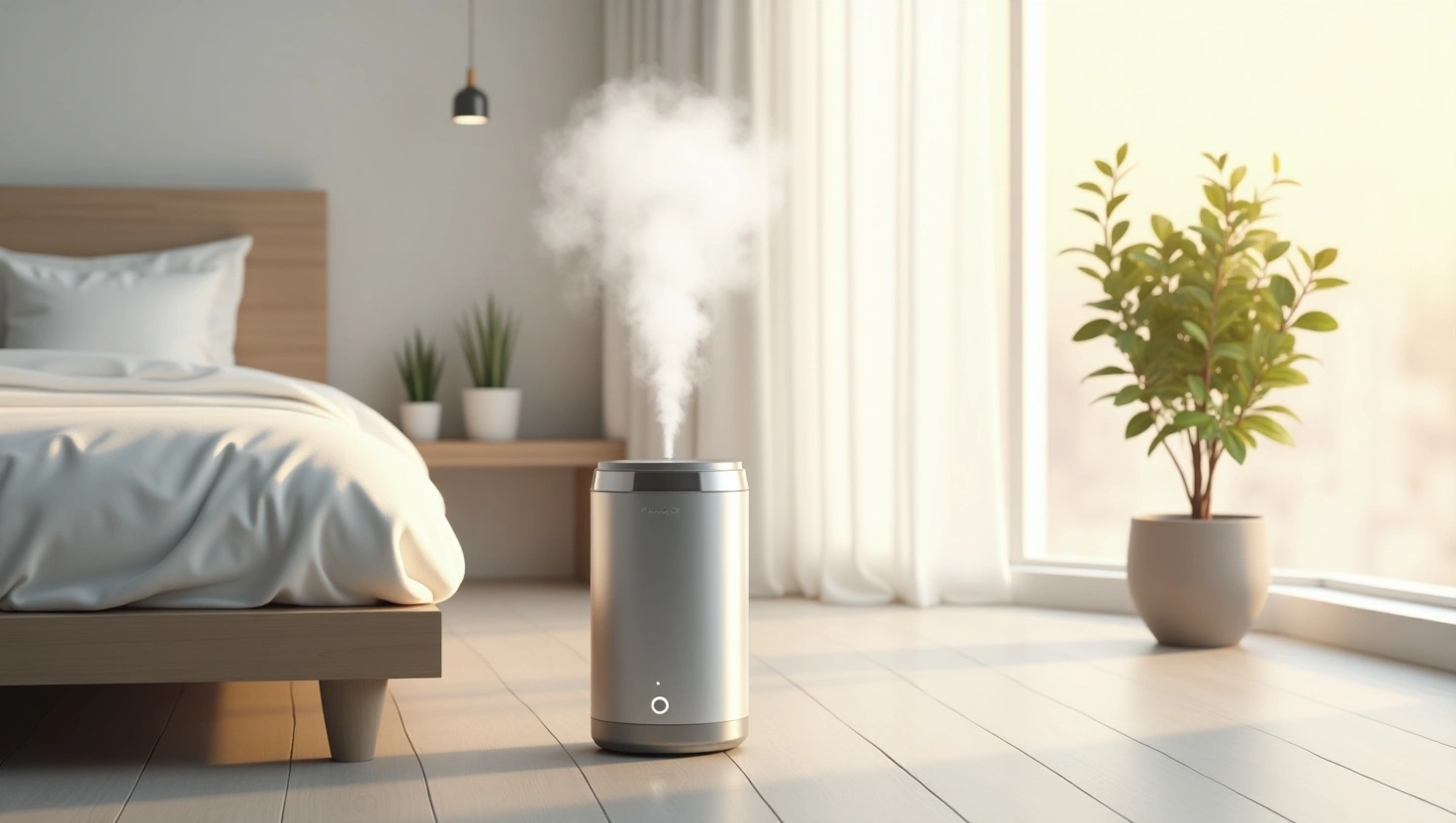
Humidification is a narrow requirement in this region and it is worth being straight about that. The typical South Florida house needs moisture removed, not added. The cases where humidification is genuinely useful are specific: a tightly conditioned property held at a low setpoint through the cooler months, a home with instruments, antiques or timber that needs a stable band, a wine room or humidor, and occasionally a medical requirement.
Outside those cases, adding moisture to a Florida home works against the equipment that is already struggling to remove it. Any proposal to humidify should start by proving the indoor reading is actually low, with a measurement over time rather than a single snapshot.
A bypass humidifier uses the pressure difference across the air handler to move air through a wetted pad and back into the supply, and it works only when the blower runs. A powered humidifier has its own fan and does not depend on system airflow. A steam unit generates moisture independently of temperature and holds a setpoint with the most precision, at the highest installation and running cost. Selection follows the required stability and the water available, not the brochure.
Humidifiers are maintenance equipment, not fit-and-forget equipment. Pads and steam canisters scale, particularly on hard water, and a scaled unit either stops producing or produces less than the controller believes. Drainage has to be handled properly so the unit is not left standing wet between cycles, because a humidifier that is neglected becomes a microbial source feeding directly into the supply air. Where the service interval cannot realistically be kept, it is better not to install one.
A humidistat set too high in a cooling climate causes condensation on windows, inside wall cavities and on any surface below dew point. That is a building problem rather than a comfort one. Control is set conservatively, with the outdoor temperature taken into account where the equipment supports it, and the system is checked against an independent reading rather than trusted to its own display.
Humidification is a small part of the work here and it is seasonal. It comes up in Weston, Parkland and Boca Raton, in larger houses that run heat for a few weeks in January and notice the difference.
Comfort in those few cool weeks is two settings, not one: the humidity in the house and the temperature you hold it at.
Rarely, and only in specific cases: a tightly conditioned property held low through the cooler months, rooms with instruments, antiques or timber that need a stable band, a wine room or humidor, or a medical requirement. Otherwise the need here runs the other way.
A bypass unit works only while the blower runs, a powered unit has its own fan, and a steam unit holds a setpoint most precisely at the highest running cost. The choice follows the stability required and the water available.
Condensation on windows, inside wall cavities and on any surface below dew point. That is a building problem, not a comfort one, which is why control is set conservatively and verified against an independent reading.
A small number of houses do, for a few weeks in January when the heat runs and the indoor air dries out. It is a minority case and we will tell you if yours is not one.
Static, dry skin, and gaps opening in wood floors during a cold snap.
Usually, at the air handler, if there is a water supply nearby. We check both before quoting.
 English
 Français
 Español
 Русский