English
  Français
  Español
  Русский


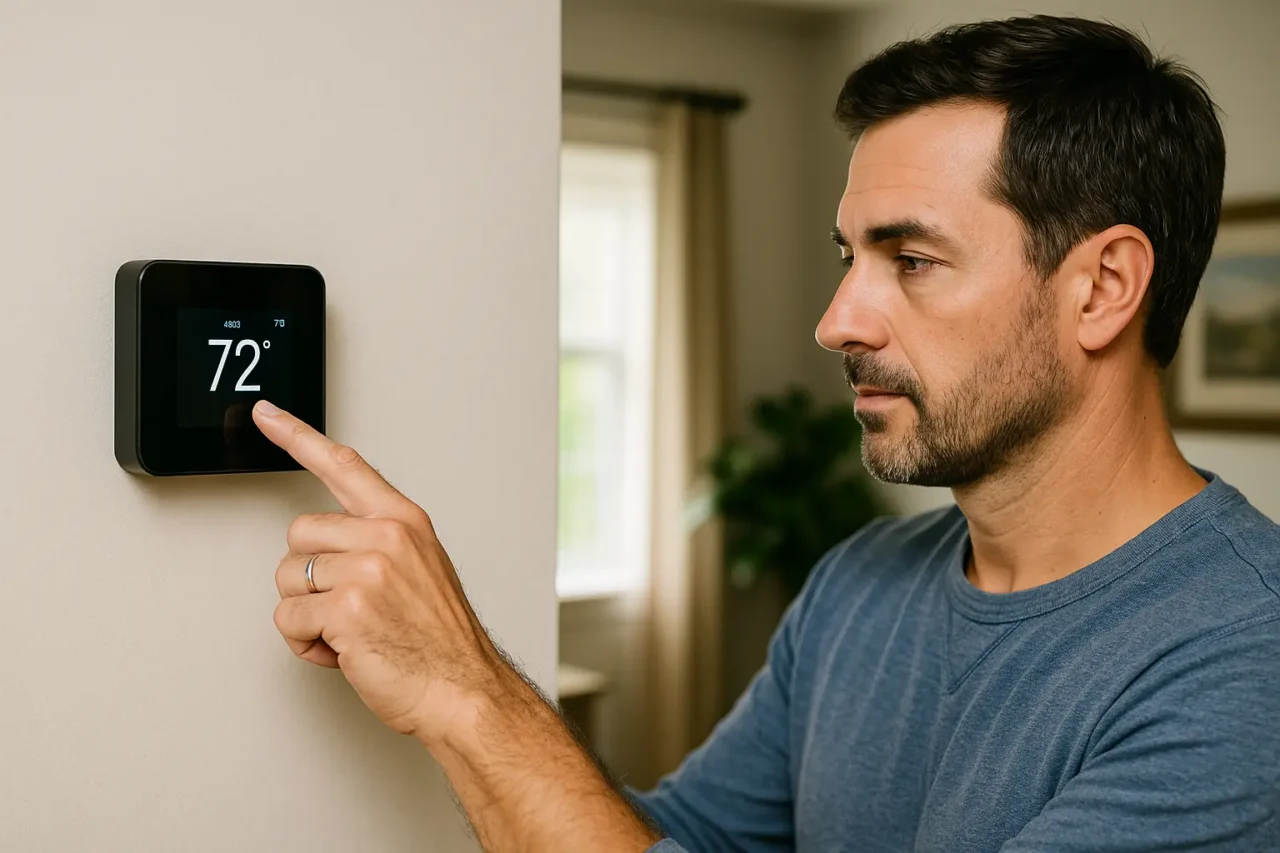
Finding the right thermostat temp does more than adjust how warm or cool your home feels. It determines how efficiently your HVAC system works, how much you pay on monthly bills, and how comfortable your home stays during temperature swings. Many homeowners unknowingly set their system too high or too low, causing discomfort, wasted energy, and unnecessary stress on their AC or heater.
The right number on a South Florida thermostat is the one that keeps the house dry, not simply the one that keeps it cool. A setting that satisfies quickly leaves the humidity behind, which is why a house at 74 degrees can feel worse than the same house at 76 with the moisture removed. The fan setting matters as much as the temperature.
This guide explains everything in a simple, human way, with practical examples, seasonal suggestions, and helpful details every homeowner can understand. You’ll learn how to choose the optimal indoor temperature, how to adjust settings as seasons change, and how to use smart features to reduce costs without sacrificing comfort.
If you ever need help with AC maintenance or diagnostics, the team at A Customer First AC is always ready to assist
Why the Right Thermostat Temp Has a Major Impact on Your Home
Most people underestimate how much impact a thermostat has on daily comfort and HVAC efficiency. When your thermostat is properly set, your home stays stable, your AC runs smoother, and you avoid problems caused by temperature swings or poor airflow. Choosing the recommended AC temperature for the season helps your system maintain a steady rhythm instead of working overtime.
The way you use your thermostat directly affects humidity levels, air circulation, and how hard your system needs to work to heat or cool your home. When the thermostat is set too aggressively, the system cycles too quickly or runs non-stop, which raises your bill and reduces the lifespan of the equipment. Proper settings support better airflow and align with HVAC efficiency tips used by technicians to extend system life.
If your system has trouble keeping the home at the right temperature, struggles to cool in summer, or overheats in winter, it may need a professional tune-up. You can schedule this anytime through A Customer First AC’s professional AC service.
Best Thermostat Temp for Summer: Staying Cool Without Overspending
Summer heat makes it tempting to drop the AC as low as possible, but that often backfires. Instead of cooling faster, your AC simply runs longer, increasing bills and stress on the compressor. Choosing logical cooling settings for summer helps your HVAC system stay efficient even during the hottest months.
Recommended Summer Temperature
-
75°F–78°F while at home
-
80°F–82°F when away
-
72°F–74°F for households with heat-sensitive individuals
These settings help maintain an energy-efficient home temperature while keeping humidity manageable. Humidity is often what makes a house feel uncomfortable in summer, not just the temperature. When both are balanced, your home feels cooler at higher thermostat settings.
Summer Comfort & Savings Tips
-
Keep blinds closed during peak sun hours
-
Use ceiling fans to enhance perceived cooling
-
Avoid lowering AC below 72°F for long periods
-
Schedule upkeep early to prevent system overload
-
Seal door and window gaps to keep cool air inside
Following these small changes can dramatically improve comfort while preventing your AC from working harder than it needs to.
Ideal Thermostat Temp for Winter: Warm, Cozy, and Cost-Efficient
Winter demands different heating strategies. Instead of blasting the heater at full power, a properly chosen heater temperature guide helps keep your home warm without major energy loss.
Recommended Winter Temperature
-
68°F when at home
-
65°F when sleeping
-
60°F–62°F during long absences
These winter heating settings for winter help your system maintain steady warmth while using less energy. Sudden temperature jumps force the heater to work harder than necessary, so gradual adjustments work best.
Winter Warmth Boosters
-
Open curtains to naturally warm rooms
-
Use carpets to insulate hard floors
-
Keep vents clear to maximize airflow
-
Wear warm clothing indoors
-
Avoid blocking return ducts with furniture
Proper winter settings also prevent short-cycling, drafts, and uneven room temperature.
Smart Ways to Use Thermostat Temp Settings to Save Money All Year
Saving energy doesn’t require big sacrifices, just smart choices. Many homeowners see noticeable reductions in their monthly bill by following simple, proven habits that support stable HVAC operation and reduce wasted heating or cooling.
Year-Round Savings Strategies
-
Adjust temperature by 1–2°F rather than making big jumps
-
Create 8-hour daytime and nighttime schedules
-
Use your thermostat’s “Away” mode when not home
-
Replace filters every 30–60 days
-
Ensure vents remain open for balanced airflow
Even small improvements in seasonal thermostat settings help reduce costs across summer and winter. This makes your HVAC system more reliable and prevents overheating, freezing, and long cooling cycles, some of the most common causes of HVAC breakdowns.
If your system seems to run longer than usual or struggles to reach set temperatures, follow trusted how to reduce HVAC energy use practices: change filters on schedule, check vents, and ensure outdoor units are clear of debris.
Step-by-Step Guide: how to program thermostat
Let’s break it down simply. Most thermostats, even the advanced ones, follow a similar setup pattern.
1. Set the Correct Time and Date
It sounds basic, but many thermostats rely on this for scheduling cycles. Ensure it matches your local time zone.
2. Choose the Right Mode
Select “Cool,” “Heat,” or “Auto.” During transitional months, Auto mode allows your system to automatically switch as temperatures change.
3. Program Weekday and Weekend Schedules
Most modern thermostats allow four key settings per day:
-
Wake
-
Leave
-
Return
-
Sleep
Example for summer cooling:
-
Wake: 72°F (6:00 AM)
-
Leave: 78°F (8:00 AM)
-
Return: 74°F (5:30 PM)
-
Sleep: 76°F (10:30 PM)
4. Take Advantage of “Hold” and “Vacation” Modes
If you’re leaving for the weekend or a business trip, use the “Vacation” setting to maintain energy efficiency while keeping humidity under control.
5. Double-Check Airflow
Once your thermostat is set, make sure your air handler and vents are clean. Restricted airflow reduces your system’s ability to reach the programmed temperature efficiently.
Best Thermostat Programming Tips for Maximum Efficiency
Programming is only half the job. Optimizing is where real savings come in. Here are professional HVAC technician tips:
-
Avoid extreme swings: Setting your thermostat too low won’t cool faster; it only forces your air handler to work harder.
-
Pair it with a zoning system: Homes with multiple floors benefit from separate temperature zones for optimal comfort.
-
Replace thermostat batteries annually: Low power can cause inaccurate readings.
-
Schedule routine maintenance: Combine programming with professional system checks to keep performance stable.
If you need help installing or fine-tuning your system, visit our thermostat services page, where A Customer First AC experts will make sure your thermostat, air handler, and overall HVAC setup operate in sync for maximum comfort and energy efficiency.
Common Mistakes When Programming a Thermostat
Even the most advanced thermostats can waste energy if programmed incorrectly. Here’s what to avoid:
-
Setting the same temperature all day long defeats the purpose of scheduling.
-
Forgetting to adjust for daylight savings time.
-
Installing the thermostat near windows or vents (this causes false temperature readings).
-
Ignoring compatibility between your thermostat and your HVAC system type.
Remember, your thermostat communicates directly with your air handler. If the wiring or sensor calibration is off, the entire system efficiency drops.
How Smart Thermostats Improve Your Home’s Temperature Control
Smart thermostats bring an entirely new level of control to homeowners. Instead of manually adjusting settings every day, your thermostat can automatically create the perfect schedule. This works especially well for people with inconsistent daily routines.
What Smart Thermostats Offer
-
Precise programmable thermostat benefits
-
Energy usage reports that highlight waste
-
Remote control from your smartphone
-
Learning features that adapt to your habits
-
Better humidity regulation
-
Alerts for filter changes and temperature swings
This level of control helps maintain a more stable, energy-efficient home temperature. Combined with seasonal strategies, smart thermostats help reduce unnecessary HVAC strain and lower bills. ENERGY STAR’s page on certified smart thermostats notes that they are Wi-Fi enabled, learn schedules and can be controlled by phone, and that you should confirm compatibility with your equipment first. To compare specific models, see our review of connected home thermostats.
FAQ: Answers to Common Thermostat Temp Questions
What is the most efficient temperature for AC in summer?
Typically 75°F–78°F, depending on humidity levels and household needs.
What temperature should I use for heating in winter?
Around 68°F for comfort and energy efficiency.
Does lowering AC temperature cool the house faster?
No. AC systems cool at a fixed rate. Lower settings only waste energy.
How often should I replace HVAC filters?
Every 1–2 months to support airflow and prevent system strain.
Is 72°F good for summer cooling?
It can feel comfortable but often increases energy use. Most experts recommend slightly higher settings.
Are smart thermostats worth it?
Yes. They provide better control, reduce waste, and help automate efficiency.
Can thermostat settings affect humidity?
Absolutely, both AC and heating rely on proper thermostat configuration to balance moisture.
Why does my system run nonstop even at normal temperatures?
Possible causes include dirty filters, airflow restrictions, refrigerant issues, or poor insulation.
Should I turn off heating or cooling when leaving home?
No. Raise or lower the temperature instead; total shutdown increases energy spikes later.
What indoor temperature is healthiest?
Most experts recommend 68–72°F depending on personal comfort and season.
Conclusion
Choosing the right thermostat settings is one of the easiest and most effective ways to improve home comfort and reduce energy costs. When you combine proper seasonal temperature settings with smart thermostat features and routine maintenance, your home stays comfortable year-round while your HVAC system remains efficient and reliable.