English
  Français
  Español
  Русский


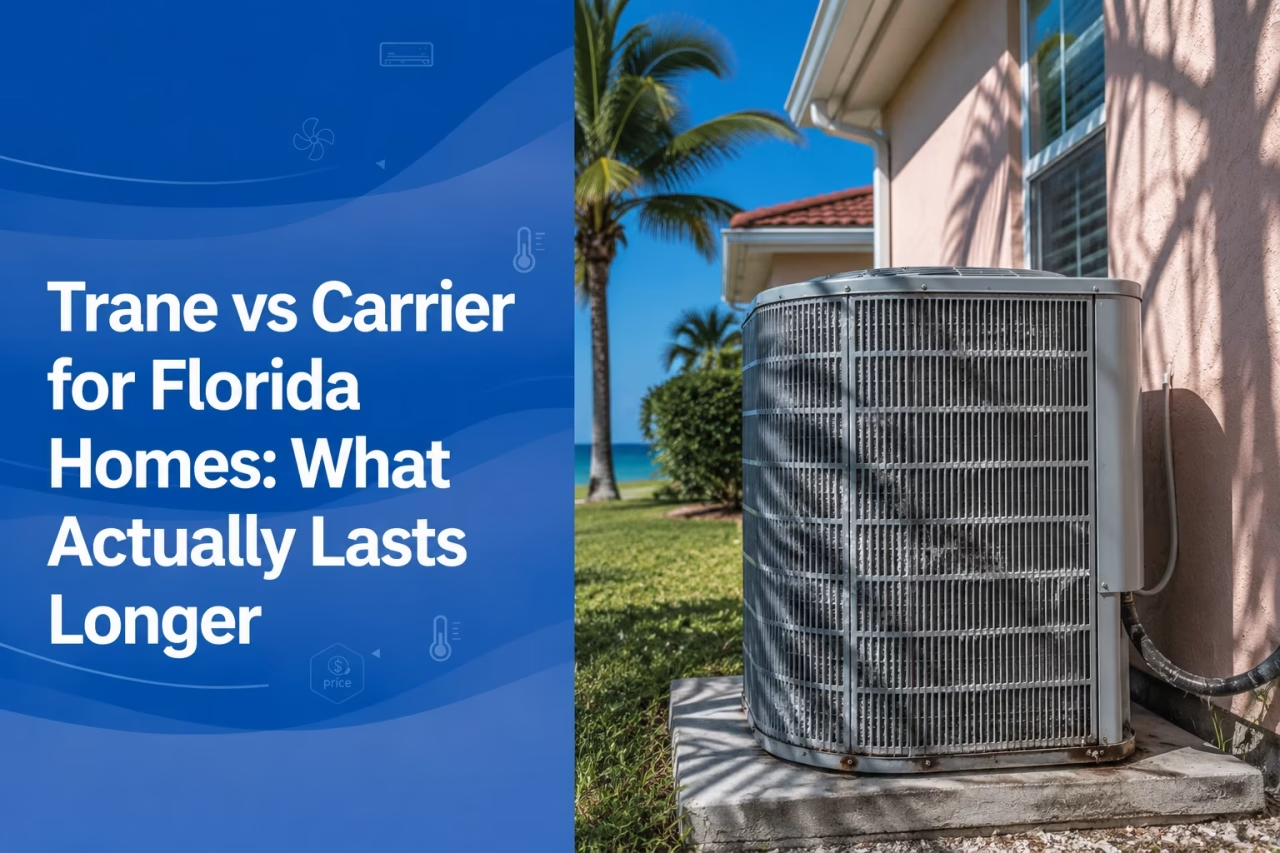
Trane and Carrier both build equipment that outlives its warranty across most of the country. Florida is where that track record stops meaning much.
Ask which brand lasts longest here and you get brand loyalty back, rarely a reason. What decides Trane vs Carrier for Florida homes is not the badge on the casing. It is what the coil is made of, whether it was coated before it ever reached your pad, and how far your house sits from salt water.
Both brands sell equipment that dies early in coastal air. Both sell equipment that survives it. What separates the two outcomes is a set of choices that happen at the quote stage, which is also where our guide to which AC units hold up best in Florida picks up the story.
What Actually Wears Out an AC in Florida
A system in Ohio cools for four months and sits idle for eight. The same system in Florida runs ten to twelve months a year, which means the compressor logs roughly double the operating hours before it reaches the same birthday.
Then there is the air itself. Humidity keeps every outdoor surface damp for hours at a stretch, and near the coast that damp carries salt. Metal that stays wet and salty corrodes, and corrosion is what ends most Florida condensers long before the compressor gives out on its own. Our piece on what salt air does to an AC along the coast goes deeper on that corrosion.
So the real question is not which manufacturer builds a better machine in a lab. It is which configuration resists corrosion and heat load in the specific spot your house occupies.
Where Trane and Carrier Genuinely Differ
There are real engineering differences between the two, and they matter more at the coast than inland. Below is what holds up to scrutiny, stripped of the sales language you will hear in a showroom.
Coil construction
Trane is known for its Spine Fin outdoor coil, an all-aluminum design where the fins and the tubing are the same metal. Carrier leans on traditional tube-and-fin construction across much of its lineup, which pairs copper tubing with aluminum fins.
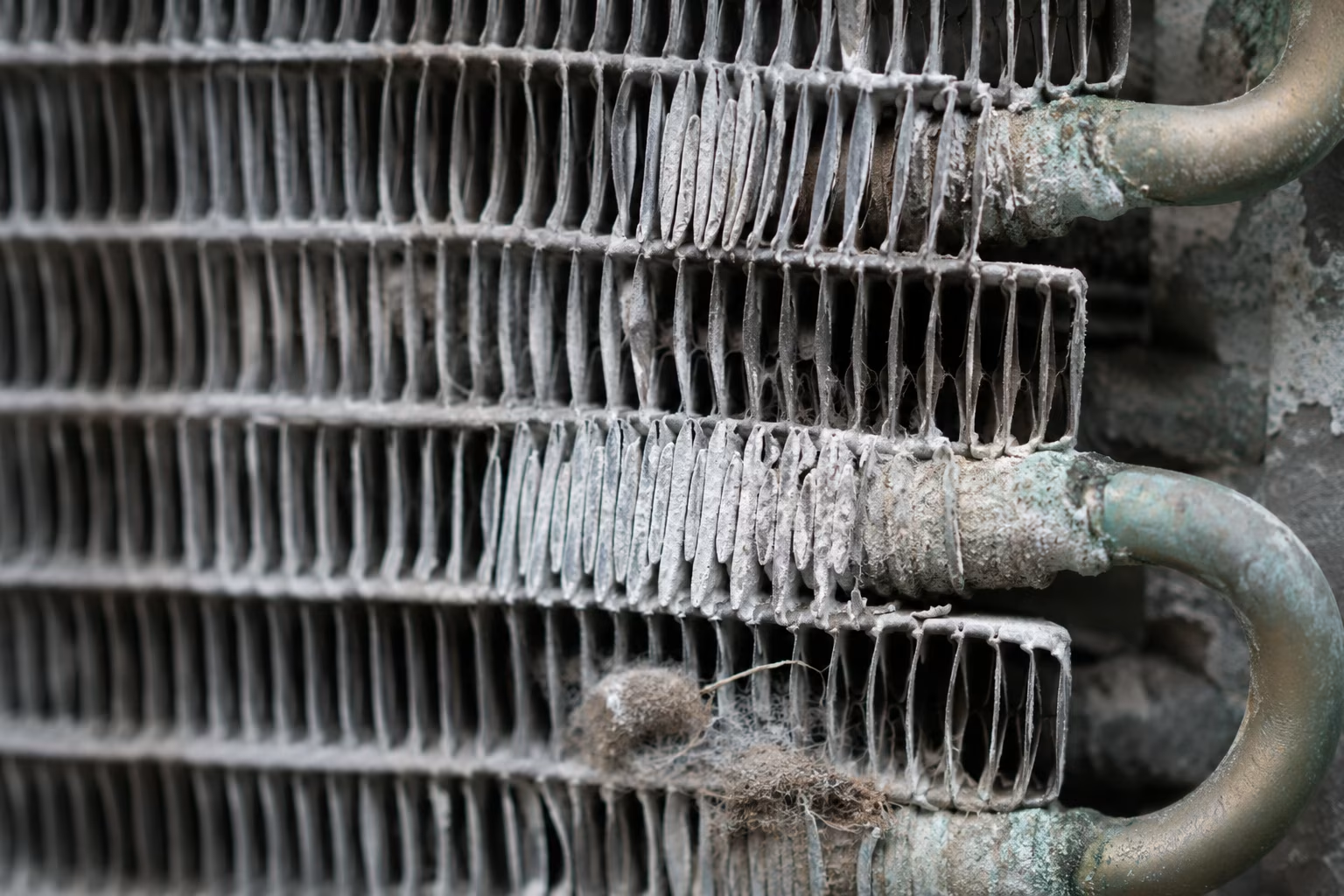
That pairing is where coastal trouble starts. Two dissimilar metals in contact, plus salt water acting as an electrolyte, creates a galvanic cell, and the aluminum sacrifices itself to protect the copper. Salt does not have to eat through anything on its own; it simply completes the circuit and lets the metals attack each other.
An all-aluminum coil removes that particular battery from the equation. It does not make the unit immune to corrosion, and aluminum still pits in salt air, but it eliminates one mechanism that runs continuously at the coast.
Coil coating and coastal packages
Both manufacturers offer corrosion protection, and this is the part most homeowners never hear about. Factory-applied coil coatings put a barrier between salt and metal, and coastal-duty options exist on both sides of this comparison.
A coated Carrier coil near the water will outlive an uncoated Trane, and the reverse is equally true. The coating decision outranks the brand decision for anyone living within sight of the ocean.
Lineup tiers and the compressor
Both brands run tiered lineups: a builder-grade single-stage unit at the bottom, two-stage in the middle, variable-speed at the top. The gap between the bottom and top of one brand’s own lineup is wider than the gap between the two brands at the same tier.
Comparing a premium Carrier to an entry-level Trane and concluding something about the brands is the most common mistake in this argument. You are comparing tiers, not manufacturers.
Why the Coil Metal Beats the Badge on the Side
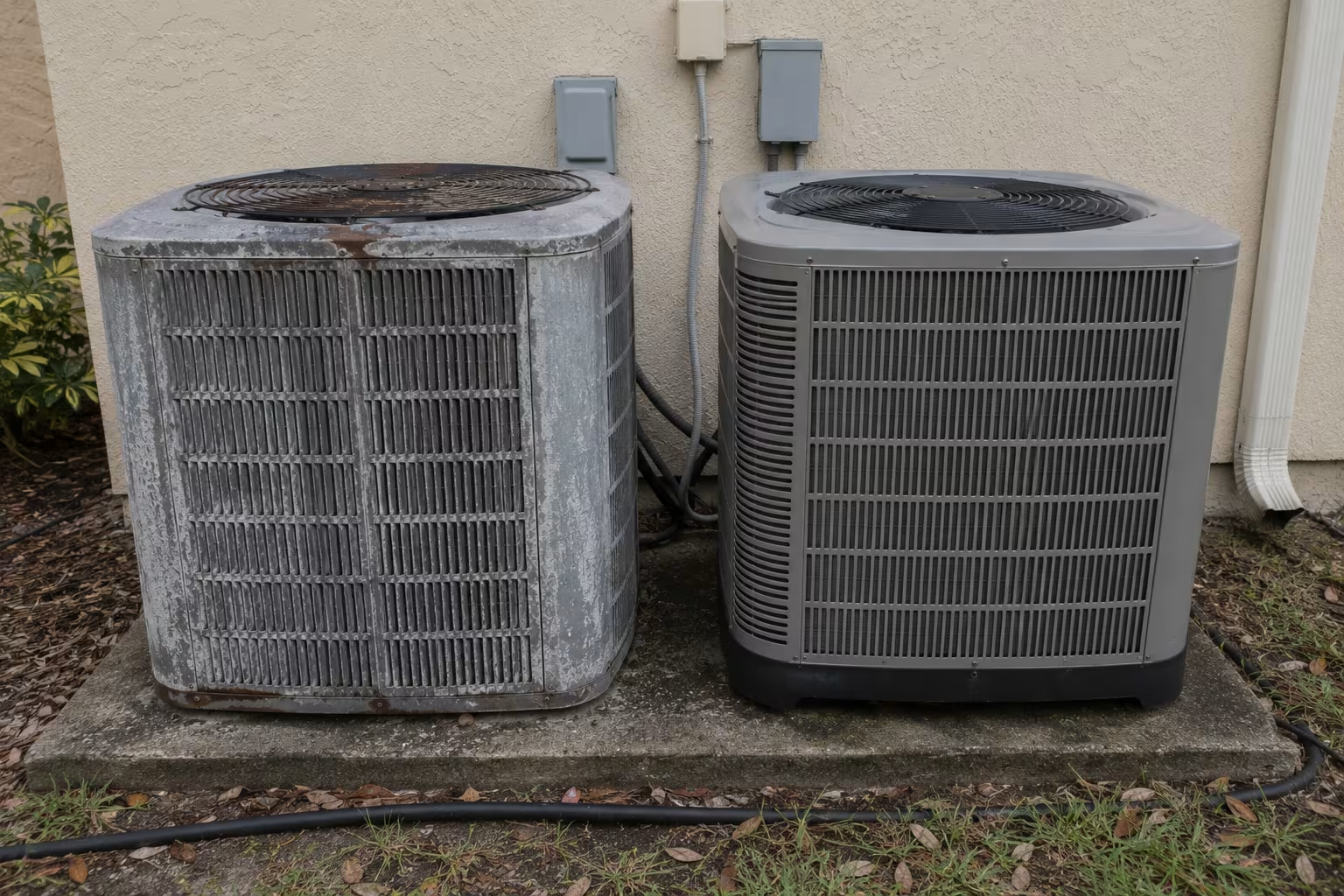
Walk a coastal neighborhood with a technician and you will see the pattern. Failed units of every brand, sitting a few hundred feet from the water, all failing the same way: fins gone chalky and crumbling, coil pitted through, a refrigerant leak somewhere in the mess.
Inland, that same pattern disappears. Ten miles from the beach, the brand argument becomes almost academic, because the thing that kills coastal units is not present in enough concentration to matter.
This is why national reliability data misleads Florida buyers. It averages a failure mode that dominates one zip code and barely exists in the next one over.
How Far You Live From the Water Changes the Answer
Salt concentration drops fast as you move inland, and your buying decision should move with it.
Directly on the water, corrosion protection is the whole conversation. A coated coil, a unit sited away from prevailing salt spray, and a rinse routine will do more for lifespan than any badge. A few miles back, the calculus softens and efficiency, staging, and humidity control start to earn their keep.
Well inland, you are buying on comfort and operating cost, because the machine will most likely reach old age regardless of which of the two names is on it.
Not sure which configuration fits your address?
We size and spec systems for coastal and inland Florida homes differently, because the air is different. Free estimate, no pressure.
Where Lennox and the Rest Fit In
Lennox comes up constantly in this comparison, usually phrased as which of the three lasts longest in salt air. The same logic applies. Lennox, Rheem, Goodman, and everyone else all sell coils that corrode near the ocean and coils built or coated to resist it.
Parts availability is the one place a brand choice has practical teeth. When a compressor or board fails in August, you want a unit whose parts sit on a local supply house shelf, not one that ships in four days while your house sits at 88 degrees.
Both Trane and Carrier clear that bar comfortably in Florida. That is a genuine argument for either, and it has nothing to do with build quality.
The Install Decides More Than the Brand
Here is the part the brand debate keeps people from asking about, and it is the part we see fail most often on service calls.
A system sized by rule of thumb instead of a Manual J load calculation will short cycle, never pull humidity out of the house, and wear its compressor out early. It does that regardless of whose name is on it. An oversized unit is the single most common defect we find in Florida homes, and it gets sold as an upgrade. ACCA’s Manual J is the national standard for sizing residential HVAC equipment, and a load calculation under it is required by national building codes and most state and local jurisdictions.
Sloppy brazing, a pad set too low in a flood-prone yard, no clearance for airflow around the condenser, a line set that was never properly evacuated: each one shortens the life of a premium machine to below what a properly installed builder-grade unit would give you. The installer has more influence over your system’s lifespan than the manufacturer does. On the efficiency side, ENERGY STAR’s guidance on heating and cooling says improper installation can reduce a system’s efficiency by up to 30 percent.
What to Ask Before You Sign
Take these to whoever is quoting you, whatever brand they carry.
Questions that actually predict lifespan
- What is the outdoor coil made of, and is it coated for coastal duty?
- Did you run a Manual J load calculation for this house, or size it off the old unit?
- Where will the pad sit, and how high off grade?
- Which parts for this model are stocked locally?
A contractor who answers all four without flinching is worth more than any brand preference. If you are weighing a coastal replacement right now, our breakdown of how salt air damages an AC on the Florida coast covers what the corrosion does once it starts, and our AC installation service page explains how we spec systems for the address rather than the catalog.
Frequently Asked Questions
The questions Florida homeowners ask most when they are stuck between two brands.
Is Trane more reliable than Carrier in Florida?
Not in a way that decides your purchase. Both build equipment across the same quality range, and in Florida the failure that matters most is coil corrosion, which depends on coil metal, coating, and your distance from salt water rather than the manufacturer.
Which AC brand lasts longest in salt air?
Whichever one you buy with corrosion protection. An all-aluminum coil removes the copper-aluminum galvanic pairing that accelerates coastal corrosion, and a factory-applied coating adds a barrier on top of that. Both brands offer coils that survive the coast and coils that will not.
Does a Trane or Carrier warranty cover salt-air corrosion?
Read the exclusions before you assume. Corrosion from environmental exposure is commonly treated differently from a mechanical defect, which is exactly why the coating decision at purchase carries so much weight.
How long should an AC last in coastal Florida?
Less than the national figure you have read. Year-round runtime plus salt exposure shortens service life well below what the same equipment delivers in a mild, dry climate, and an uncoated coil near the water can be finished while an inland twin is still middle-aged.
Is it worth paying for a variable-speed system in Florida?
Often, and for humidity rather than the energy savings people expect. Longer, slower run cycles pull far more moisture out of the air than short blasts from a single-stage unit, which is what makes a house at 76 degrees feel comfortable instead of clammy. That benefit is real on both brands.