English
  Français
  Español
  Русский


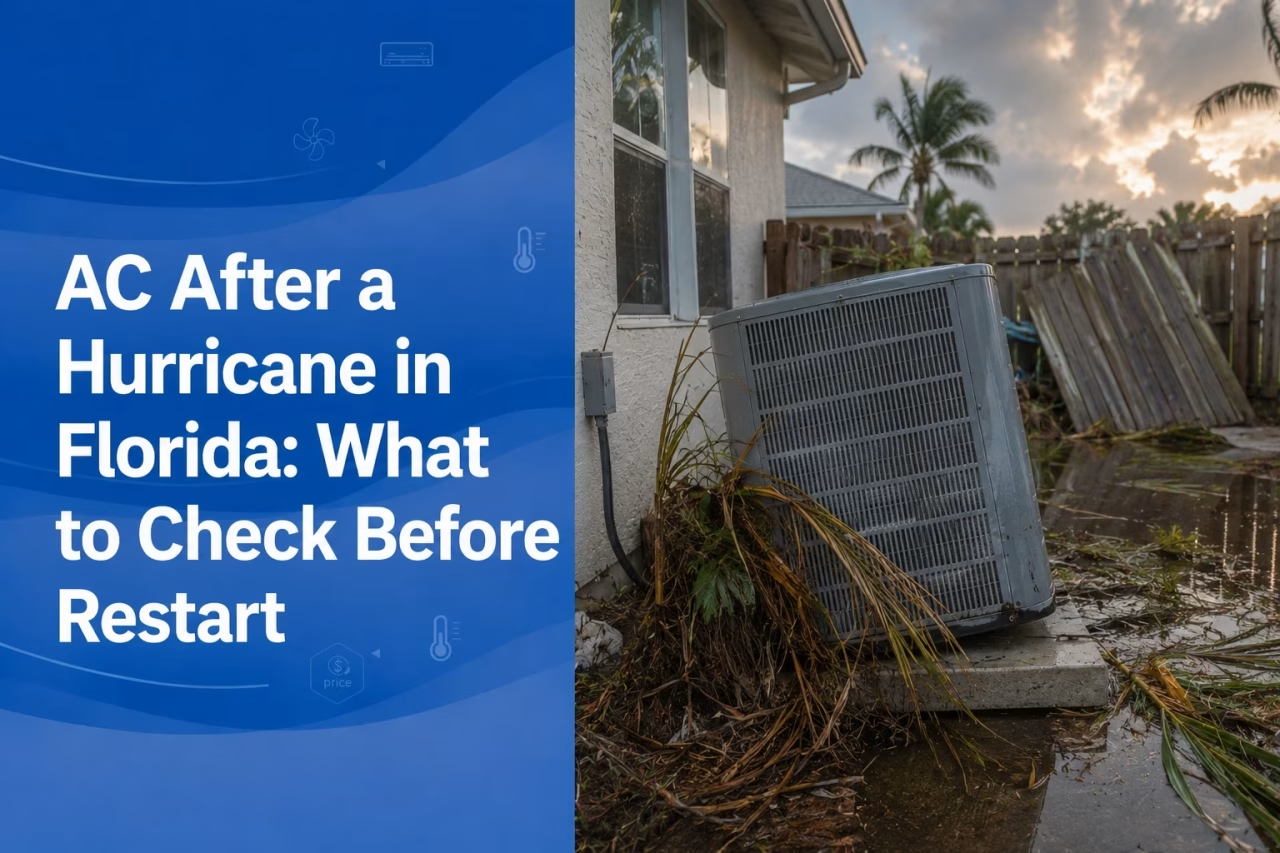
Power comes back before the yard dries out. That gap is where most post-storm AC damage happens, and almost none of it is caused by the hurricane itself.
The wind and water do their part, then a homeowner flips the breaker on a system that is standing in mud, and a repair turns into a replacement. Knowing what to check on your AC after a hurricane in Florida takes about ten minutes and decides which of those two you are paying for.
Work outside to inside, and keep the system off until you have finished looking. If you went through our guide to protecting an AC before hurricane season, this is the other half of that job.
Why the First Hour After Power Returns Matters
A condenser that took on water is not dangerous while it sits there dead. It becomes dangerous the moment it gets voltage.
Water in the electrical compartment, silt packed into the contactor, a compressor whose windings are soaked: none of that announces itself. The unit will try to start, and the failure that follows is permanent rather than repairable.
So the rule is simple. Leave the breaker off until you have looked, even if the house is heating up and the neighbors already have theirs running.
Start at the Outdoor Unit
Everything that decides your next move is visible from the pad. You are not diagnosing anything here, just reading what the storm left behind.
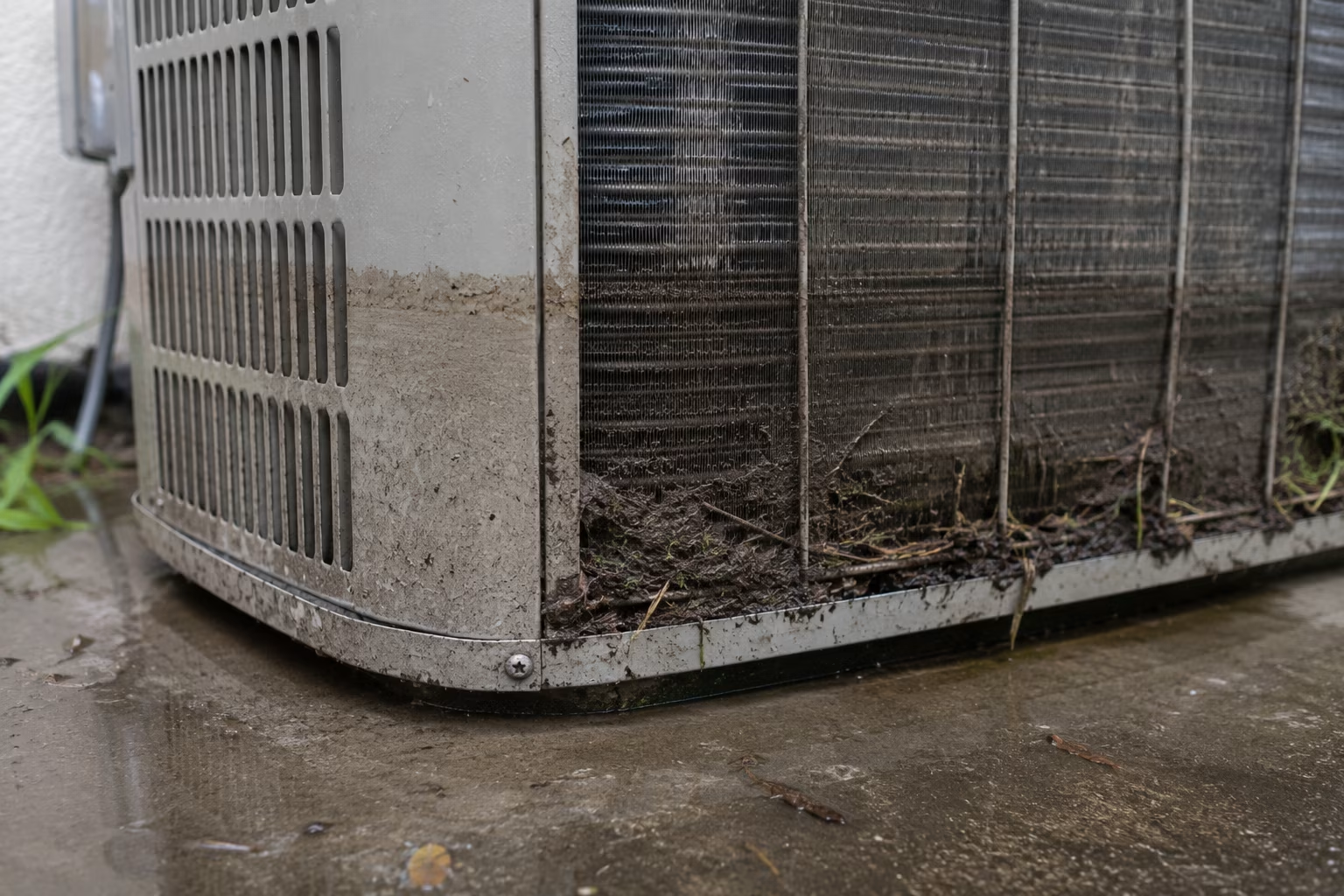
Debris packed into the coil
Palm fronds, leaves, roof grit, and insulation all end up pressed against the condenser by storm wind. The coil breathes through those fins, and a blanket of wet debris means the system cannot dump heat.
Clear what you can reach by hand with the power off. Leave anything embedded in the fins for a technician with a fin comb, because pulling it out sideways bends the aluminum and costs you airflow permanently. Once the unit has been cleared to run, our guide to getting the coil fully clean covers the rest of the job.
Standing water and the waterline
This is the check that matters most. Look at the casing for a mud line, a silt stain, or a debris ring that shows how high the water actually got.
Water that pooled around the pad and stayed below the base is a non-event. A line above the base panel means water reached the compartment where the contactor, capacitor, and compressor terminals live, and that changes the answer from restart it to do not touch it.
A unit that moved on its pad
Storm surge and saturated ground shift condensers, and the refrigerant lines do not shift with them. A unit sitting crooked, or one whose copper lines now look stretched or kinked, may have a leak you cannot see or hear.
Do not push it back into place yourself. Straightening a unit that is still connected puts the strain right back on the same lines and joints.
The Disconnect and the Breaker
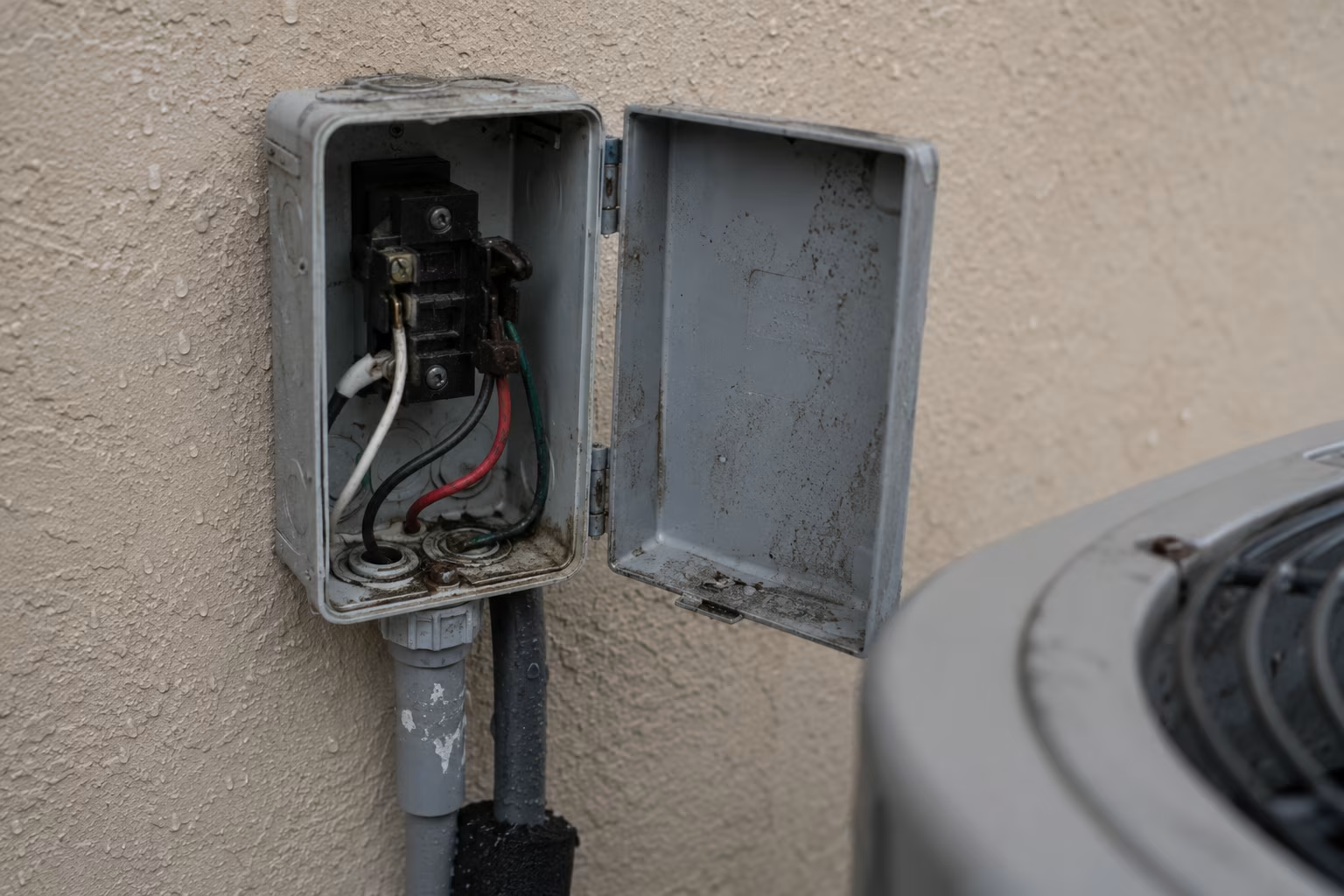
The disconnect is the gray box on the wall beside the condenser. It is the first thing to open and the last thing to close.
With the breaker already off, look at the box for water inside, silt on the contacts, or scorch marks. Corroded or wet terminals on an outdoor disconnect are common after a surge event, and they are a technician’s job rather than a homeowner’s.
If you are standing in water, do not open anything electrical. Wait for the ground to drain or call someone. That advice is boring and it is also the only part of this article that will hurt you if you skip it. Ready.gov’s hurricane guidance says the same: do not touch electrical equipment if it is wet or you are standing in water, and turn off the electricity at the main breaker only if it is safe to do so.
What a Flooded Condenser Does When You Restart It
Here is the sequence we get called out to during every storm week, and it is always the same.
The breaker goes on. The contactor pulls in through a film of dirty water and welds itself shut, or the compressor tries to start with moisture in the windings and shorts. Either way the failure takes seconds, and the part that dies is the expensive one. To see what the contactor does in that sequence, read our explainer on how the AC contactor works.
A soaked unit that was left alone is a cleaning, drying, and testing job. The same unit after one restart attempt is often a replacement, and no warranty covers a homeowner energizing flooded equipment.
Storm water reached your unit?
Leave the breaker off and let us look first. Post-storm inspections across South Florida, and an honest answer about what survived.
Surges and Brownouts Cause Damage You Cannot See
Not every post-storm failure involves water. When the grid comes back, it rarely comes back cleanly.
Voltage sags and spikes as circuits reload, and low voltage is harder on a compressor than a spike is. A motor trying to start on insufficient voltage draws heavy current and heats its windings, and repeated attempts during a brownout do cumulative damage that shows up weeks later as a unit that hums and refuses to start.
If your AC ran through the outage on a generator, that is worth mentioning to whoever services it. Undersized generators and unstable output are a well-known way to cook a compressor quietly.
A system that seemed fine for a week and then quit is often a surge casualty rather than a coincidence, and the symptoms overlap almost exactly with an AC that runs but does not cool.
What to Check Inside the House
The indoor half takes two minutes and catches problems the pad does not show.
Air handler and drain
Look for water around the air handler or in the drain pan, especially if the closet or garage took on any water. A drain line that backed up during the storm will trip the float switch, and a system that will not start after a hurricane is sometimes just that switch doing its job.
Thermostat
A blank thermostat after an outage is usually a dead battery or a tripped breaker rather than storm damage. Check both before assuming the worst, because this is the cheapest problem on the list and it gets misdiagnosed constantly.
When to Call a Technician
Restart the system yourself only when all of it is true: no waterline above the base, no debris in the coil, the unit sits level and its lines are undisturbed, the disconnect is dry and clean, and nothing smells burnt.
Anything else earns a call. That includes a unit that starts and then trips the breaker, one that hums without turning, a burnt smell at the pad, and any case where water reached the compartment. Our AC repair service covers post-storm inspections, and the honest outcome of some of them is that the system was gone before we arrived.
Once the season is over, the same checks work in reverse as prevention, which is what the salt and storm exposure in coastal Florida does to equipment year-round anyway.
Frequently Asked Questions
What Florida homeowners ask us in the days after a storm passes.
Can I turn my AC back on after a hurricane?
Only after you have checked the outdoor unit for a waterline above the base panel, debris in the coil, and a dry disconnect. If water reached the electrical compartment, leave the breaker off and have it inspected first.
Will my AC work if it was underwater?
Sometimes, if nobody energized it while it was wet. A flooded condenser that stayed off can often be cleaned, dried, and tested. One that was switched on while soaked has lost its compressor or contactor for good.
How do I know if a power surge damaged my AC?
The classic signs are a unit that hums but will not start, a breaker that trips on every attempt, or a system that worked for days after the storm and then quit. Surge damage hits the capacitor, contactor, and control board first, and none of it is visible from the outside.
Should I cover my AC unit before a storm?
No. A cover traps water against the metal and gives the wind something to grab. Clearing loose objects from the yard protects the unit far better than wrapping it does.
Does homeowners insurance cover hurricane damage to an AC unit?
It depends on your policy and on whether the damage came from wind or flooding, which are commonly handled differently. Photograph the waterline and the debris before you clean anything, because that documentation is what the adjuster asks for.