English
  Français
  Español
  Русский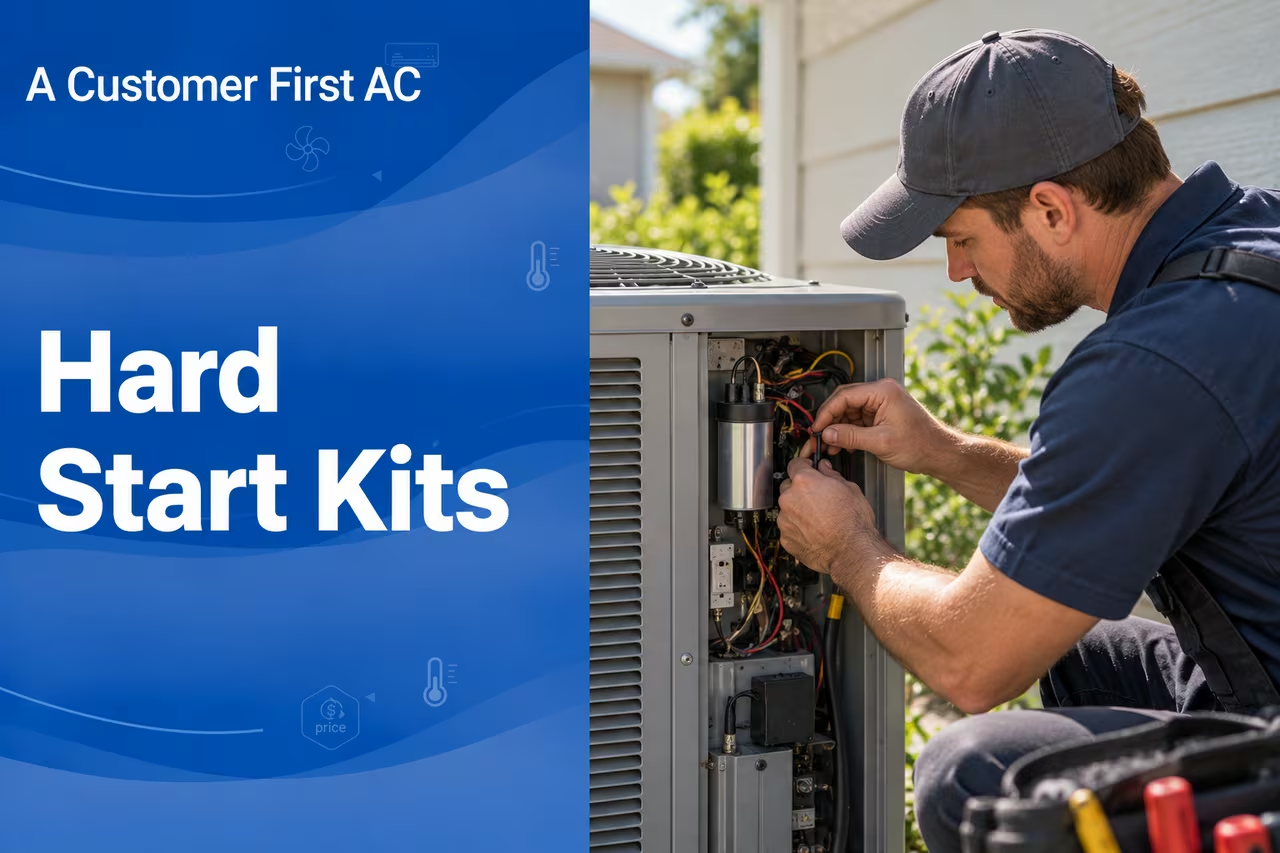
AC Repair & Troubleshooting in Florida
Hard Start Kits for AC: What They Do and When Yours Needs One
A hard start kit is a capacitor and a relay wired across the compressor's start circuit to give it a brief surge of extra torque...
Your message has been sent successfully. We will contact you soon!
These articles start from what the system is doing: warm air at the vents, ice on the coil, water on the floor, a unit that runs all day and never catches up.
A hard start kit is a capacitor and a relay wired across the compressor's start circuit to give it a brief surge of extra torque...
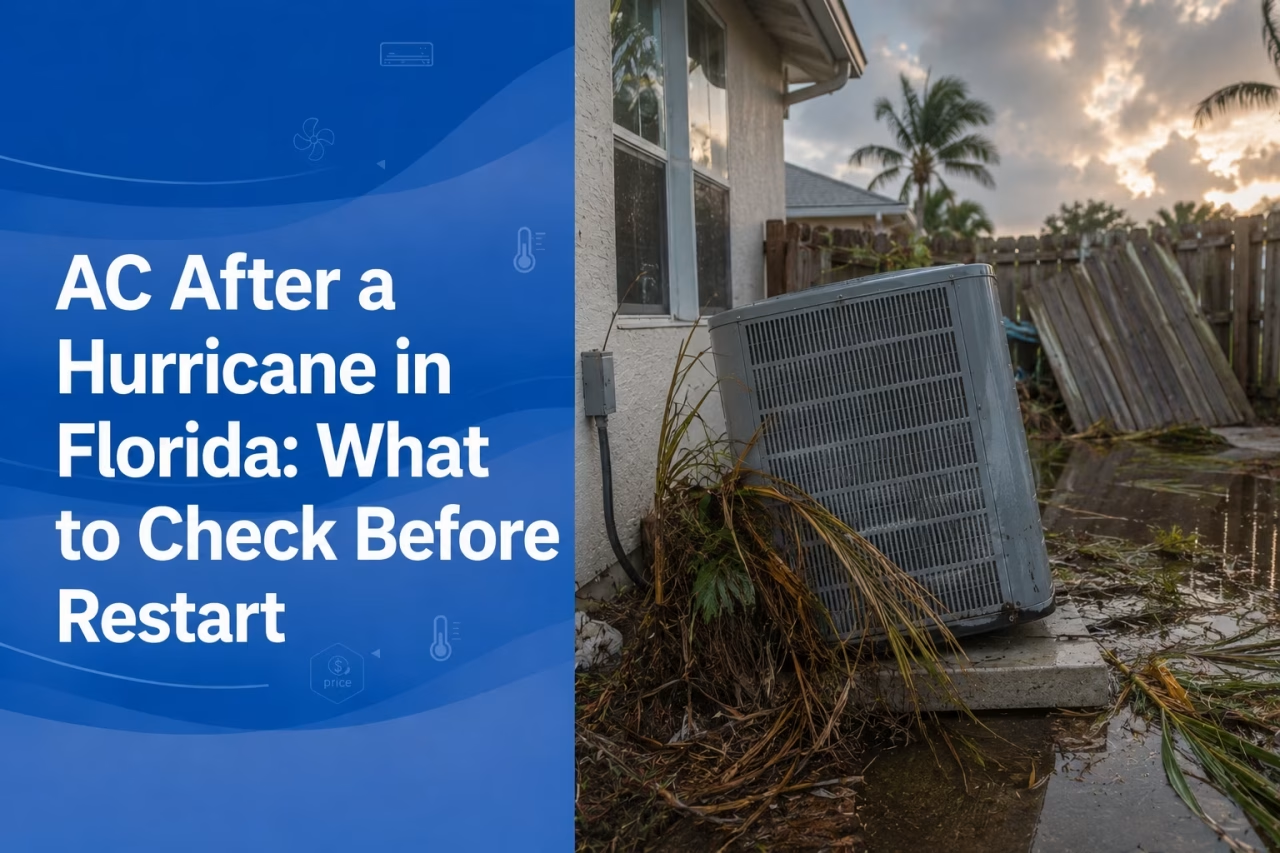
Power comes back before the yard dries out. That gap is where most post-storm AC damage happens, and almost none of it is caused...
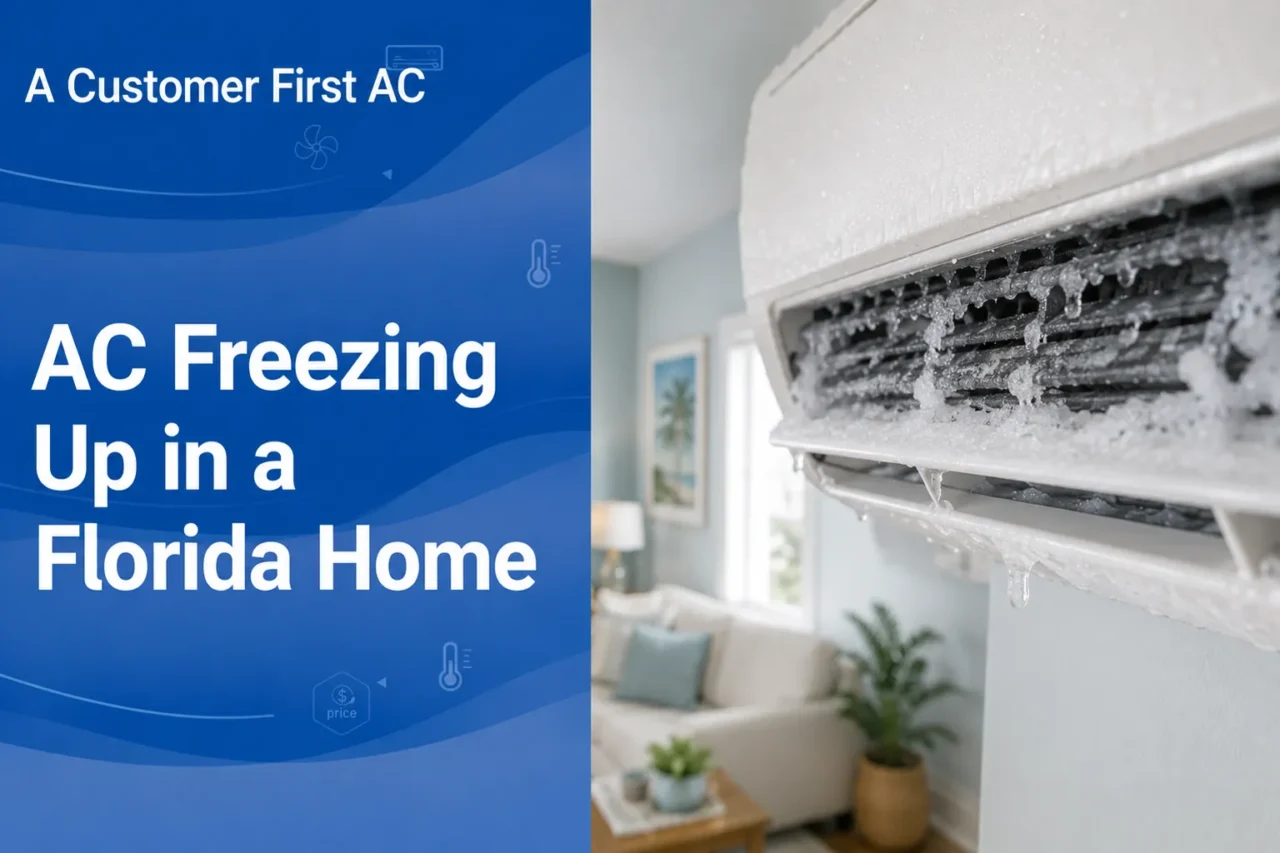
Ice on an air conditioner in the middle of a Florida summer looks like a contradiction, but it is a common one. When the...

When an AC runs all day but the house still drifts a few degrees above the thermostat setting, the problem is rarely a single...
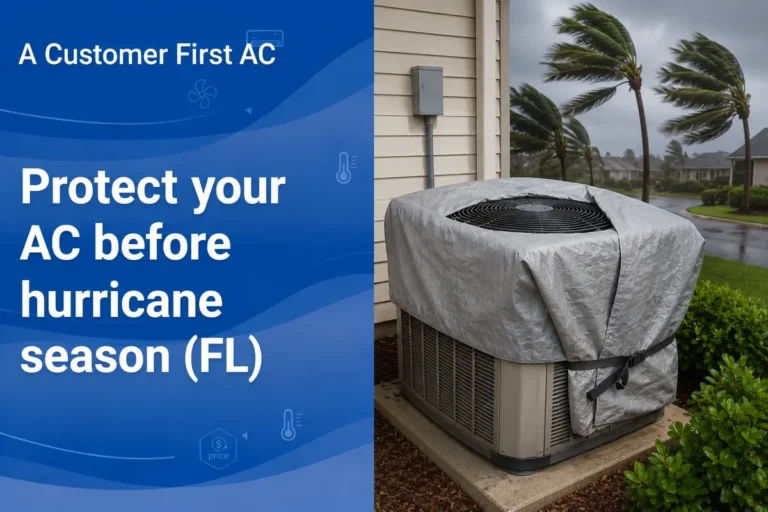
Hurricane season runs from June through November, and your air conditioner sits outside through all of it. The condenser that...
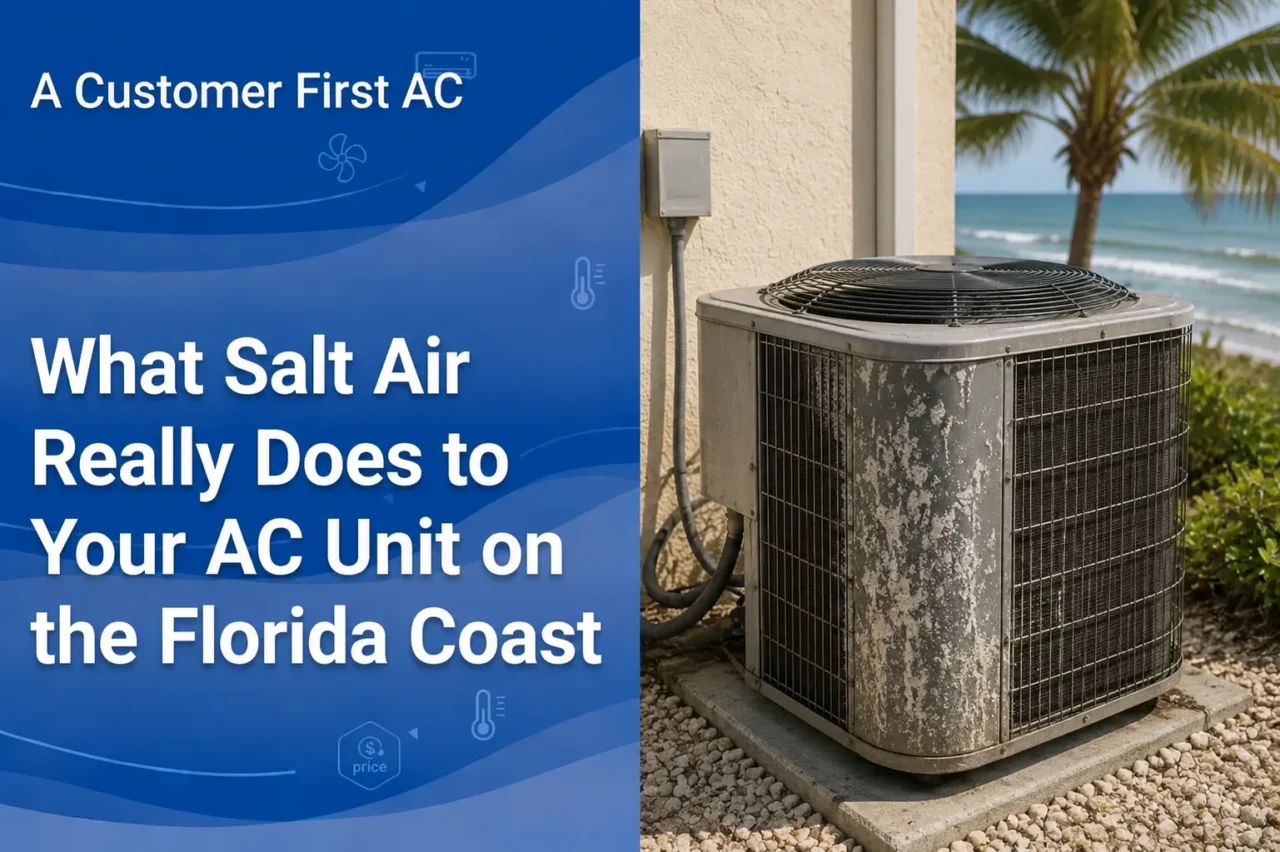
Salt air is one of the few things that wears out an AC faster than Florida's heat does. Homes within a few miles of the water in...
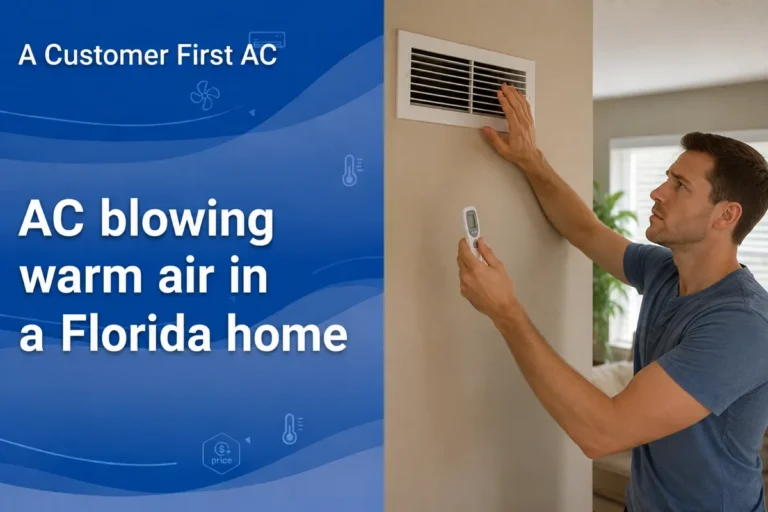
Warm air coming out of the vents is a different problem from an AC that simply cannot keep up. When the air is genuinely warm,...
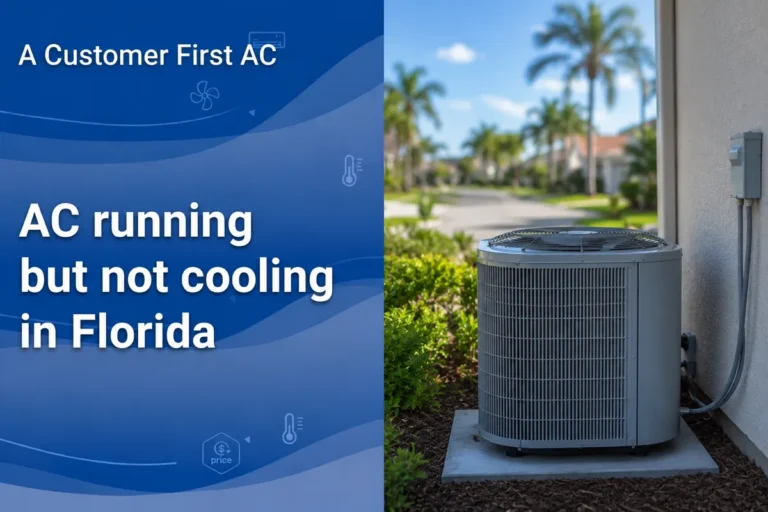
An AC that runs but will not cool is one of the most common service calls we get in Florida, and it rarely means the whole system...
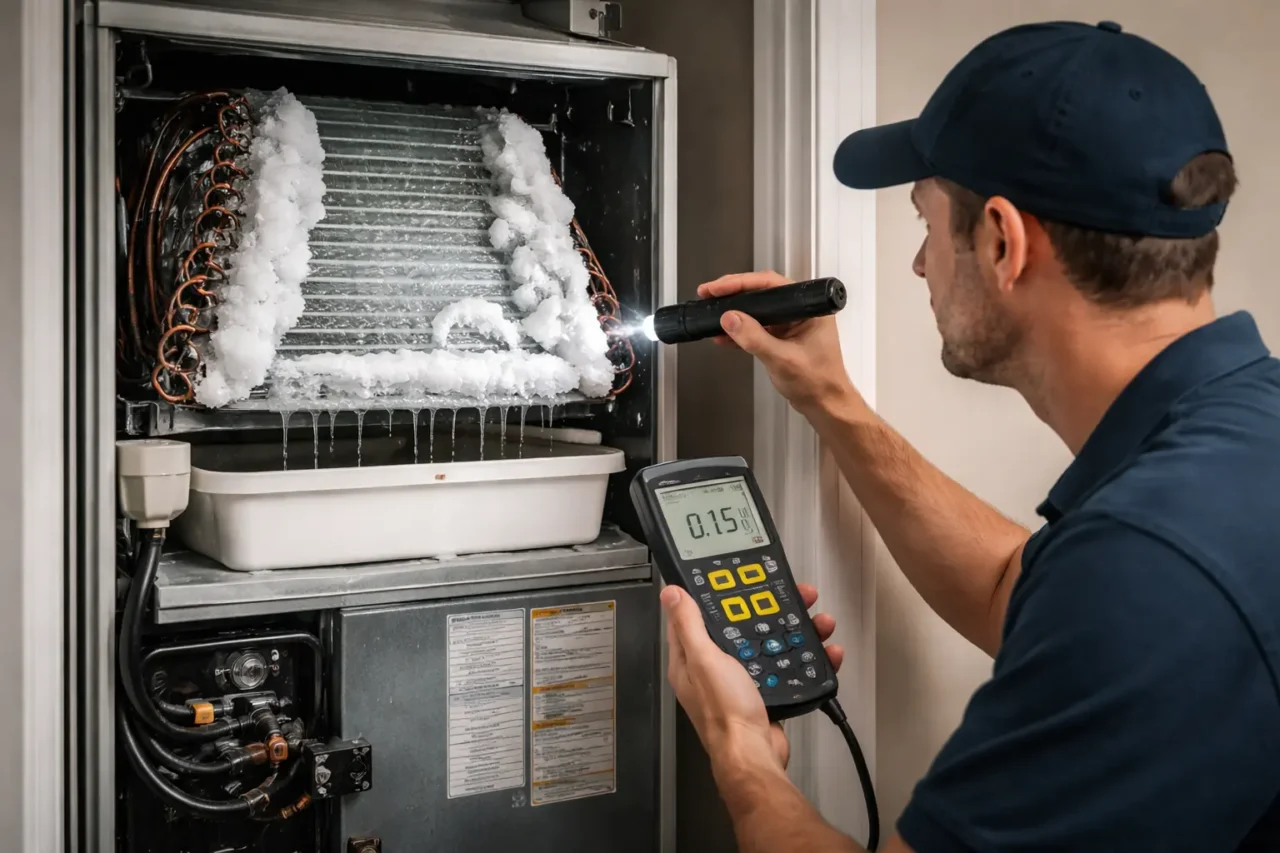
When little or no air comes out of the vents, the problem is the airflow itself, not just the temperature. The system may be...
A burning or electrical smell, water pooling at the air handler, ice on the refrigerant line, or a breaker that trips more than once. Each of those gets worse the longer the system runs, and a frozen coil in particular can send liquid back to the compressor.
If it is only cooling weakly, yes for a short time. If it is frozen, leaking or tripping its breaker, no. The failures that turn expensive are usually the ones that ran for another week because the house was still tolerable.
When it started, what changed just before, when the filter was last replaced, and what the thermostat is showing. Those four answers narrow the diagnosis before anyone opens a panel, and they often shorten the visit.