English
  Français
  Español
  Русский


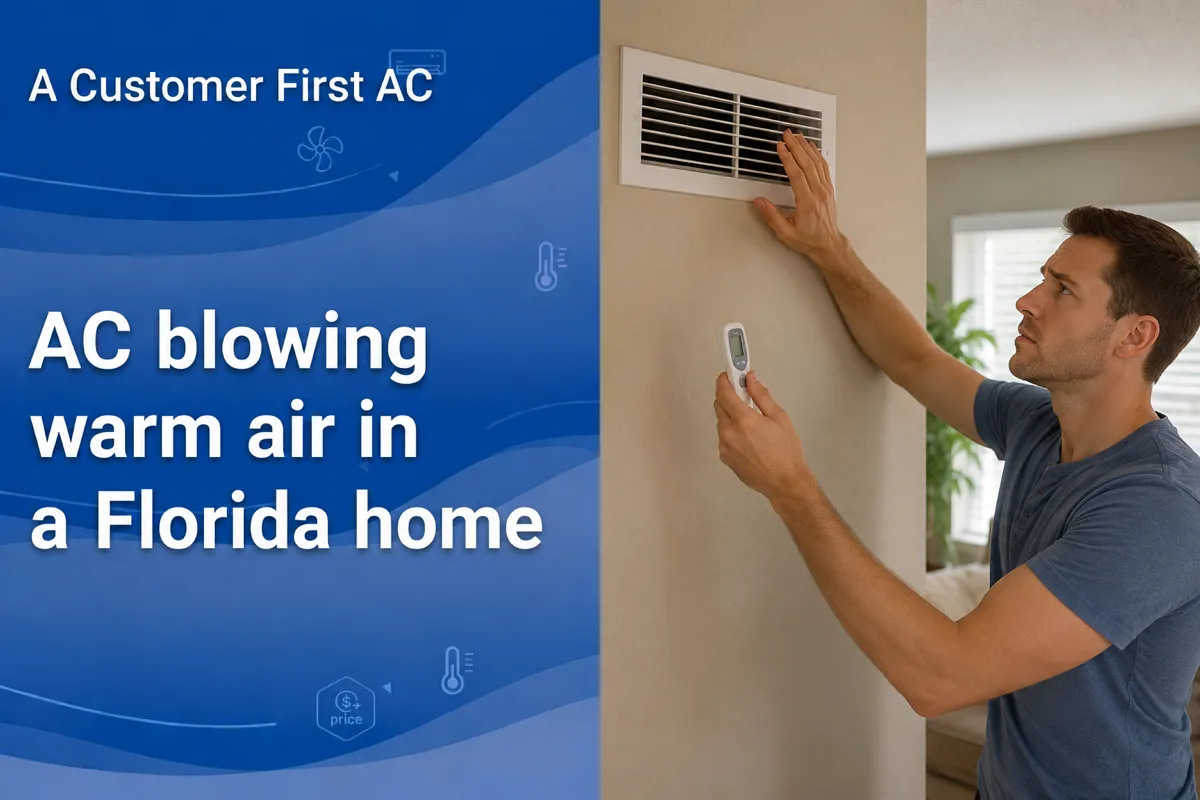
Warm air coming out of the vents is a different problem from an AC that simply cannot keep up. When the air is genuinely warm, the system has usually stopped cooling altogether – the indoor blower keeps pushing air, but no heat is being removed from it. In a Florida summer, that turns a comfortable house uncomfortable within an hour.
This page covers the hard version of the fault: the air at the vent is warm, or close to room temperature, and the house is not cooling at all. If the air is cool but weak, and the house gets there slowly, read AC running but not cooling instead. If it cools fine most days and only loses ground in the afternoon heat, that is AC not keeping up with the heat.
The good news is that the causes are a short, predictable list, and a couple of them you can rule out in two minutes. The most common reason is that the outdoor unit has stopped running while the indoor fan keeps going. Here is how to tell what is happening and when to call.
Start With the Thermostat
It sounds obvious, but a thermostat set to “heat” or bumped to emergency heat is a real cause of warm air, especially after someone adjusts it during a cooler week. Set it to cool, a few degrees below the room temperature, and listen for the outdoor unit to start.
The fan setting matters just as much. On “fan on,” the blower runs continuously even when the system is not cooling, so it pushes room-temperature air through the vents and feels warm. Switch it to “auto” so the fan only runs during an active cooling cycle. Dead thermostat batteries or a wiring fault can also cut the signal to the outdoor unit while the indoor fan keeps going.
Rule it out first. It costs nothing to check.
The Outdoor Unit May Have Stopped
This is the most common cause of truly warm air. The indoor blower and the outdoor condenser run on separate circuits, so the fan inside can keep blowing while the outdoor unit sits dead. When the condenser is not running, no heat leaves the system and the air turns warm.
A tripped breaker is the simplest version – Florida’s summer storms and grid surges trip them often. A blown capacitor is the next most common: it stores the jolt needed to start the compressor and fan, and heat is what kills it, which is why it fails on the hottest days. A worn contactor, the relay that powers the outdoor unit, does the same thing. The pattern is almost always the same one we hear on the phone – the house cooled fine the day before, then the air turned warm during the hottest stretch of the afternoon, which is exactly when a heat-stressed capacitor or contactor gives out and leaves the indoor fan blowing uncooled air through the vents.
Low Refrigerant From a Leak
Refrigerant is never consumed in normal operation, so a low charge always means a leak. As the charge drops, the system loses its ability to remove heat, and the air shifts from cold to cool to plainly warm. You may also see ice on the refrigerant line or the indoor coil as the charge falls.
Topping off the refrigerant is a patch that fails again within the season. The real fix is finding the leak and sealing it, then recharging to spec. Our refrigerant leak repair follows the full procedure, and you can read the early warning signs in our guide to spotting low AC refrigerant.
Air Still Coming Out Warm?
If the thermostat and breaker are fine and the air is still warm, the cooling side has quit. We will find the exact cause on-site and get you cold again.
A Frozen Evaporator Coil
A coil that freezes over will blow warm air even though the system is running hard. Ice forms when airflow is too low – a dirty filter or blocked vents – or when refrigerant is low. Once the coil is encased in ice, it cannot absorb heat from the air, so the vents go warm.
If you see frost on the indoor coil or the line entering the air handler, switch the system to fan-only for a few hours to let it thaw, and replace the filter. If it freezes again after that, the cause is deeper than airflow and needs a charge check. A clogged condensate drain can compound the problem, which we cover in our look at what a clogged AC drain does.
This might interest you: when your AC runs but will not cool – the related case where the air is cool but weak rather than fully warm.
When It Points to the Compressor
If the outdoor unit is running, the breaker is on, and the air is still warm, the compressor itself may be failing. The compressor is the heart of the cooling cycle – when it cannot build pressure, the system circulates refrigerant without removing heat.
At that point it is a judgment call.
This is the highest-cost component in the system, so the diagnosis matters. On a newer unit under warranty, a compressor repair can make sense. On an older system, it often tips the decision toward replacement, which is where weighing the repair cost against a new unit becomes the real question.
How to Avoid It
Two habits prevent most warm-air breakdowns. Change the filter on schedule to keep the coil from freezing, and get a seasonal tune-up before peak heat. Our AC maintenance visit tests the capacitor, the contactor, the refrigerant charge, and the drain – the exact parts that leave you with warm air in August.
Because Florida storms are a leading cause of the electrical failures behind warm air, a surge protector on the AC is worth installing before storm season. It guards the capacitor and control board against the grid surges that hit when power comes back after an outage.
FAQ
Why is my AC blowing warm air in my Florida home?
Most often the outdoor unit has stopped while the indoor fan keeps running – a tripped breaker, a blown capacitor, or a worn contactor. A refrigerant leak or a frozen evaporator coil will also turn the air warm. Check the thermostat and breaker first, then call if the air is still warm.
Why is cold air not coming out but the fan is running?
The indoor blower and the outdoor condenser run on separate circuits, so the fan can blow while the cooling side is dead. If the outdoor unit is not running, no heat leaves the system and the vents go warm even though air is moving.
Can I fix an AC blowing warm air myself?
You can safely check two things: the thermostat settings and the breaker. Set the thermostat to cool and auto, and reset a tripped breaker once. Beyond that – capacitors, contactors, refrigerant, and the compressor – the work needs a licensed technician, and a capacitor holds a dangerous charge even with the power off.
Why does my AC blow warm air only during the day?
Heat-related failures show up in the afternoon. A weak capacitor or a marginal charge can run in the cooler morning, then quit once the outdoor temperature and system load peak. That daytime-only pattern is a classic sign the system needs service before it fails completely.
Is warm air from the AC an emergency?
In Florida’s heat it is at least urgent, especially for homes with children, older residents, or pets. If a breaker keeps tripping, stop resetting it and call, since that signals an electrical fault. Schedule a repair visit for a same-day diagnosis when the house is heating up.