English
  Français
  Español
  Русский


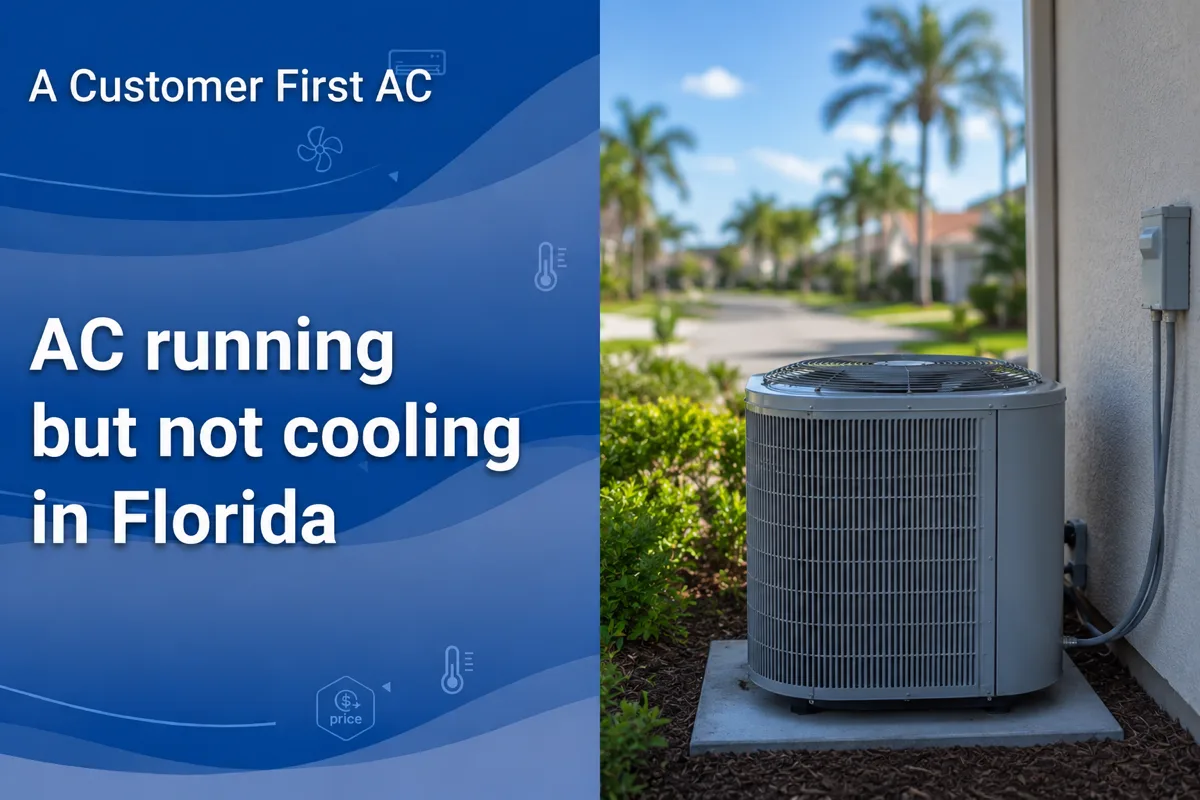
An AC that runs but will not cool is one of the most common service calls we get in Florida, and it rarely means the whole system is dead. More often, one part of the cooling chain is failing while everything else keeps running – the fan blows, the thermostat reads normal, but the air never gets cold enough to catch up with the heat.
The symptom here is partial: the air is cooler than the room but not by much, and the system runs far longer than it used to. Warm air straight from the vent is a different fault and a different page, AC blowing warm air. A system that cools properly until the afternoon and then falls behind belongs in AC not keeping up with the heat.
In a climate where the system runs most of the year, small problems show up fast. A clogged filter that might go unnoticed up north turns into a warm house here within a day. Below are the causes we see most, what you can safely check yourself, and the point where it is time for a technician.
Restricted Airflow Is the First Thing to Check
Most “not cooling” calls trace back to airflow before anything else. A dirty filter chokes the system, the blower works harder, and cooling capacity drops. Florida’s dust and pollen load clogs filters faster than the label assumes, so a filter that looks fine on the calendar may already be restricting flow.
That is where to start. It is the most common fix we make.
Past the filter, the indoor evaporator coil can collect dirt and biofilm that insulate it from the air it is supposed to cool. A blocked return vent or a closed-off room does the same thing. When airflow drops far enough, the coil can even freeze over, which stops cooling entirely until it thaws.
Low Refrigerant Means a Leak, Not a Top-Off
Refrigerant is not used up during normal operation. If the charge is low, there is a leak somewhere – a fitting, the coil, the line set, or the compressor. A system low on refrigerant keeps running but cannot pull heat out of the air, so it blows cool-ish air that never reaches the thermostat setting.
Simply adding refrigerant is a short-term patch that fails again within the season. The fix is finding and sealing the leak, then recharging to spec. Our refrigerant leak repair follows the full leak-search and seal procedure rather than topping off a system that will lose the charge again. You can read the warning signs in our breakdown of how to spot low AC refrigerant.
A Dirty or Failing Outdoor Unit
The outdoor condenser releases the heat your system pulls from inside. When its coil is caked with dirt, grass clippings, or salt residue, it cannot shed that heat, and cooling suffers even though the unit is running. Storm debris does the same thing faster, which is why checking the condenser after a hurricane matters before you restart the system.
The outdoor fan motor and the capacitor that starts it also fail in Florida heat. A weak capacitor is one of the most common failures we see, and it often shows up on the hottest afternoons – exactly when you need the system most. If the outdoor fan is not spinning while the system calls for cooling, that is a service issue, not a DIY fix.
This might interest you: why an AC blows warm air in a Florida home – a related problem with a different set of causes when the air is genuinely warm, not just weak.
House Still Not Cooling Down?
If the filter and thermostat check out and the air still will not get cold, we will diagnose it on-site and tell you exactly what is wrong.
The System May Be Undersized or Aging
Sometimes nothing is broken – the system just cannot keep up. An AC sized too small for the home, or one that has lost efficiency with age, runs constantly on the hottest days and never reaches the set temperature. Florida’s long, intense cooling season exposes this faster than a milder climate would. A unit that cooled the house fine three summers ago can fall a few degrees short now without any single part having failed, simply because the compressor has lost a step and the heat load outside has not, which is why the same equipment that felt strong in spring struggles by the middle of July.
Older units also drift from their rated efficiency as compressors wear and coils age. A system past its prime may cool fine in spring and fall but fall behind in peak summer. When that happens every July, the question shifts from repair to whether a repair still makes sense versus replacement.
Thermostat and Settings
It is worth ruling out the simple things. A thermostat set to “fan on” instead of “auto” runs the blower even when the system is not actively cooling, which pushes room-temperature air and feels like a failure. Dead thermostat batteries, a wiring fault, or a unit in direct sun can all misread the room and short the cooling cycle.
If the thermostat display is blank, flickering, or far off from the actual room temperature, that alone can explain a house that will not cool. It is a quick thing to verify before assuming the worst about the equipment.
It takes thirty seconds to rule out.
How to Prevent It Next Time
Most “not cooling” breakdowns are preventable. Changing the filter on schedule keeps airflow up, and rinsing the outdoor coil clears the dirt that blocks heat from escaping. Keeping vegetation and debris back from the outdoor unit lets it breathe.
The bigger lever is a seasonal tune-up before the worst heat arrives. Our AC maintenance visit catches a weak capacitor, a dirty coil, a slow drain, or a low charge before it turns into a warm house in August. In Florida, where the system never gets a long off-season, that check is what keeps a small issue from becoming an emergency.
FAQ
Why is my AC running but not cooling my Florida home?
The most common reasons are restricted airflow from a dirty filter or coil, low refrigerant from a leak, or a dirty outdoor condenser that cannot release heat. An undersized or aging system can also run nonstop without reaching the set temperature on Florida’s hottest days.
Why is my AC blowing cool but not cold air?
Cool-but-not-cold air usually points to low refrigerant or restricted airflow. The system is still moving air and partly cooling it, but it cannot pull enough heat out to hit the thermostat setting. Check the filter first, then have the refrigerant charge tested.
Can a dirty filter really stop my AC from cooling?
Yes. A clogged filter chokes airflow, drops cooling capacity, and can freeze the indoor coil, which stops cooling entirely. In Florida’s dust and pollen, filters load up faster than expected, so this is the first thing to check.
Should I add refrigerant myself if my AC is not cooling?
No. Low refrigerant means a leak, and adding more without finding it is a short-term patch that fails again. Refrigerant handling is also regulated and requires a licensed technician. The lasting fix is locating and sealing the leak, then recharging to spec.
When should I call a technician instead of troubleshooting myself?
If you have replaced the filter, confirmed the thermostat settings, and cleared the vents but the house still will not cool, it is time to call. The same goes for an outdoor fan that will not spin, an iced-over coil that keeps returning, or a system that falls behind every summer. Schedule an on-site diagnostic for an exact answer.