English
  Français
  Español
  Русский


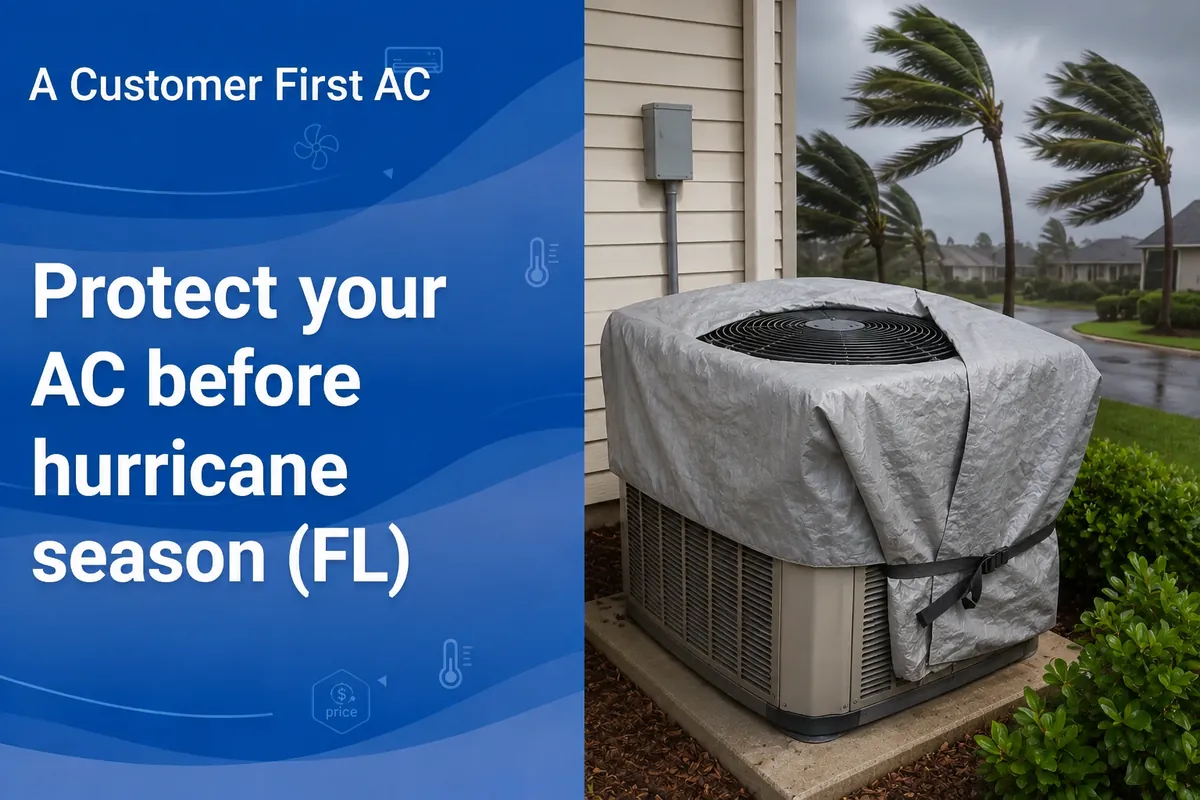
Hurricane season runs from June through November, and your air conditioner sits outside through all of it. The condenser that keeps your home livable is also the part most exposed to wind, flying debris, flooding, and the power surges that follow a storm.
A little preparation before a storm is on the radar protects an expensive piece of equipment and keeps you from waiting in a long repair line once the weather clears. This guide covers how to protect your AC before hurricane season, what to do in the final hours before a storm, and what to check before you turn the system back on.
Coastal homes face an extra layer of wear that storms accelerate, so it helps to know what salt air does to an AC unit on the Florida coast if you live near the water.
Anchor and Protect the Outdoor Unit
The single most important pre-season step is making sure the condenser cannot move. Florida code calls for the outdoor unit to be strapped to its concrete pad with approved hurricane anchors, and a properly secured unit rides out most lower-category wind events without shifting.
If your unit was installed years ago, the straps may be missing, rusted through, or never up to current code. That is worth checking before a storm, not during one.
For homes in low-lying or flood-prone spots, raising the condenser on an elevated platform is worth a conversation with your installer. A few extra inches of clearance can be the difference between a unit that survives a storm surge and a flooded compressor that needs full replacement.
Surge Protection Is Your Best Insurance
Wind gets the attention, but the surge does the quiet damage.
When power comes back after an outage, the grid sends voltage spikes through the lines, and those spikes are brutal on HVAC electronics. Control boards and compressors are the usual casualties. A whole-house surge protector, or one installed at the AC disconnect, absorbs that hit and is one of the cheapest forms of protection you can add.
Many of the systems we restart after a storm did not take wind damage at all. They took an electrical hit when the power snapped back on.
What to Do in the 24 Hours Before a Storm
Once a storm is actually heading your way, a short checklist handles the rest.
Clear the area around the unit
Walk the space around your condenser and remove anything wind can pick up: patio furniture, potted plants, loose decorative rock, garden tools. In a hurricane, those become projectiles aimed at the coil fins. Trim back any tree limbs hanging over the unit while you are at it.
Pre-cool the house
Drop the thermostat a few degrees a few hours before the storm arrives. A well-insulated Florida home holds that cooler air for a while after the power goes out, which buys you comfort during the early hours of an outage.
Shut the system down
When tropical-storm-force winds are forecast, turn the AC off at the thermostat and then at the breaker. Running it during the storm can pull wind-driven rain and debris into the system, and shutting off the breaker is what actually protects the electronics from the surge when power is restored.
Want your AC storm-ready before the next watch?
A pre-season inspection checks your anchoring, surge protection, and drainage so you are not scrambling when a storm forms.
After the Storm: What to Check Before Restarting
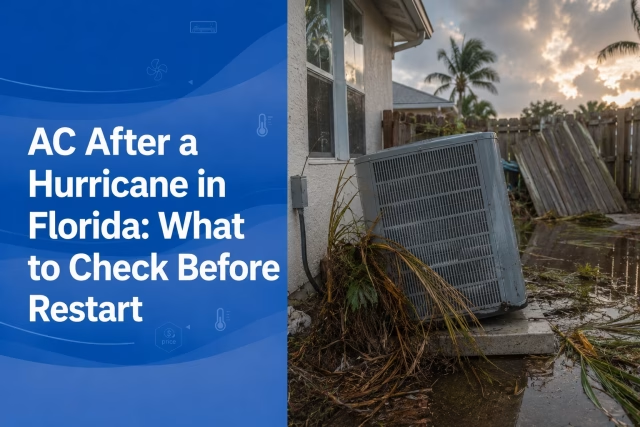
Resist the urge to flip the AC back on the moment power returns. A quick look first can save the compressor. This is the short version of our full post-storm AC checklist, which goes deeper on waterlines, flooded condensers, and surge damage.
Walk out to the condenser and look it over before you restore power at the breaker. Check for bent fan blades, debris jammed in the coil, standing water around the base, and any sign the unit shifted on its pad. If you see standing water near the electrical components or inside the air handler, leave the system off.
This might interest you: The clear signs your AC needs a closer look – useful for spotting storm-related trouble early.
If the unit looks clean and dry and the area around it is clear, it is usually safe to restore power and run a short test cycle. If anything looks off, or the system trips, hums, or blows warm air when you restart it, shut it down and call for AC repair rather than forcing it.
Why a Pre-Season Inspection Pays Off
Most storm damage to AC systems is preventable, and the prevention is cheap compared with an emergency replacement during the busiest stretch of the year.
A pre-season check confirms the anchoring is solid, the surge protection is in place, the drain line is clear, and the electrical connections are tight. It is the same work that keeps a system running efficiently through the summer, which is why regular AC maintenance doubles as your best storm preparation. Going into hurricane season with a system that has already been looked over means one less thing to worry about when a name lands on the forecast.
Frequently Asked Questions
Should I cover my AC unit during a hurricane?
Standard covers are made for off-season debris, not hurricane winds. A cover that is not secured can rip off and become a projectile, or trap moisture against the unit and cause corrosion. Clearing the area and shutting off the breaker protects the unit better than a cover does.
Can I run my AC during a hurricane?
No. Turn it off at the thermostat and the breaker once tropical-storm-force winds are forecast. Running it lets wind-driven rain and debris into the system, and leaving the breaker on exposes the electronics to the surge when power returns.
Why turn off the breaker instead of only the thermostat?
The thermostat stops the system from cooling, but the breaker is what disconnects the electronics from the grid. Shutting off the breaker is the step that protects the control board and compressor from the voltage spike when power is restored.
My AC was off during the storm but will not start now. What happened?
Even with the system off, a surge can reach the electronics, and water intrusion or a shifted unit can cause problems on restart. Do not keep cycling it. Have a technician inspect it before running it further to avoid turning a small issue into a compressor failure.
Is surge protection really necessary in Florida?
For HVAC equipment, it is one of the highest-value protections you can add. The post-outage voltage spikes that follow Florida storms are a leading cause of compressor and control-board failure, and a surge protector costs a fraction of those repairs.