English
  Français
  Español
  Русский


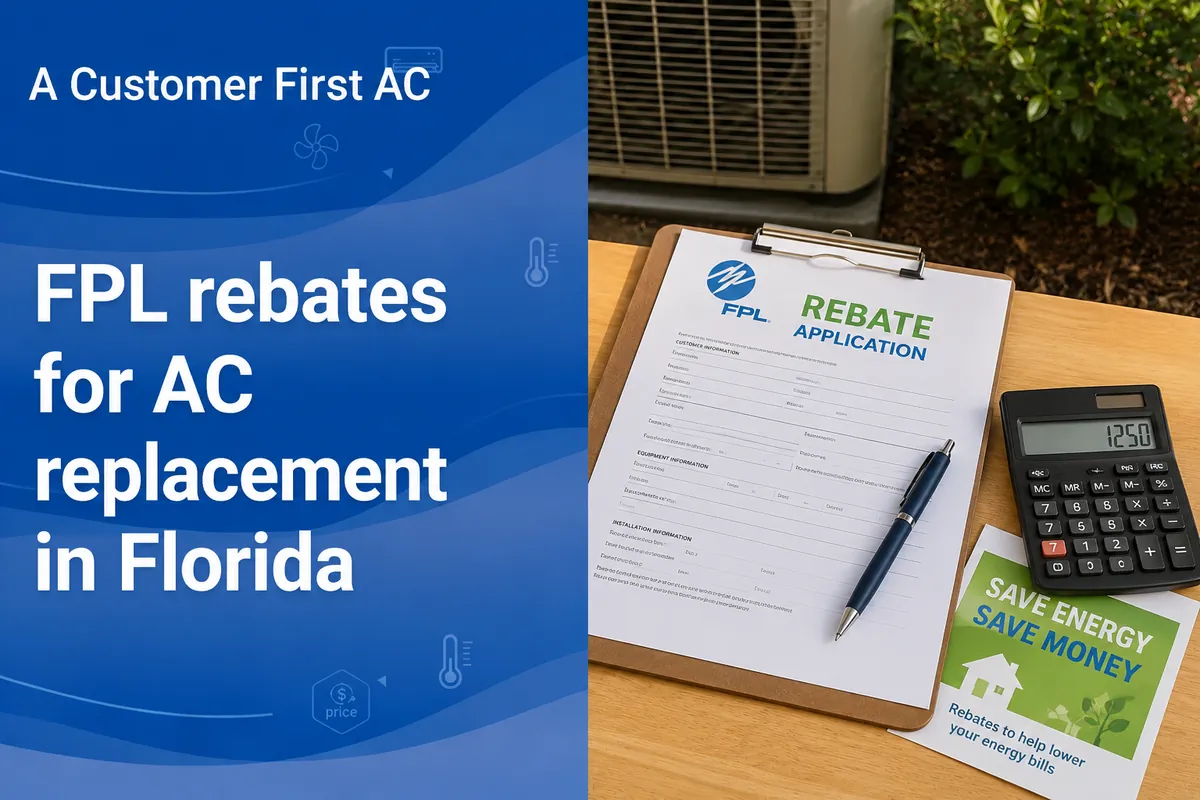
Replacing an air conditioner is one of the bigger home expenses a Florida homeowner runs into, and the FPL rebate is one of the few ways to take real money off the top. The catch is that the rebate only applies under specific conditions, and most people learn about those conditions after they have already signed for a system that does not qualify.
This guide breaks down how the FPL rebate for AC replacement works, what equipment and installers qualify, and why the efficiency tier you choose usually matters more to your wallet than the rebate itself.
If you are weighing a full replacement, it helps to first understand what actually shapes the cost of replacing an AC in Florida so the rebate fits into the bigger picture rather than driving the whole decision.
How the FPL Rebate Actually Works
FPL offers an instant rebate when you replace your old system with a qualifying high-efficiency one through a participating contractor. The word “instant” matters here.
Unlike older mail-in programs, the credit comes off your installation invoice at the time of purchase. You are not filing paperwork and waiting weeks for a check. The participating contractor handles the rebate submission, and you see the discount applied directly.
The rebate is tied to the equipment and the installer, not to you personally applying for anything. That is why the choice of who does the work decides whether the savings show up at all.
What Qualifies for an AC Rebate in Florida
The program is built around full-system replacements that meet a minimum efficiency rating. A few details decide eligibility, and missing any one of them takes the rebate off the table.
Minimum efficiency rating
The new system has to meet FPL’s SEER2 threshold. SEER2 is the current federal efficiency standard that replaced the old SEER rating, and Florida sits in the region with the highest minimum requirements because our cooling season runs nearly year-round. A unit below the threshold will not earn the credit, even if it is brand new.
Full system, not a partial fix
The rebate rewards replacing the whole system, indoor and outdoor units together. Swapping only the condenser, recharging refrigerant, or replacing an air handler on its own does not count. The program is designed to retire an aging system and put in a matched, efficient one.
Residential account and a participating installer
The home needs an active residential FPL account, and the install has to be done by one of FPL’s participating independent contractors. This is the requirement that trips people up most. A great price from a contractor outside the program still means no rebate.
Why Efficiency Matters More Than the Rebate
The rebate is a nice incentive. It is not the reason to upgrade.
The bigger payoff is on your monthly FPL bill. In a climate where the AC runs ten to twelve months a year, the gap between an old, low-efficiency system and a modern high-SEER2 one lands on your bill every single billing cycle. Cooling is the largest slice of most Florida electric bills, so a more efficient system keeps working for you long after the one-time rebate is forgotten.
This is also where sizing comes in. A high-efficiency unit that is the wrong size for your home wastes much of its advantage, which is why getting the right AC size for a Florida home is part of the same conversation as efficiency.
This might interest you: The AC brands and features that actually last in Florida – which efficiency tiers hold up to our heat and humidity.
Not sure which systems qualify for the rebate?
We will walk you through the efficiency tiers, confirm what your home qualifies for, and put it all in a no-pressure estimate.
How to Claim the Rebate Without Headaches
Because the rebate runs through the installer, your job is mostly about asking the right questions before the work starts.
Confirm three things up front: that the contractor participates in the FPL program, that the quoted system meets the SEER2 requirement, and that the rebate is already reflected in your written estimate. A contractor who handles this regularly will have answers ready and will show you the credit line by line.
Keep your final invoice and the equipment model numbers. If a question ever comes up about the rebate or the warranty, those documents settle it fast.
Before you sign, confirm:
- The installer participates in the FPL rebate program
- The system meets the SEER2 efficiency requirement
- The instant credit shows on your written estimate
- Indoor and outdoor units are being replaced as a matched set
Is a High-Efficiency Replacement Worth It for Your Home?
If your current system is more than a decade old, struggles through August, or needs a major repair, a high-efficiency replacement usually makes sense even before you factor in the rebate. The rebate just sweetens a decision the energy savings already support.
The right answer depends on your home, your current system, and how it is sized. A proper load calculation tells you which efficiency tier actually pays off versus where you would be overspending for ratings you cannot use. When you are ready, our team handles AC installation across South Florida and can confirm rebate eligibility as part of a free installation estimate.
Frequently Asked Questions
Do I have to apply for the FPL rebate myself?
No. The participating contractor submits the rebate and applies it as an instant credit on your installation invoice. You do not file separate paperwork or wait for a mailed check.
Does a repair qualify for the FPL rebate?
No. The rebate is for full-system replacements that meet the efficiency requirement. Repairs, refrigerant recharges, and single-component swaps do not qualify.
What SEER2 rating do I need to qualify in Florida?
Your new system has to meet FPL’s minimum SEER2 threshold, which is set higher in Florida than in cooler parts of the country. A qualified installer will confirm whether a specific system clears the line before you commit.
Can any HVAC company give me the FPL rebate?
Only contractors enrolled in FPL’s participating program can apply the instant rebate. A company outside the program may quote a lower price, but the rebate will not be available, which can erase the apparent savings.
Is the rebate worth it if my system still works?
If your system is aging or inefficient, the monthly savings from a high-efficiency replacement often outweigh the cost of keeping an old unit running, and the rebate lowers the upgrade further. A load calculation and an honest assessment of your current system give you the clearest answer.