English
  Français
  Español
  Русский


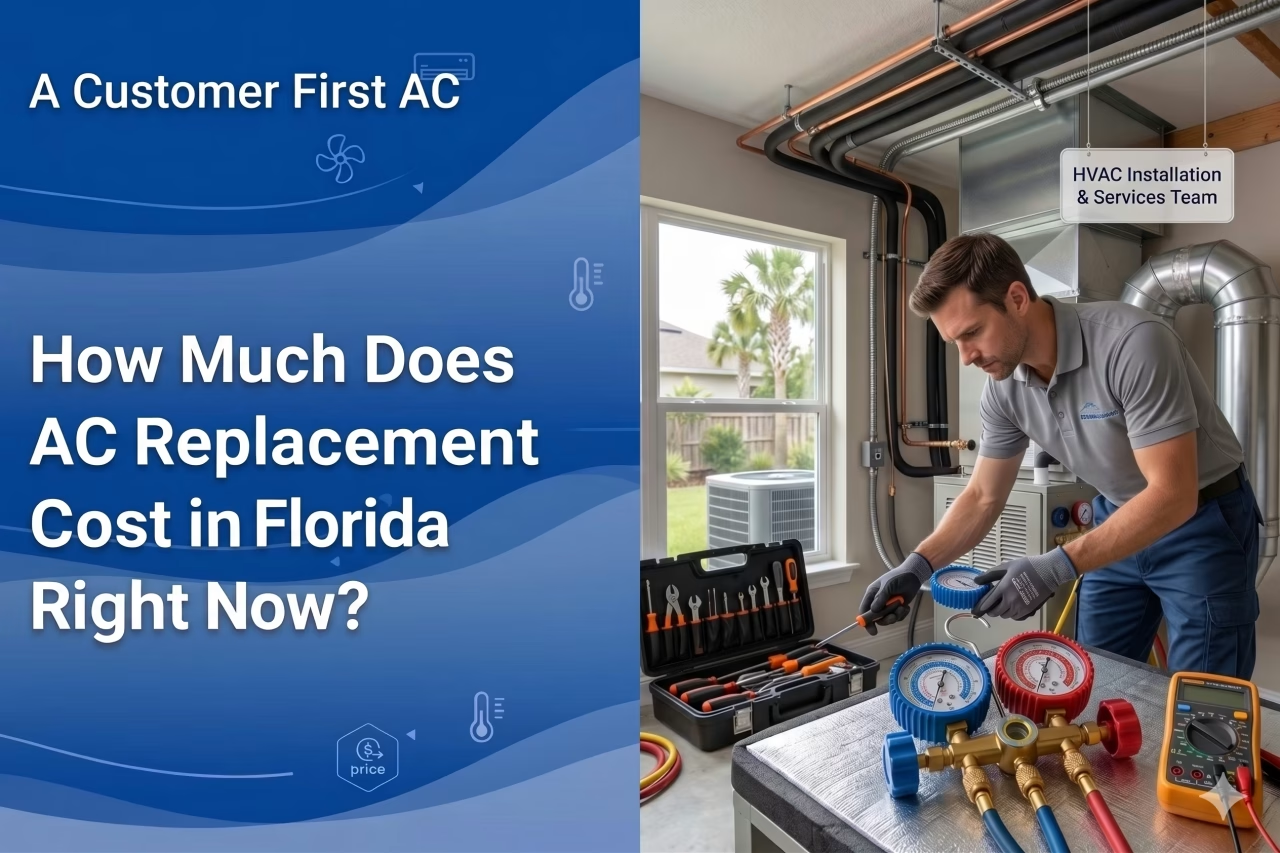
The ac replacement cost in Florida catches most homeowners off guard. Not because the equipment itself is exotic, but because the system runs harder, longer, and in conditions that wear through components faster than anywhere else. That changes the math on what a replacement should cost and what kind of system actually makes sense for a Florida home.
This page is about replacing a system that is still in the house: the whole job, equipment and labour together. If you are pricing the equipment on its own, the new AC unit cost guide covers that. If there is no ducted system yet, or the ducts are being redone, the number you want is in the central air installation cost guide.
Most homeowners start researching ac replacement cost in Florida after a repair bill crosses a certain threshold or the system hits double digits in age. Both are valid triggers. But the quotes that come back vary wildly, and without understanding what actually moves the number up or down, it’s tough to know whether you’re looking at a fair deal or paying for someone else’s overhead.
We’ve walked through enough replacements across Broward, Miami-Dade, and Palm Beach counties to know what separates a solid quote from one that’s missing half the job. If you’re comparing numbers right now, the factors below are what you should actually be paying attention to.
Why Florida AC Replacement Costs Don’t Match National Averages
Search “ac replacement cost” and you’ll find national averages everywhere. Those figures come from blended data that pools mild-climate states with places like ours, where the compressor barely gets a break between March and November.
Down here, your system runs ten to twelve months straight. The outdoor condenser sits in direct sun, salt air (if you’re near the coast), and rain that would rust a lesser unit in five years. Florida Building Code also requires specific efficiency minimums and hurricane-rated equipment in certain zones. All of that pushes the baseline cost higher than what a homeowner in a mild climate would pay.
There’s also the humidity factor. A system in Florida doesn’t just cool air – it has to strip moisture constantly. That means the compressor type, coil size, and airflow design matter more here than in a dry climate. A system rated for a dry climate won’t necessarily handle a July afternoon in Pembroke Pines where outdoor humidity sits at 85%.
The Factors That Actually Set Your Price
Every replacement quote is built from the same core components. The difference is how each contractor handles them.
System size and type
Florida homes typically need between 2.5 and 5 tons of cooling capacity. Sizing isn’t guesswork – it requires a load calculation that accounts for square footage, insulation, window exposure, ceiling height, and duct layout. An undersized system runs nonstop without reaching temperature. An oversized one short-cycles, never removes enough humidity, and wears out faster.
We see the oversizing problem constantly in Broward County. A previous contractor installs a 5-ton unit in a 1,600-square-foot home “just to be safe,” and the homeowner spends years wondering why the house feels cold but clammy. The correct tonnage for your specific home is the single biggest factor in how the system performs long-term.
Efficiency rating (SEER2)
Federal minimums for our region start at 15 SEER2. That’s the floor. Systems go up to 22+ SEER2 with variable-speed compressors.
Higher efficiency costs more upfront but cuts electricity bills significantly when you’re running AC year-round. The U.S. Department of Energy breaks down how efficiency ratings translate to real savings, and the difference is more dramatic in a climate like ours where the system barely shuts off.
Ductwork condition
This is where quotes diverge the most. If your existing ducts are crushed, leaking, poorly insulated, or undersized for the new equipment, they need attention. Some contractors ignore ductwork entirely to keep the bid attractive. Then the new system can’t deliver air properly, the house stays uncomfortable, and the homeowner blames the equipment when the real problem is six inches of collapsed flex duct in the attic.
Florida attics hit 140 to 150 degrees in summer. Duct insulation breaks down under that kind of heat, and any air leak in the attic means you’re cooling the roof instead of the living room. Homes built before 2000 in areas like Hollywood, Davie, and Coral Springs almost always have duct issues worth addressing during a replacement.
Electrical and code requirements
Older homes sometimes need a disconnect upgrade or breaker swap to handle modern equipment. Properties in Wilton Manors, Hollywood Lakes, and parts of Oakland Park built in the 1960s and 70s run into this more often.
Florida requires a building permit for every AC replacement, no exceptions. Broward, Miami-Dade, and Palm Beach counties each have their own fee schedule and inspection process, but the requirement is universal. The permit ensures a county inspector signs off on the installation, which protects your warranty and your home’s resale value. If a contractor suggests skipping the permit to save a few hundred dollars, that’s a red flag worth walking away from.
Single-Stage, Two-Stage, and Variable-Speed: What You’re Choosing Between
The compressor type drives both the upfront cost and the long-term operating expense. Understanding the difference keeps you from overspending on features you don’t need or underspending on a system that won’t keep up.
Single-stage compressors are the straightforward option. Full blast or off. They cost the least upfront and cool the house, but they cycle on and off frequently, which means higher electricity use and less control over indoor humidity.
Two-stage systems spend most of their runtime at a lower speed, only ramping up when the load demands it. That lower speed is where the real advantage shows up in Florida – the system runs longer at reduced output, which strips more moisture from the air. For a family home in Fort Lauderdale or Plantation, this is where most of our customers end up landing. Meaningful efficiency gains without the jump to premium pricing.
Variable-speed compressors are a different category entirely. The system modulates output continuously, running at 40% on a mild February morning and 95% during an August afternoon. Here’s what that means in practice:
- Consistent temperature from room to room, even in two-story homes
- Humidity stays where you set it, not where the weather decides
- The outdoor unit runs so quietly that neighbors won’t hear it
- Lowest electricity bills of any compressor type over the life of the system
The upfront cost is higher. But for homeowners in Weston, Parkland, or Boca Raton who plan to stay long-term, the electricity savings and comfort difference tend to justify the investment within a few years.
Ready to See What Your Replacement Would Cost?
We’ll evaluate your home, run a proper load calculation, and give you an honest quote with no surprises.
What Makes a Quote Trustworthy
Three quotes is standard advice. But the number on the bottom line means nothing if you can’t tell what’s included.
A solid quote lists specific model numbers for both the outdoor condenser and indoor air handler. It includes the thermostat, drain line, disconnect, permit fee, and labor. It specifies whether ductwork modifications are included or excluded. And it mentions the load calculation – because without one, the contractor is guessing at the system size, and that guess will cost you for years.
Warranty terms matter too. Most manufacturers offer 10-year parts coverage, but only if the system is registered within 60 days and installed by an authorized dealer. A non-authorized install can void coverage before you turn the system on. Labor warranties vary by contractor.
We stand behind our work with a full parts and labor warranty because the quality of the installation affects performance just as much as the equipment brand. Ask every contractor you’re considering what happens if something fails in year three – the answer tells you a lot.
If you’ve already been researching equipment options, our breakdown of what Florida homeowners are paying for a new AC unit covers specific pricing tiers and brand comparisons in more detail.
When Replacement Is the Right Call
Not every failing system needs to be replaced. A compressor capacitor, a contactor, or a blower motor can sometimes buy another few years at a fraction of the replacement cost – our breakdown of what shapes AC repair cost in Florida walks through which calls usually justify a fix. But there are clear situations where repair stops making financial sense. A failed compressor is the clearest example, and what drives an AC compressor replacement cost in Florida shows when a fix still pays off.
If the repair bill exceeds roughly half the cost of new equipment, replacement is the stronger move. Systems older than ten to twelve years that need frequent service calls are typically past the point of diminishing returns. And any unit still running R-22 refrigerant is on borrowed time – the refrigerant is no longer manufactured, supply is shrinking, and recharge costs keep climbing.
The efficiency gap also matters. An older 10-12 SEER system running alongside a modern 16+ SEER2 unit would cost hundreds more per year in electricity. Across five or six Florida summers, that penalty stacks up fast enough to offset a meaningful portion of the replacement investment.
Financing and Utility Rebates in Florida
Most HVAC companies in South Florida work with financing partners that offer promotional rates. Equal monthly payments over 36 to 60 months at low or zero interest are common. The key is confirming whether the offer is true 0% APR or deferred interest – with deferred interest, missing the payoff deadline triggers retroactive charges at rates above 20%.
FPL and other Florida utilities periodically offer rebates on high-efficiency equipment. The amounts change, but qualifying systems rated 16 SEER2 or higher have historically been eligible. Checking with your utility before signing a contract takes five minutes and can save a few hundred dollars.
This might interest you: the cost of installing central air here – how installation pricing comes together once repair stops making sense.
FAQ
What factors affect ac replacement cost in Florida the most?
System size, compressor type (single-stage vs. variable-speed), efficiency rating, ductwork condition, and permit requirements. The equipment itself is only part of the total – installation complexity and whether your home needs electrical or duct modifications can shift the final number significantly.
How do I know if my AC needs replacement or just a repair?
If the system is under eight years old and the repair is a minor one, fixing it usually makes sense. Once repair costs approach half the price of new equipment, the unit is over ten years old, or it still runs R-22 refrigerant, replacement typically delivers better long-term value.
Does a higher SEER2 rating actually save money in Florida?
Yes, more than in most states. Florida AC systems run nearly year-round, so the efficiency difference compounds faster. Moving from 15 SEER2 to 18 SEER2 can reduce cooling costs by 15-20%, which adds up to real savings over the life of the system.
Is a permit required for AC replacement in Florida?
Every time. Florida law mandates a building permit and inspection for HVAC replacements. Skipping the permit risks voiding your manufacturer warranty and creates problems if you sell the home.