English
  Français
  Español
  Русский


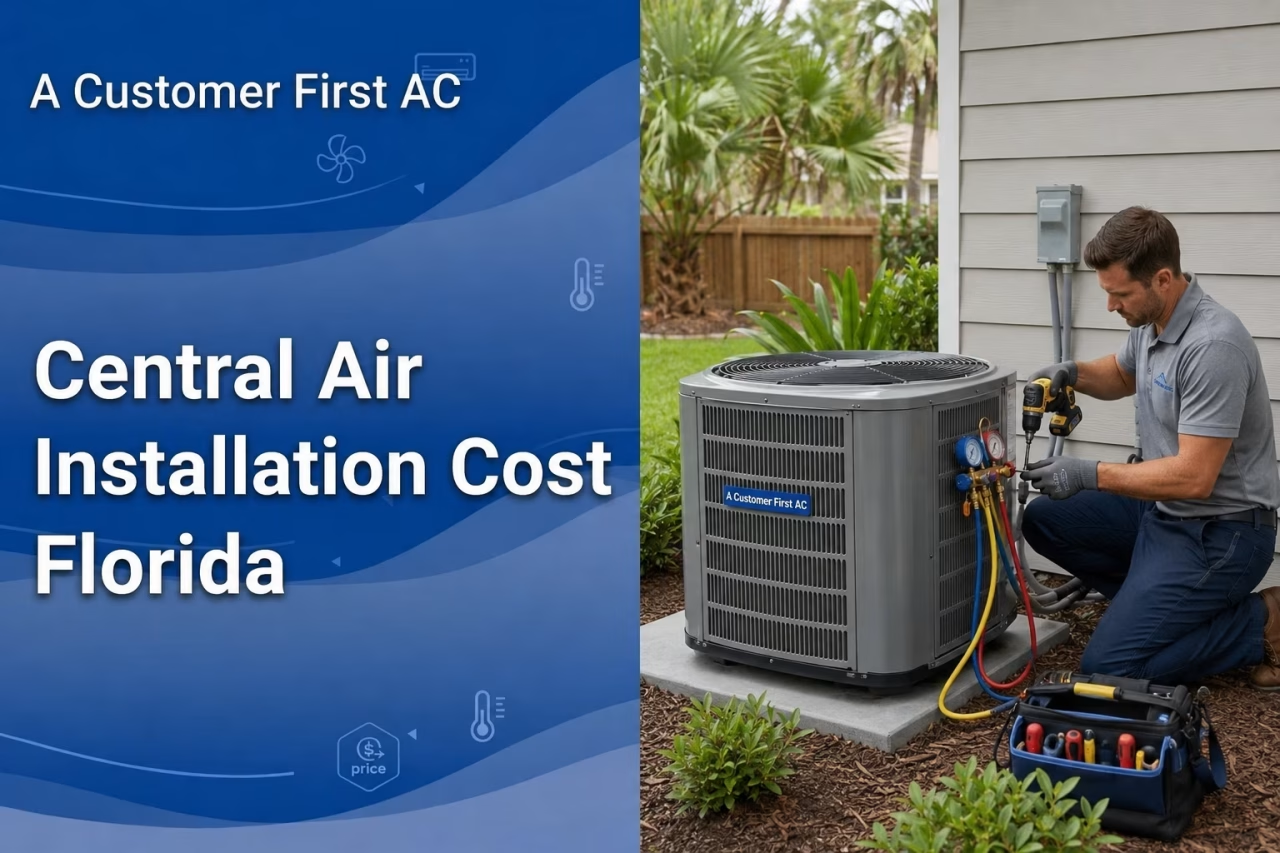
Central air installation cost in Florida spans a wider range than almost any other home upgrade. Two houses on the same street, same square footage, can land at very different numbers. The equipment is only part of the figure, and often not the part that moves it most. Ductwork condition, electrical capacity, and the county you live in pull the total around as much as the system does.
This one is about putting ducted central air into a house: the labour, the duct work, the permits and the code. If the system is already there and only the equipment is changing, the AC replacement cost guide is the page you want, and the equipment on its own is priced in the new AC unit cost guide.
No honest installer prices a system sight unseen.
This breakdown walks through every factor that shapes a central air installation quote in Florida, from tonnage and SEER2 rating to permit rules in Broward, Miami-Dade, and Palm Beach. If you are weighing a fresh system against nursing an aging one along, our look at what Florida homeowners pay for a new AC unit covers the equipment side of that decision.
Why No Two Florida Installation Quotes Match
National averages for central air installation blend mild-climate states with high-load regions, which makes them close to useless here. Florida systems run ten to twelve months a year, so the equipment, the ductwork, and the install labor all carry more weight.
The same square footage can call for different tonnage depending on insulation, window exposure, and ceiling height. A tight, shaded home in Plantation needs less cooling capacity than a sun-facing house of identical size near the water in Pompano Beach. Sizing is a calculation, not a number pulled off a chart. That is the first reason two quotes on the same block rarely match.
Phone quotes are guesses.
What Goes Into a Central Air Installation Quote
Every central AC installation estimate in Florida is built from a handful of variables. How they stack up against your home decides where the final number lands.
System size and tonnage
Cooling capacity is measured in tons, and a proper Manual J load calculation sets it. The math accounts for square footage, ceiling height, insulation, window count, and which way the house faces.
Oversizing is the most common mistake in Florida homes. A unit that runs too large short-cycles, never staying on long enough to wring humidity out of the air. The house ends up cool but clammy, which is the comfort complaint we hear most after a rushed install. Right-sizing matters more here than it does anywhere dry.
Efficiency rating (SEER2)
SEER2 is the current federal efficiency standard, and the South region floor sits higher than the national one. A higher-SEER2 system carries a larger upfront figure, then pulls down monthly FPL bills across a cooling season that barely pauses.
Variable-speed and two-stage compressors cost more, and they dehumidify better. In Florida, that second part is the one you feel.
Ductwork condition
This is the quietest swing factor in any central air installation quote. When the existing ducts are sound, the install proceeds on the equipment alone.
But if the home has no ducts, or the ducts are crushed, leaking, or mold-laden after years baking in a hot attic, new ductwork joins the project. Duct design and replacement can move the total more than the choice of equipment brand does. It is the line item homeowners least expect, and the one that most often explains a high quote.
Electrical and permit requirements
A new condenser and air handler may need a dedicated circuit, a breaker upgrade, or a disconnect that meets current code. Older homes around Hollywood and Fort Lauderdale sometimes need panel work before the system can even be energized.
Permit and inspection fees apply to every legitimate install, and they are not optional.
Equipment tier and accessories
Base, mid, and premium equipment lines differ in warranty length, sound levels, and compressor staging. Add-ons such as a smart thermostat, a whole-home surge protector, or UV air treatment also land on the quote.
The Florida Factors That Push Installation Higher
South Florida adds cost pressure that homeowners up north never see. Three factors push local central AC installation above the national figure.
Year-round runtime is the first. A system here logs more operating hours in three years than a Midwest unit does in five, so the spec leans toward durability and higher capacity from the start.
Salt air is the second. Homes east of US-1 in Hollywood Beach, Hallandale, and the barrier islands need corrosion-resistant condenser coils and coated cabinets, which begin at a higher equipment grade than inland homes ever require.
Code is the third, and it bites hardest in Miami-Dade. The county sits inside the High-Velocity Hurricane Zone, where outdoor units require rated tie-downs and approved mounting. That hardware, plus the inspection that signs off on it, lands on the install. There is no version of the job that skips it.
Ducted Central Air vs Ductless and What It Means for Your Quote
Most Florida homes run ducted central air, where one system feeds conditioned air through ducts to every room. When the ductwork is already there and sound, this is usually the most direct path.
Homes without ducts tell a different story, and so do additions, garage conversions, and older block houses. A ductless mini split setup skips the duct cost entirely and cools room by room. That can flip the math when building duct runs from scratch would otherwise dominate the project.
Neither option is automatically cheaper. The right one depends on what your home already has.
Get a real number for your home
Installation pricing depends on your home’s load, ducts, and county. Schedule an on-site visit for a written quote with no guesswork.
Permits, Code, and County Differences
Florida requires a permit for central air installation. The contractor pulls it, the work gets inspected, and the paperwork protects you when you sell the home later.
Broward, Miami-Dade, and Palm Beach each run separate fee schedules and inspection processes. A job in Boca Raton follows a different permit path than the same job in Miami Gardens.
Miami-Dade carries the strictest requirements, again because of the High-Velocity Hurricane Zone. Outdoor equipment must be anchored to approved standards, and the inspector verifies those tie-downs before the system passes. This is not the place to let a contractor cut corners.
Skipping the permit to shave the figure is a false saving.
Unpermitted equipment surfaces during a home sale and during insurance claims after a storm, and it costs far more to untangle then than it ever saved at install.
How to Get an Accurate Installation Number
A trustworthy central air installation quote starts with a technician inside your home, not a price read off the phone. The visit covers the load calculation, the ductwork inspection, and the electrical check that together produce a real figure. Anything quoted before that is a placeholder, and you should treat it as one.
Ask each company for an itemized written quote. It should name the equipment model and SEER2 rating, the ductwork scope, the permit, and what is excluded.
Our free on-site installation estimate includes the load calculation and a written breakdown, so you compare full quotes instead of round numbers. Three itemized quotes tell you more than three guesses ever will.
This might interest you: Best AC Unit for Florida: What Actually Works in South Florida – which systems hold up to year-round runtime and salt air before you pick a model.
Smart Ways to Control Central Air Installation Cost
The biggest savings come from getting the system right, not from buying the cheapest one. A correctly sized unit on sound ductwork outlasts and out-saves a bargain install that fights the home every summer.
Right-sizing protects you from paying for capacity you cannot use. An oversized system costs more upfront and leaves the house humid, which is the opposite of value in this climate.
Timing helps too. Demand spikes in the heat across Broward and Miami-Dade, so a planned swap in the cooler months finds more installer availability and fewer rushed corners.
After the install, maintenance is what protects the money you spent. Our AC installation team sets every system up to meet the warranty terms that depend on documented service, so the coverage you paid for stays valid. A skipped first-year tune-up is the quiet way homeowners void their own warranty.
FAQ
How much does central air installation cost in Florida?
There is no flat figure. The price depends on system size, SEER2 rating, ductwork condition, electrical work, and your county’s permit fees. Two homes of the same square footage can land far apart once the load calculation and duct inspection are done. The only accurate number comes from an on-site visit.
What size central air unit do I need for a Florida home?
Size is set by a Manual J load calculation, not square footage alone. Insulation, ceiling height, window exposure, and orientation all feed the result. Florida homes are especially prone to oversizing, which wrecks humidity control, so a measured calculation matters more here than any rule of thumb.
Is a higher SEER2 rating worth it in Florida?
Usually yes, because the cooling season barely stops. A higher-efficiency system costs more upfront and recovers part of that through lower FPL bills over thousands of annual runtime hours. The payback runs faster in Florida than in states where the AC sits idle half the year.
Do I need a permit to install central air in Florida?
Yes. Every county requires a permit and inspection, and Miami-Dade adds High-Velocity Hurricane Zone tie-down rules on top. A licensed contractor pulls it as part of the job.
Does adding new ductwork raise the installation cost a lot?
It can. If your home has no ducts, or the existing ducts are leaking, crushed, or contaminated, duct design and replacement become a significant part of the project. In some homes the ductwork moves the total more than the equipment choice does.
How long does a central air installation take?
Swapping equipment on sound ductwork is often a one-day job. Adding new ducts, electrical upgrades, or hurricane-zone mounting stretches the timeline. The on-site estimate gives you a schedule along with the quote.
Is ducted central air or a ductless mini split cheaper to install?
It depends on the home. When usable ducts already exist, ducted central air is often the direct path. When a home has no ductwork, a ductless mini split can avoid the cost of building duct runs from scratch.
Can I get an exact central air installation price over the phone?
No. Any company quoting a firm install price without seeing the home is estimating broadly. Accurate pricing needs the load calculation, duct inspection, and electrical check done on-site. For the equipment side of the decision, our breakdown of AC replacement cost in Florida shows what shapes the system figure itself.