English
  Français
  Español
  Русский


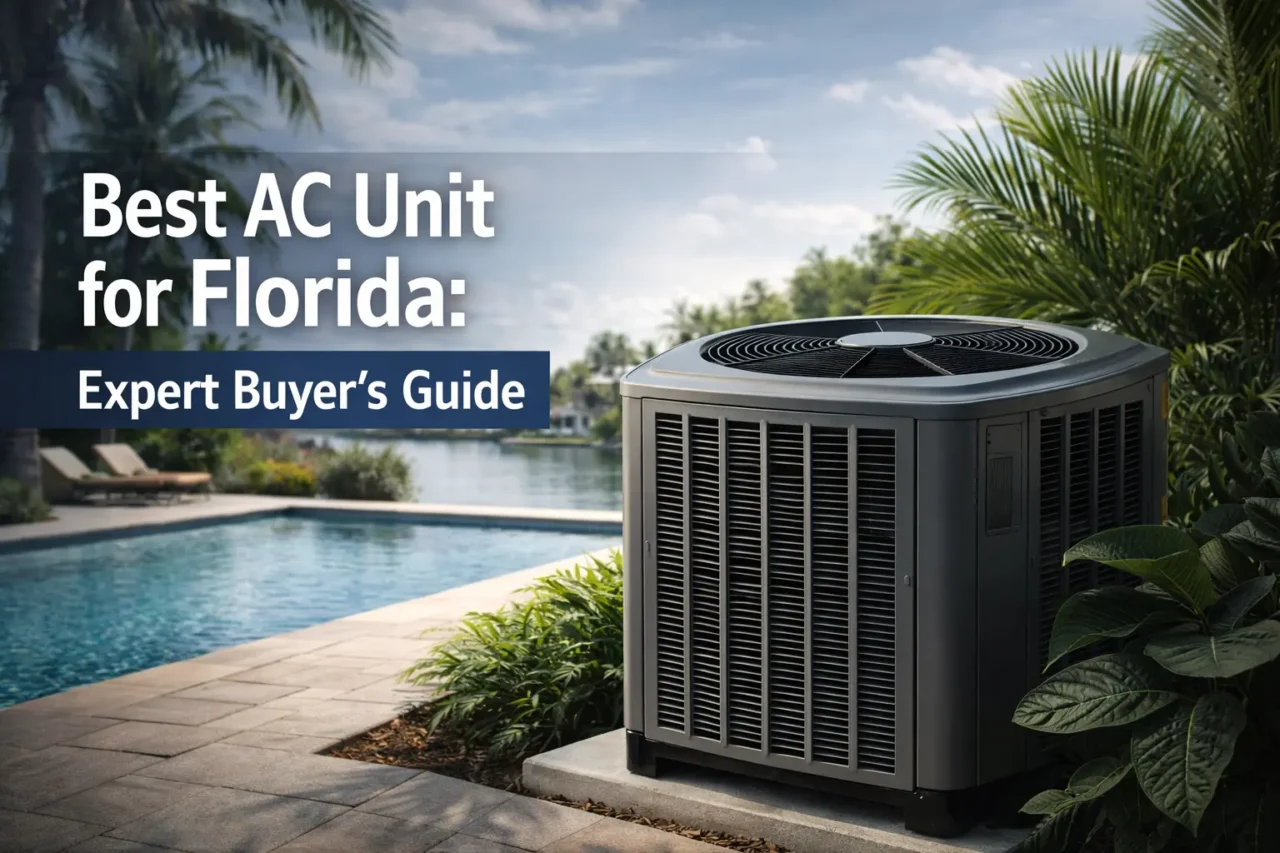
Not every air conditioner survives Florida. We install and replace systems across South Florida, and the ones that fail early almost always come down to the same thing – the homeowner picked a system built for a normal climate.
Florida is not a normal climate. Your AC runs most of the year against heavy humidity, salt air near the coast, and a long storm season. Choosing the best AC unit for Florida means choosing equipment built for what this state puts a system through, not whatever happens to be on sale.
Below is what we actually recommend to homeowners who ask us, and the sizing and humidity mistakes we see most often.
We install and replace these systems across Florida. If you want a straight answer for your own house rather than a spec sheet, call us or send the details.
Why Florida Is Harder on AC Systems Than Almost Anywhere Else
The average air conditioner in the US runs part of the year. In South Florida, yours runs most of it. That runtime wears every component faster – compressor, capacitors, contactors, coils, and fan motors all age quicker here than the manufacturer’s lifespan assumes.
Humidity is the second factor. Your AC cools the air and also pulls moisture out of it for hours at a time. A system without strong dehumidification runs nonstop chasing the thermostat while the house still feels damp. Near the coast, salt-laden air adds a third factor, corroding outdoor coils, electrical connections, and cabinet panels far faster than inland.
Storm season adds one more. High winds drive debris into outdoor units, and power surges when the grid comes back online damage control boards. Florida punishes air conditioners.
What to Look for in a Florida AC Unit
Buying an AC for South Florida is different from buying one anywhere else. These are the features that actually matter here.
SEER2 efficiency rating
The federal minimum for the Southeast region, which includes all of Florida, is 14.3 SEER2 for most residential split systems, roughly 15 on the older SEER scale. That is the legal floor, not the target. DOE’s purchasing guidance for the hot-humid Southeast lists 15.2 SEER2 as the ENERGY STAR level for a split system. Stepping up to 16-18 SEER2 lowers your FPL bills over a cooling season that runs most of the year, and the higher the rating, the larger that gap becomes. In a state where the system runs almost year-round, efficiency is not the place to cut.
Variable-speed vs. single-stage compressors
A single-stage compressor runs one way – full output or off. It cools the air fast, then shuts off before it can dehumidify, so the house hits the set temperature but still feels sticky.
A variable-speed compressor adjusts output to match the load. It runs longer at lower speeds, which pulls far more moisture from the air. Homeowners who switch almost always describe the house as drier, more even, and quieter. In Florida’s climate it is one of the most worthwhile upgrades available.
Humidity control and dehumidification
Some premium systems include dedicated dehumidification modes that prioritize moisture removal over temperature. That matters most during the shoulder seasons, when it is not blazing hot but the humidity is still heavy. Look for humidity-sensing thermostats or compatibility with a whole-home dehumidifier. In a Florida home, comfort depends on humidity control as much as temperature.
Corrosion protection for coastal homes
Near the coast, corrosion protection is not optional. Look for coated condenser coils, composite hardware, and corrosion-resistant cabinet finishes – most major brands offer a coastal package. The coating adds years to the life of an outdoor unit that would otherwise sit in salt air every day. Our breakdown of what salt air actually does to a coastal AC unit covers how to slow the corrosion down.
The Best AC Brands for Florida Homes
We install systems from every major manufacturer across South Florida. These are the five we recommend most, with an honest read on where each one fits.
Trane
Our top pick for Florida. The XV series uses a variable-speed compressor built for hard operating conditions, with strong humidity control and durable outdoor cabinets that hold up near the coast. The XR and S series cover the mid-range for homeowners who want Trane reliability without the top-line system.
Carrier
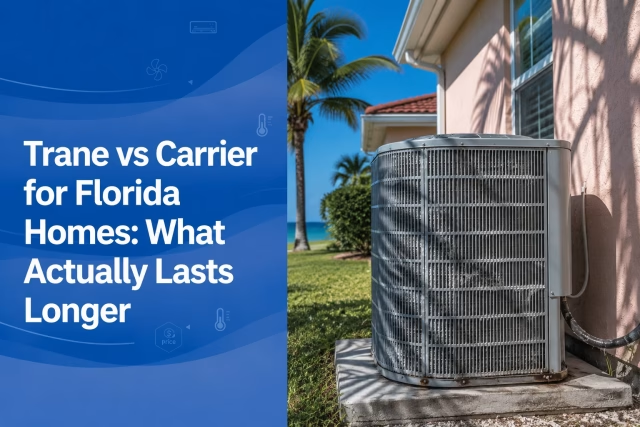
Carrier’s Infinity series with Greenspeed is the strongest humidity management package we install. The variable-speed compressor runs long, low cycles that strip moisture out of the air, and the Infinity thermostat lets you set a target humidity level the system manages on its own. The Performance series gives you variable-speed comfort a step below the Infinity line. Putting the two head to head is its own question, and our comparison of Trane and Carrier for Florida homes covers what decides which one survives coastal air.
Lennox
If efficiency is your single priority, Lennox is hard to beat – the SL28XCV is among the highest-rated split systems available. Its coil also resists formicary corrosion, the copper pitting common in humid coastal air. The catch is that Lennox is dealer-exclusive, so parts can take longer to source across South Florida.
Rheem
A favorite for coastal properties. Rheem’s Prestige series delivers variable-speed performance, and the brand includes composite base pans and coated coils across much of its lineup rather than only the premium tier – so coastal homeowners get corrosion protection without buying top-of-line. Rheem also builds Ruud, the same equipment under a different dealer network.
Goodman
When the budget is tighter, Goodman is the brand we recommend. The GSXC7 series offers variable-speed performance that is genuinely strong for the value tier, and Goodman is owned by Daikin, the largest HVAC manufacturer in the world. Build quality has improved a lot over the past decade, and we install them across South Florida without hesitation. Add the coastal coil package if you are near the water.
| Brand | Best for | Standout strength | Coastal protection |
|---|---|---|---|
| Trane | All-round Florida durability | Compressor built for hard runtime | Coastal package |
| Carrier | Humidity control | Greenspeed dehumidification | Coastal package |
| Lennox | Top efficiency | Highest SEER2 ratings | Corrosion-resistant coil |
| Rheem | Coastal value | Coated coils across the lineup | Standard on most models |
| Goodman | Tighter budgets | Variable-speed at value tier | Optional package |
Not Sure Which Brand Fits Your Home?
We look at your home, run the load calculation, and give you an honest recommendation – no pressure, no upselling.
Central AC, Heat Pump, or Ductless – Which Type Is Right for Florida?
Central air conditioners only cool, paired with an electric air handler for the few cold nights. This has been the South Florida standard for decades, and most homes here are already set up for it.
Heat pumps cool and heat from the same system by reversing the refrigerant cycle. In Florida’s mild winters they heat far more efficiently than electric resistance strips, with identical cooling in summer. The premium over a comparable straight AC is small, which makes a heat pump the smarter long-term choice for most South Florida homeowners.
Ductless mini-splits are the right answer for specific situations – converted garages, room additions, older homes without ductwork, or rooms the central system never reaches. For a home with existing ducts they are usually a supplement, not a whole-home replacement. ENERGY STAR’s guidance on ductless systems draws the same line: mini splits make sense for homes with no ductwork, additions and rooms with hot or cold spots, while homes that already have ducts may be better served by a ducted heat pump. You can read whether ductless mini split installation fits your situation.
What Size AC Does Your Florida Home Actually Need?
AC sizing is measured in tons, and the Florida rule of thumb is roughly one ton per 500-600 square feet. That is a starting point, not a final answer.
What most homeowners do not know is that oversizing is worse than undersizing here. An oversized unit cools the air too fast, shuts off before it can dehumidify, and leaves the house cold and clammy. The fix is not a bigger box – it is a correct one. A proper professional AC installation always starts with a Manual J load calculation that factors in insulation, window area, ceiling height, sun exposure, and ductwork. ACCA describes Manual J as the national ANSI-recognized standard for equipment sizing loads, and notes that a load calculation under it is required by national building codes and most state and local jurisdictions.
Questions to Ask Before You Sign
A quote shows what a contractor intends to install. These questions show how carefully the job was thought through, and they cost nothing to ask.
Was a Manual J load calculation done for my house?
Ask to see it. A size chosen from square footage alone is a guess, and a wrong guess is what leaves a new system running short cycles in a damp house.
Which exact models are going in?
The quote should name both the outdoor unit and the indoor coil or air handler, so you can confirm they are designed to work together as a matched pair.
What happens to my ductwork?
A new system on leaking or undersized ducts underperforms from day one. The quote should say whether the ducts are tested, sealed or left as they are.
Who pulls the permit?
An AC replacement in Florida normally needs a county permit and an inspection. Scheduling both should be the contractor’s job, not yours.
Is corrosion protection included?
If you live within a few miles of the water, a coastal coating or package belongs in the written scope, not in a verbal promise.
What does the warranty require from me?
Many manufacturer warranties depend on registration and professional installation. Ask what is required, who files it and by when.
What Actually Drives the Cost of a Florida AC
The brand on the cabinet is rarely the biggest line item. Three things move the number more than the badge does.
The first is the system tier – a single-stage budget unit and a variable-speed premium system are different machines, and the compressor type sets both the comfort and the price. The second is efficiency: a higher SEER2 rating costs more upfront and returns it through lower FPL bills over the system’s life. The third is everything around the equipment – the condition of your ductwork, whether the electrical needs updating, and the county permit. Older homes often need duct work the cheapest bid quietly leaves out.
That is why two quotes for the “same” house can look so different, and why no honest number exists without an on-site look. Our breakdown of what shapes a new AC unit cost in Florida walks through each driver. The lowest bid is rarely the best value – corners cut on ductwork or refrigerant charging show up in AC repair bills within a few years.
How to Make a Florida AC Last Longer
A quality system in South Florida should last well over a decade with proper care. Neglected, it gives you far less. The difference comes down to two things – how consistently you maintain it and how you handle storm season.
Maintenance schedule
We recommend professional AC maintenance twice a year in Florida, before cooling season and again in fall. A proper tune-up covers coil cleaning, a refrigerant check, electrical connections, and drain line inspection – clogged drains are the single most common service call we get. Between visits, change the filter on schedule and keep debris clear of the outdoor unit.
Hurricane season preparation
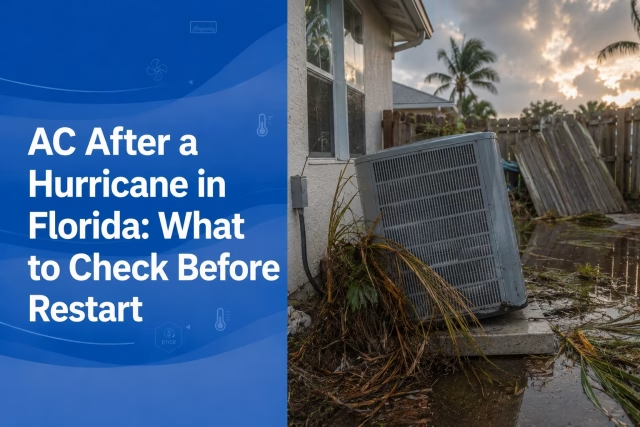
Before a storm, shut the system off at the thermostat and breaker, and make sure the outdoor unit is bolted or strapped to its pad. Do not cover it with a tarp – trapping moisture underneath does more harm than the rain. After the storm, inspect for bent fins, a shifted position, or standing water before restoring power. If the unit was submerged, call a professional before turning it on, since running a flood-damaged compressor can destroy the system and void the warranty. The same discipline applies to the yard: Ready.gov’s hurricane guidance tells homeowners to de-clutter drains and gutters and bring outside furniture in, and a clear yard gives the wind less to throw at the outdoor unit.
Ready to Choose a System?
We come out, look at the ducts and the electrical, size the equipment for your house, and give you a clear, obligation-free estimate for the installation.
FAQ
What is the best AC brand for Florida?
Trane is our top recommendation across South Florida. Its variable-speed systems handle humidity, salt air, and year-round runtime better than most. Carrier is a close second when humidity control is the priority, and Goodman delivers solid reliability for budget-conscious homeowners.
What SEER rating do I need in Florida?
The federal minimum for Florida is 14.3 SEER2 for most residential split systems, roughly 15 on the older SEER scale. We recommend targeting 16-18 SEER2 for meaningful savings given the long cooling season, and higher if you plan to stay in the home long term. The extra efficiency pays back through lower FPL bills over the years the system runs.
How long does an AC unit last in Florida?
Well over a decade with proper maintenance. Neglected systems, or budget units near the coast without corrosion protection, fail much sooner. Twice-yearly professional maintenance is the single biggest factor in reaching full lifespan.
What size AC unit do I need for my Florida home?
Start with one ton per 500-600 square feet, but always get a Manual J load calculation before buying. Ceiling height, insulation, window count, and sun exposure all shift the number. Oversizing is a common and costly mistake here – it causes short cycling and poor humidity control that leaves the house clammy regardless of the thermostat setting.
Is a heat pump better than an AC in Florida?
For most South Florida homes, yes. A heat pump gives identical cooling plus efficient heating through Florida’s mild winters for a small premium over a comparable straight AC. Unless you already have gas heat, which is uncommon here, a heat pump is the smarter long-term choice.
What type of AC is best for Florida humidity?
Variable-speed or inverter-driven systems. They run at lower speeds for longer periods, pulling far more moisture from the air than single-stage units that cycle on and off. Pairing one with a humidity-sensing thermostat improves dehumidification further.
How do I protect my AC during hurricane season?
Shut the system off at the thermostat and breaker before a storm, and make sure the outdoor unit is strapped or bolted to its pad. After the storm, inspect for damage before restoring power. Install an HVAC-rated surge protector before the season – grid surges are a top cause of post-storm AC failures in South Florida.