English
  Français
  Español
  Русский


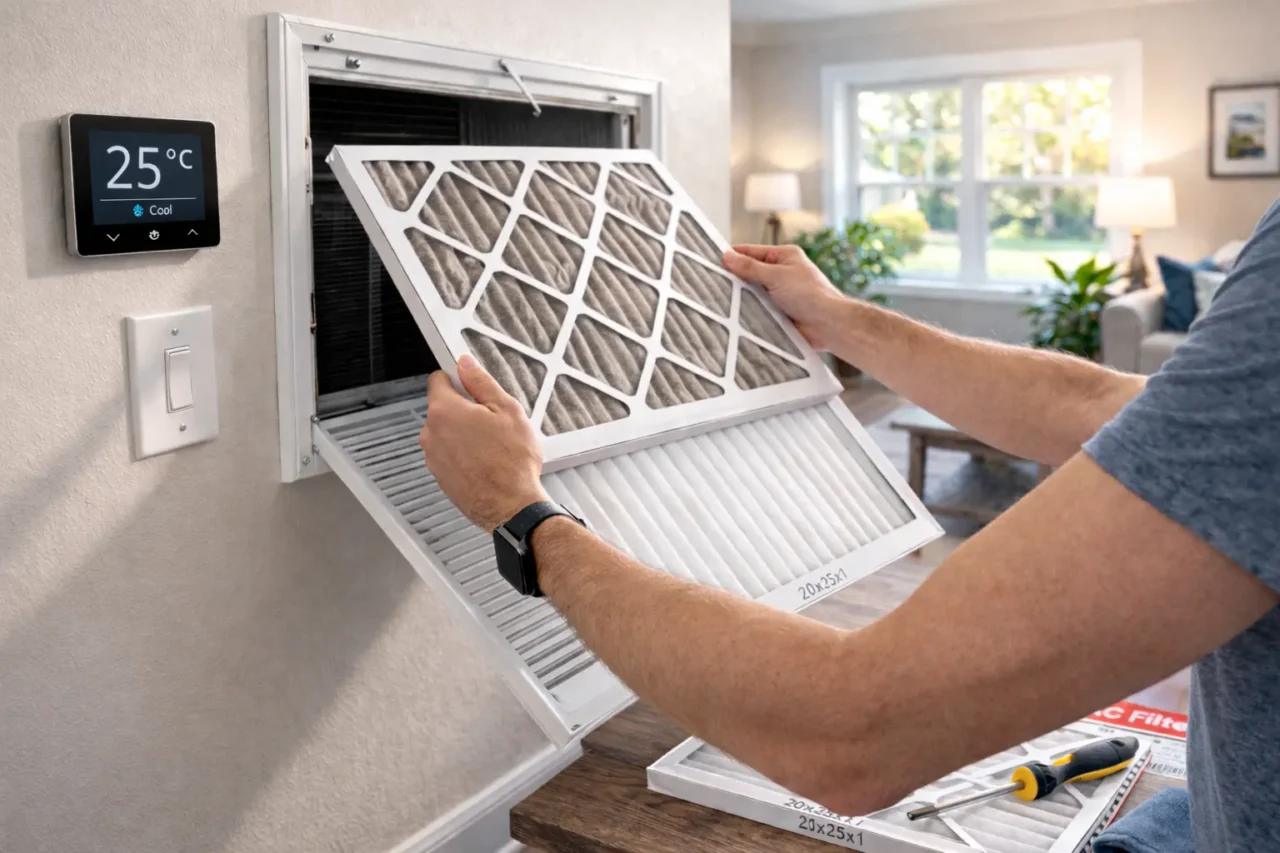
In Florida, your AC doesn’t really get a long break. Heat, humidity, and long run time mean one simple habit makes a big difference: changing your AC filter on time. A clean filter helps your system breathe, keeps airflow steady, and can make the home feel less dusty and less “sticky.”
For most Florida homes, a realistic answer is this: change your AC filter every 30 to 60 days, then adjust based on what you see and how your household lives.
Why Florida Filters Usually Need More Attention
Florida isn’t a “normal” climate for HVAC. Your system often runs more months per year, and humidity can make fine debris cling and build up faster inside the filter. During allergy seasons, pollen adds extra load, and day-to-day life—pets, kids, frequent door openings—can fill a filter sooner than expected.
When the filter gets packed, airflow drops. Lower airflow makes the AC work harder to move the same amount of air through the system, which can show up as longer run times and uneven cooling around the home.
The Best Filter-Change Frequency for Most Florida Homes
There’s no one schedule that fits every home, but these ranges match real Florida conditions.
Every 30 days
Monthly changes make sense if your AC runs most of the day, you have pets that shed, someone in the home has allergies, or you notice dust building up quickly. Many homeowners also benefit from monthly changes during peak summer heat, when the system is running almost constantly.
Every 45–60 days
This is the sweet spot for many Florida households. If you don’t have heavy shedding pets, keep windows mostly closed, and your home doesn’t collect dust fast, this range usually keeps airflow stable without wasting filters.
Up to 90 days
Some homes can stretch it, but it’s less common in Florida. If you want to go longer, the filter must still look reasonably clean, and airflow should feel strong at the vents. If comfort drops, don’t wait for the calendar—replace it.
Signs You Should Replace the Filter Sooner
Sometimes the filter looks “fine” until it’s not. The AC can give you quiet hints first.
If rooms take longer to cool, airflow feels weaker, the system seems to run forever, or the home feels more humid than usual, the filter is one of the first things to check. Replacing it is a fast, low-cost step that can immediately improve airflow.
If you’re changing filters correctly but still see performance issues, it’s often worth having a tech look over the system, and a seasonal visit like AC maintenance can catch small problems before they turn into expensive ones.
What Happens If You Wait Too Long
A dirty filter doesn’t usually “break” the AC in one day. The real issue is what happens slowly over weeks.
Reduced airflow makes the system work harder and longer. That can raise energy use and wear down parts faster. In some cases, poor airflow can contribute to comfort problems that feel like “the AC isn’t keeping up,” even though the thermostat is set low.
The Florida factor is humidity—when airflow is weak, the home can feel clammy even when temperature looks good on the thermostat.
Choosing a Filter That Won’t Hurt Airflow
A lot of people think the highest-rated filter is always best. In reality, the best filter is the one that balances particle capture and airflow for your system.
If you choose a very restrictive filter, airflow can drop faster, especially as the filter loads up. If you’re not sure what your system can handle, it’s safer to use a solid mid-range filter and replace it consistently rather than choosing the most restrictive option and forgetting about it.
For a clear, non-sales explanation of indoor air basics and filtration, the EPA’s guide to indoor air quality is a strong reference: EPA Indoor Air Quality (IAQ).
Florida Situations That Change the Schedule
Two homes in the same neighborhood can have totally different filter timelines.
Pets usually mean more frequent changes. Allergy concerns often mean you’ll either change filters more often or be more careful about choosing the right type. Renovations, new flooring, or even a period of heavy cleaning can temporarily load up a filter much faster than normal.
If you’re consistently seeing heavy buildup, it can also point to airflow issues, leaky ducts, or a return setup that pulls in extra dust.
When that happens, it’s not just about changing the filter—your system may need airflow work, and services like Air Duct Cleaning can help remove built-up dust and debris that keeps circulating through the home.
Where the Filter Sits Matters More Than People Think
In many homes the filter is at a return grille, while others have it near the air handler. Either setup can work well, but the filter must fit correctly.
If there are gaps around the edges, some air can bypass the filter and carry dust into the system anyway. That’s one reason people change filters but still feel like the home gets dusty quickly.
If you don’t want to guess the size or deal with tricky access, it can be easier to schedule filter replacement service so the correct fit and installation are handled properly.
For extra guidance on filter selection and airflow, Energy Star has a helpful homeowner resource on HVAC efficiency and comfort: ENERGY STAR Heating & Cooling Tips.
When a Filter Change Isn’t Enough
If you’re changing filters on time and the AC still struggles, the problem is usually somewhere else—like coil buildup, drainage issues, duct leakage, or system settings that need adjustment.
At that point, it’s smarter to address the root cause than to keep forcing the AC to run longer. You can always start from the home page and choose the service that matches your situation on AC Customer First AC.
Professional vs DIY Filter Replacement
Some homeowners replace filters themselves, which can work for standard units. But professional replacement ensures:
-
Correct filter size and type for your air handler.
-
Full inspection of airflow and coil condition.
-
Recommendations for high-efficiency filters if needed.
-
Peace of mind that the system is operating at peak performance.
If you’re unsure about which filters to use or want to maximize system efficiency, professional service is the safer choice, and a conversation about filtration options for your system is a good place to start.
FAQ
How do I know my AC filter is too dirty?
If the filter looks gray, feels heavy, or you can’t easily see light through it, it’s time to replace it. Many people also notice weaker airflow from vents or longer cooling times when the filter is clogged.
Is it okay to change my filter more often than recommended?
Yes. Replacing a filter early is usually harmless and can be helpful in Florida during peak heat, allergy seasons, or if you have pets. The bigger risk is waiting too long and letting airflow drop.
Can the wrong filter make my AC run worse?
It can. A very restrictive filter can reduce airflow, especially as it loads up. If you’re unsure, choose a moderate filter and replace it consistently.
Does changing the filter help with humidity?
It can help indirectly. A clean filter supports proper airflow, which helps the AC operate the way it was designed. But if humidity stays high even with clean filters, there may be other airflow or duct issues.
How often should I check the filter if I’m not sure?
If you’re new to the home or just changed your routine, check it after two weeks once or twice. You’ll quickly learn how fast it loads up in your specific house.