English
  Français
  Español
  Русский


When little or no air comes out of the vents, the problem is the airflow itself, not just the temperature. The system may be trying to cool, but the air is not moving through the house – and in Florida’s heat, a home with no airflow warms up fast.
This is a different complaint from weak cooling, where air blows but never gets cold. Here the air is missing or barely there, and the causes sit on the airflow side of the system: the filter, the blower, the coil, or the ducts.
Why Is My AC Not Blowing Air?
Air reaches your rooms through a chain – the blower pulls it across the coil and pushes it through the ducts and out the vents. A blockage or failure anywhere along that chain shows up as weak or no airflow. The most common breaks are a clogged filter, a frozen coil, a failing blower motor, or duct trouble.
Start at the easy end. Two of the four causes you can check yourself in minutes.
A Clogged Filter or Closed Vents
A severely clogged filter is the simplest cause. When it loads up, it chokes airflow to a trickle, and Florida’s dust and pollen clog filters faster than the calendar suggests. Replacing it can restore airflow on the spot, and ENERGY STAR’s heating and cooling guidance suggests checking the filter monthly in heavy-use seasons and changing it at least every three months, sooner if it looks dirty. In a home with shedding pets the filter loads up faster still, which is where a filter chosen with pets in mind earns its place.
Blocked or closed supply vents do the same thing on a smaller scale. Furniture over a vent, closed registers in unused rooms, or a blocked return all cut the air the system can move. Walk the house and make sure every supply and return vent is open and clear.
A Frozen Evaporator Coil
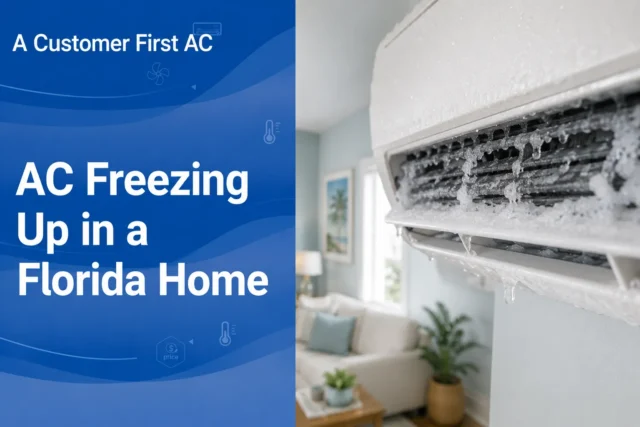
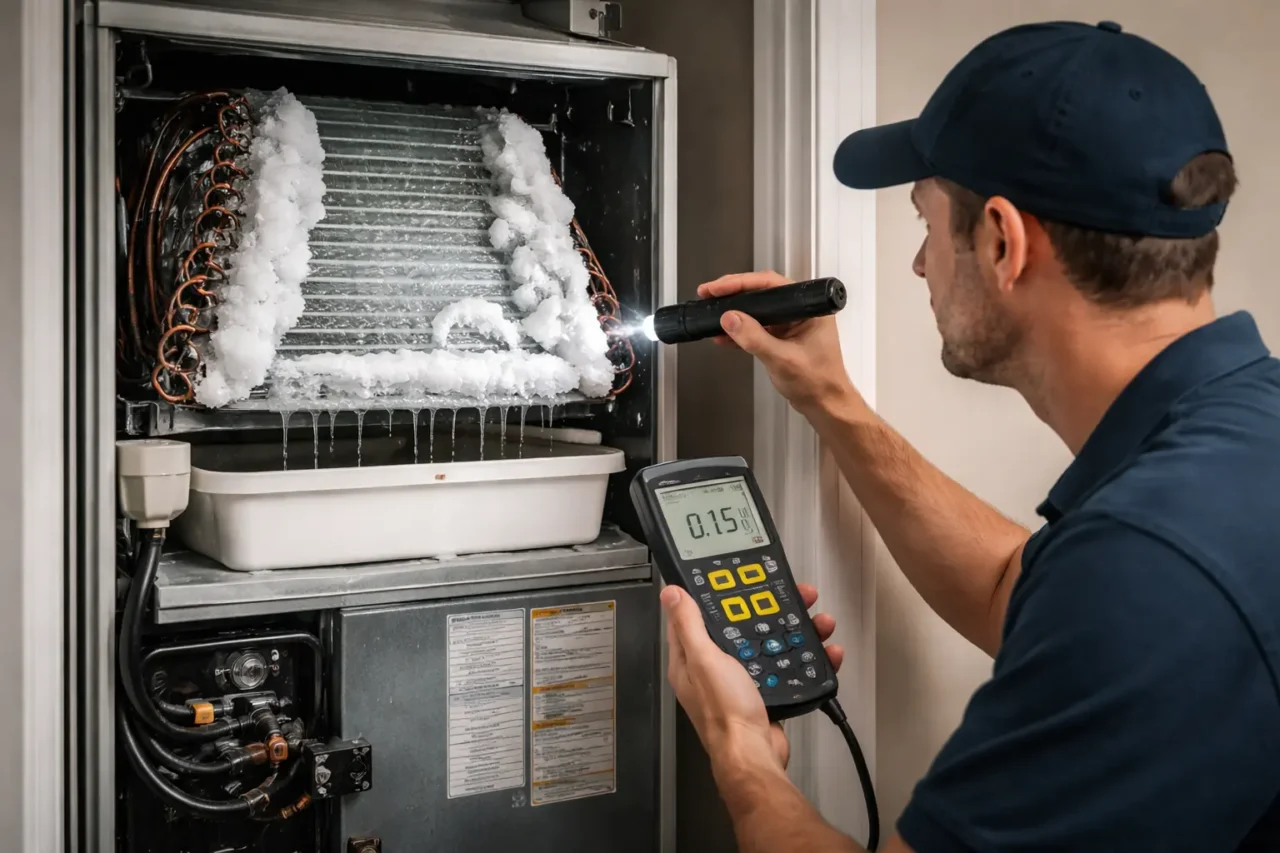
A coil encased in ice blocks the air from passing through it, so the vents go weak or dead even while the system runs. Ice forms from low airflow or low refrigerant, and Florida’s humid air builds the layer fast.
The first step is to switch the system to fan-only and let the coil thaw, then replace the filter. If it freezes again, the cause runs deeper than airflow – usually a refrigerant or coil problem, and our guide on spotting low AC refrigerant covers the charge side of it.
Still No Air From the Vents?
If a fresh filter and open vents do not bring the airflow back, the blower or the ducts need a look. We will find it fast.
A Failing Blower Motor
The blower motor is what actually moves the air. When it fails, weakens, or its capacitor gives out, airflow drops or stops while the rest of the system seems to run. A blower that hums but will not spin often points to a failed capacitor, the same heat-stressed part behind many Florida breakdowns.
Leave that one to a pro.
This one is not a do-it-yourself fix. A blower motor or its capacitor needs a technician, and the capacitor holds a charge even with the power off.
Duct Problems
Sometimes the air is moving but never reaches the rooms. A disconnected duct in the attic dumps cooled air into the attic instead of the house, and crushed or leaky ducts bleed away the pressure that pushes air through the vents. The result is weak airflow at the registers even with a healthy blower.
This might interest you:when your AC blows warm air – a frozen coil and a few other faults can cause both weak airflow and warm air at once.
How to Keep the Air Flowing
Most airflow problems trace back to a neglected filter or an overdue tune-up. Changing the filter on schedule keeps the blower breathing, and a seasonal service visit checks the blower, the capacitor, and the ducts before a hot week turns into a no-air emergency.
FAQ
Why is my AC not blowing air in my Florida home?
Usually a clogged filter, a frozen evaporator coil, a failing blower motor, or duct trouble. Start by replacing the filter and opening all the vents, and check for ice on the coil. If airflow is still weak, the blower or ducts need a technician.
Why is the fan running but no air is coming out?
If the blower runs but little air reaches the vents, the coil may be frozen or the ducts may be disconnected or leaking in the attic. A frozen coil blocks airflow; a duct problem lets the air escape before it reaches the rooms.
Can a frozen coil stop airflow?
Yes. A coil covered in ice blocks air from passing through, so the vents go weak or dead. Switch the system to fan-only to thaw it, replace the filter, and if it freezes again, have the refrigerant charge checked.
Is a weak airflow problem something I can fix myself?
You can replace the filter, open blocked vents, and thaw a frozen coil with the fan. A failing blower motor, its capacitor, or duct repairs need a technician – the capacitor in particular holds a charge even with the power off.
When should I call a technician?
If a fresh filter and open vents do not restore airflow, or the blower hums without spinning, call. The same goes for a coil that keeps freezing. Schedule a diagnostic to find where the airflow is being lost.