English
  Français
  Español
  Русский


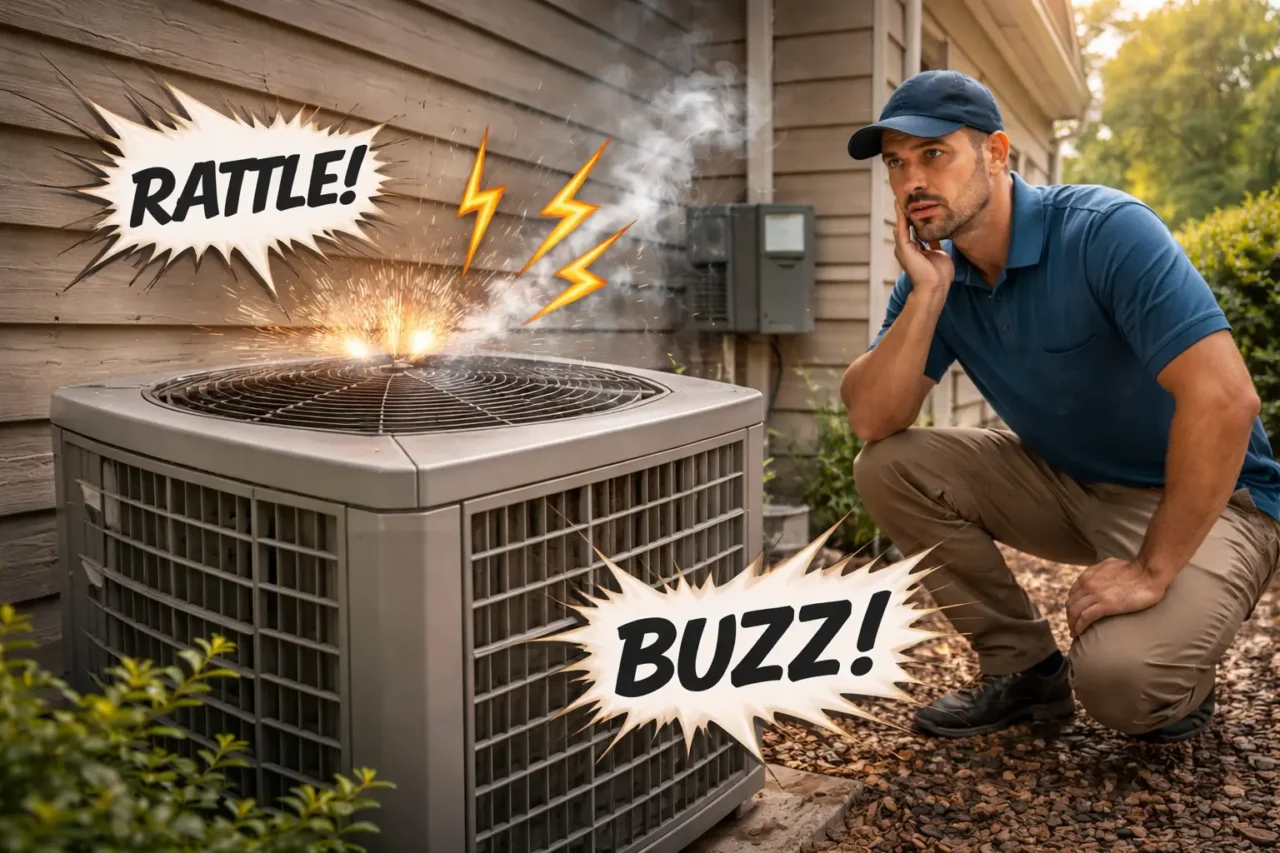
A new sound from your AC is the system telling you something changed. Some noises are harmless. Others are the early warning before a breakdown, and in a Florida summer the gap between catching it early and ignoring it can be the difference between a small repair and a dead compressor.
The key is matching the sound to its source. Each kind of noise – rattling, buzzing, humming, grinding, screeching, banging, clicking – points to a different part, and a different level of urgency.
Why Is My AC Making Noise?
Most AC noise comes from one of three places: the outdoor condenser, the indoor air handler, or the ductwork that carries the air. Florida’s year-round runtime wears parts faster, so sounds that might take years to develop elsewhere show up sooner here.
What matters is whether the sound is new, getting louder, or paired with weak cooling. Any of those deserves a look before the season peaks.
The sound is the clue. Match it to the part.
Rattling and Buzzing
A rattling AC is often the least serious – loose hardware, a panel that needs tightening, or twigs and debris inside the outdoor unit. It can also be a sign of a failing fan motor or loose electrical components, so rule out the simple causes first.
Buzzing usually points to electrical trouble. A buzzing outdoor unit can mean a failing capacitor, a loose connection, or a contactor on its way out. Because a weak capacitor is one of the most common failures in Florida heat, a persistent buzz is worth a service call before it leaves you without cooling on the hottest day.
Humming, Clicking, and Banging
A steady hum is often normal operation. A loud hum with the system not starting can mean the compressor or a motor is struggling to start, frequently a capacitor issue.
Clicking at startup and shutdown is normal. Constant clicking while running points to a relay or thermostat fault. Banging or clanking is more serious – it usually means a loose or broken part inside the compressor, and that calls for shutting the system off and having it inspected before more damage spreads.
Grinding and Screeching
Grinding means metal on metal, usually worn motor bearings in the blower or condenser fan. Left alone, the motor seizes and takes the cooling with it. Screeching or squealing can be a failing motor bearing as well, or in older systems a belt, and a high-pitched hiss is a separate concern entirely.
A hiss or bubbling sound often signals a refrigerant leak. Because a low charge always means a leak rather than normal use, that sound is worth catching early – it ties directly to the warning signs in our guide on spotting low AC refrigerant.
Hearing Something That Worries You?
We will track down the source on-site and tell you whether it is a quick fix or something that needs attention now.
When a Noisy AC Is an Emergency
Not every sound needs a same-day call, but a few do. A loud bang, grinding metal, or a burning smell with the noise means shut it down now. A buzzing unit that will not start, or a hiss with warm air, should be looked at before you run the system again.
The pattern matters too. A sound that appears only on the hottest afternoons often points to a heat-stressed electrical part – exactly the kind that fails completely when the load peaks. Catching it during the noise stage is far cheaper than after it quits.
This might interest you:when your AC runs but will not cool – several of the same parts behind a noisy unit also show up as weak cooling.
How to Prevent AC Noise
Most noise traces back to wear that a tune-up would have caught. ENERGY STAR recommends a yearly tune-up for heating and cooling equipment, and a seasonal service visit tightens hardware, checks the capacitor and contactor, and catches a worn bearing before it grinds. Keeping the outdoor unit clear of debris stops the rattles that come from twigs and leaves inside the cabinet. If you would rather not live with the noise at all, choosing a system designed to run quietly is the other route.
FAQ
Why is my AC making a loud noise in Florida?
It depends on the sound. Rattling is often loose hardware or debris, buzzing points to an electrical part like the capacitor, grinding means worn motor bearings, and banging suggests a loose component in the compressor. A hiss with weak cooling can be a refrigerant leak. New or louder sounds are worth a look before peak heat.
Is a humming AC normal?
A steady, quiet hum during operation is usually normal. A loud hum with the system failing to start often means the compressor or a motor is struggling, frequently a capacitor problem worth checking.
What does a buzzing AC mean?
Buzzing usually signals an electrical issue – a failing capacitor, a loose connection, or a worn contactor. Since capacitors fail often in Florida heat, a persistent buzz is worth a service call before the system quits on a hot day.
Should I turn off my AC if it is making a grinding or banging noise?
Yes. Grinding metal or a loud bang means a part is failing or already broken, and running the system through it can destroy the motor or compressor. Shut it off at the thermostat and have it inspected.
When should I call a technician about AC noise?
Call promptly for grinding, banging, a buzzing unit that will not start, or a hiss paired with warm air. A rattle or a normal hum can wait for a scheduled visit. Book a diagnostic when a sound is new, loud, or getting worse.