English
  Français
  Español
  Русский


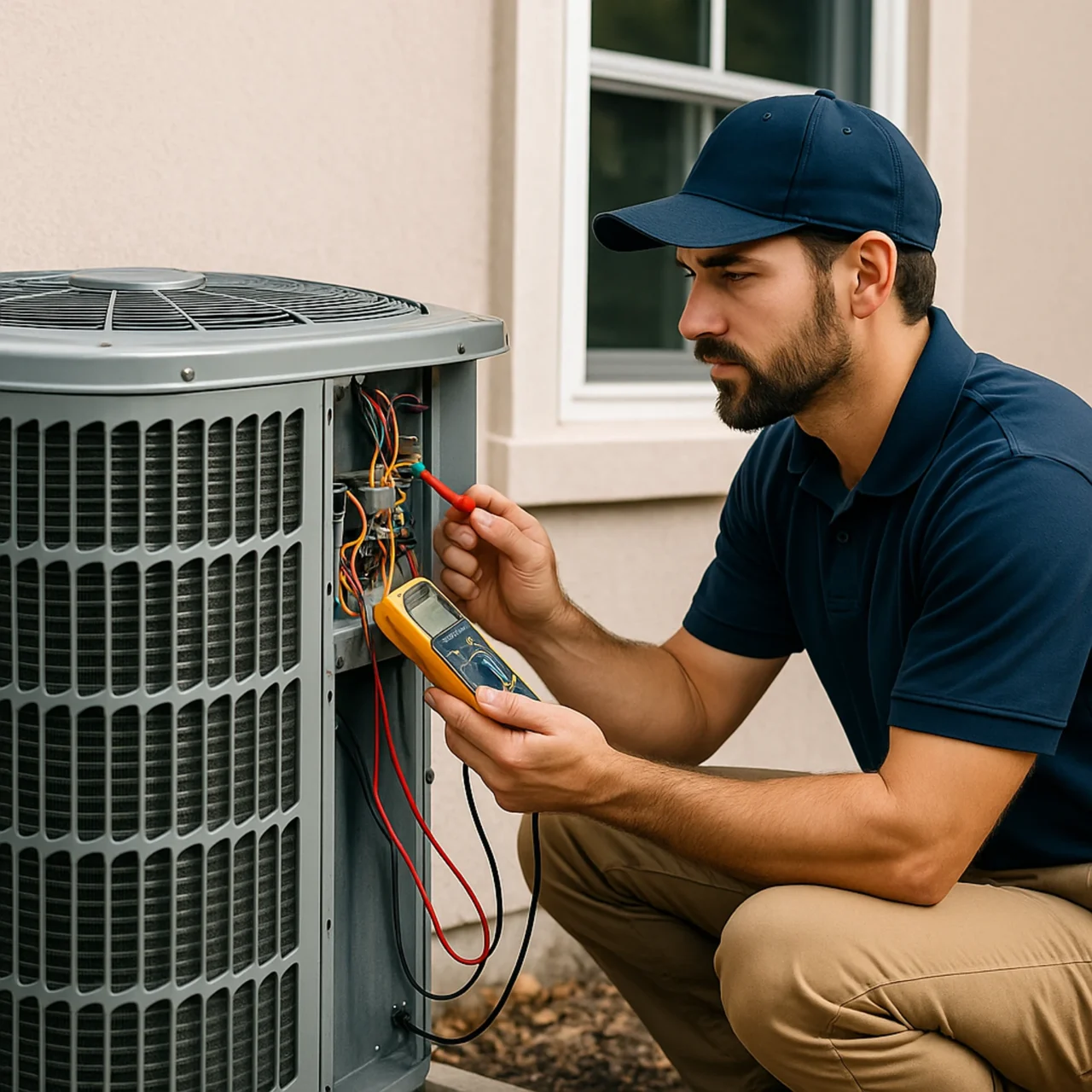
Your air conditioner’s compressor is the heart of the entire cooling system. When it fails, everything else stops working — airflow decreases, indoor temperatures rise, and energy bills spike. Understanding the most common AC compressor problems and how to deal with them can save you time, stress, and expensive repairs.
In South Florida the compressor works on a schedule the manufacturer never planned for: roughly eleven months of the year, against a coil that collects salt and leaf litter. Wear a northern system spreads over a decade arrives here in five, which is why most of the failures below show up on Broward and Miami-Dade systems well before their nameplate life is up.
Whether you own a central air system or a ductless mini-split, the compressor’s job is to circulate refrigerant between the evaporator and condenser coils, allowing heat to move from inside your home to the outdoors. When this essential process is interrupted, the result is poor cooling performance and strain on your HVAC unit.
What Does the AC Compressor Do?
Before diving into problems, it’s important to understand how the compressor functions. It acts as the “pump” that pressurizes refrigerant gas, transforming it into a high-temperature vapor. This vapor then moves through the condenser coils, releasing heat and cooling the air before it cycles back indoors.
Without a working compressor, even the best air handler can’t deliver efficient airflow. The Air Handler plays a critical supporting role here — it pushes conditioned air through your ducts, ensuring even cooling in every room.
If your air feels warm or weak, don’t immediately assume the compressor is dead. It may be a symptom of an imbalance between the air handler, refrigerant pressure, or thermostat settings.
Top Signs of AC Compressor Problems
Your system usually gives you hints before the compressor completely fails. Here are the most common warning signs:
1. Warm Air From Vents
If the air coming from your vents feels lukewarm, your compressor might not be pressurizing refrigerant effectively. This can happen due to leaks, insufficient refrigerant, or valve issues.
2. Strange Noises
Banging, rattling, or clicking sounds near your outdoor condenser unit may indicate mechanical failure, worn bearings, or an electrical short.
3. Tripped Circuit Breaker
A compressor drawing too much power can trip your home’s electrical breaker. This typically points to an internal short or overheating problem.
4. Reduced Airflow or Weak Cooling
Even if your air handler fan works properly, airflow can feel weak if the compressor can’t build enough pressure, and on a scorching afternoon that weak pressure is often why the AC can’t keep up with the heat.
5. AC Won’t Start at All
Sometimes, the unit doesn’t turn on. This could be a simple capacitor issue or a more serious internal motor fault.
If any of these symptoms appear, it’s best to turn off the unit and call a professional from A Customer First AC to avoid additional damage.
Common Causes of Compressor Failure
A compressor rarely fails overnight. In most cases, it’s the result of multiple small issues building up over time.
Dirty Coils and Clogged Air Filters
When coils and filters get dirty, airflow becomes restricted. This makes the compressor work harder to maintain pressure, causing overheating and premature wear.
Low Refrigerant Levels
Refrigerant leaks cause the compressor to overwork, trying to reach the set temperature without enough pressure. Over time, this leads to overheating and failure.
Electrical Issues
Faulty capacitors or loose wiring can cause voltage spikes that damage the compressor’s internal windings.
Incorrect Refrigerant Charge
Too much refrigerant can flood the compressor, while too little causes low pressure — both conditions are harmful and must be corrected by a certified HVAC technician.
Poor Maintenance and Lack of Air Handler Care
Ignoring routine maintenance on your air handler or ductwork can strain the entire HVAC system. Clean filters, ducts, and coils help reduce the workload on the compressor, extending its life significantly.
How to Troubleshoot and Fix AC Compressor Problems
If you suspect your compressor is malfunctioning, here are some steps you can take before calling a technician:
-
Check the Thermostat — Make sure it’s set to “cool” and not “fan only.”
-
Inspect the Circuit Breaker — If tripped, reset it once. If it keeps tripping, turn off the system and call for service.
-
Clean or Replace Filters — Dirty filters can restrict airflow and create pressure imbalances.
-
Clear Debris Around the Outdoor Unit — Remove leaves, dirt, or anything blocking the condenser.
-
Listen for Unusual Noises — A buzzing sound may indicate electrical issues; rattling could point to loose parts.
While some of these checks are safe to perform, diagnosing deeper mechanical or refrigerant issues requires professional tools. For instance, if your refrigerant charge is low, it means there’s a leak that must be sealed and re-filled by a licensed HVAC technician. The EPA’s Section 608 page explains that the Clean Air Act bans intentionally venting refrigerants while air conditioning equipment is maintained, serviced or repaired. Running a heat pump rather than a plain AC? Its usual faults are laid out in a repair guide written for heat pumps.
Preventing Future Compressor Issues
Schedule Regular Maintenance
Professional maintenance once or twice a year can prevent most compressor failures. Technicians inspect pressure levels, clean coils, and verify the air handler’s performance. ENERGY STAR also recommends a yearly tune-up in its guide to heating and cooling efficiently.
Protect Your System During Extreme Weather
Surges from lightning or extreme heat can damage electrical components. A surge protector and shaded outdoor installation can help.
Monitor Air Handler Efficiency
Your air handler directly affects how well the compressor operates. Regular cleaning, lubrication, and inspection of blower motors ensure the system doesn’t overwork.
Upgrade to Smart Controls
A Wi-Fi thermostat helps regulate temperature automatically, keeping your HVAC system from running unnecessarily.
For advanced control and improved comfort, you can also explore the AC Service options offered by A Customer First AC.
When to Replace the Compressor
If your system is more than 10–15 years old and compressor repairs cost more than half the price of a new unit, replacement is usually the smarter choice.
If you are weighing that decision, what drives an AC compressor replacement cost in Florida breaks down the factors that move the price before you commit.
A new compressor or full system upgrade offers benefits such as:
-
Lower energy bills
-
Quieter operation
-
Improved indoor comfort
-
Extended equipment warranty
Modern HVAC systems are built with better airflow control and energy-saving technologies. Pairing a new compressor with a properly maintained air handler ensures long-term reliability and performance.
The Role of Air Handlers in Compressor Longevity
It’s impossible to discuss compressor health without emphasizing the air handler. This component distributes cooled air throughout your home, ensuring consistent pressure. If the air handler’s motor, filter, or ducts are dirty, the compressor must work harder — and that accelerates wear.
Routine maintenance of both the air handler and compressor is the best strategy for long-term efficiency. A Customer First AC provides complete service packages that include filter replacement, coil cleaning, refrigerant balancing, and drain clearing.
Professional Help You Can Trust
Trying to repair a compressor without proper training can lead to bigger and more expensive problems. Certified HVAC professionals from A Customer First AC can perform a full system diagnostic, check refrigerant levels, inspect air handlers, and provide affordable solutions that restore your comfort fast.
Final Thoughts on Preventing Compressor Problems
An AC compressor failure isn’t just an inconvenience — it can also lead to major costs if ignored. Proper maintenance, early detection, and professional care are key to keeping your cooling system in top shape.
If you notice unusual noises, reduced cooling, or rising energy bills, it’s time to schedule an inspection. A Customer First AC offers same-day service, honest pricing, and experienced technicians who ensure your system runs efficiently all year round.
A compressor that hesitates at startup but runs normally once turning is not yet a failed compressor. That symptom is covered separately in hard start kits and the readings that justify one.
FAQ
How long does a compressor last in South Florida?
Less time than the manual promises. A system here runs close to eleven months a year, so a compressor rated for fifteen years of northern duty often reaches ten or twelve. Within a mile or two of the water, salt on the outdoor coil takes another slice off that.
Is a failed compressor worth replacing by itself?
It depends on the age of the system and what refrigerant it holds. Under warranty, yes. On an older unit that is already past a decade of Florida run hours, the labour and refrigerant usually make more sense put toward a replacement.
What kills compressors here fastest?
Three things, in this order: a refrigerant leak nobody chased down, a condenser coil left dirty until head pressure climbed, and the voltage sags that come with summer storm season.