English
  Français
  Español
  Русский


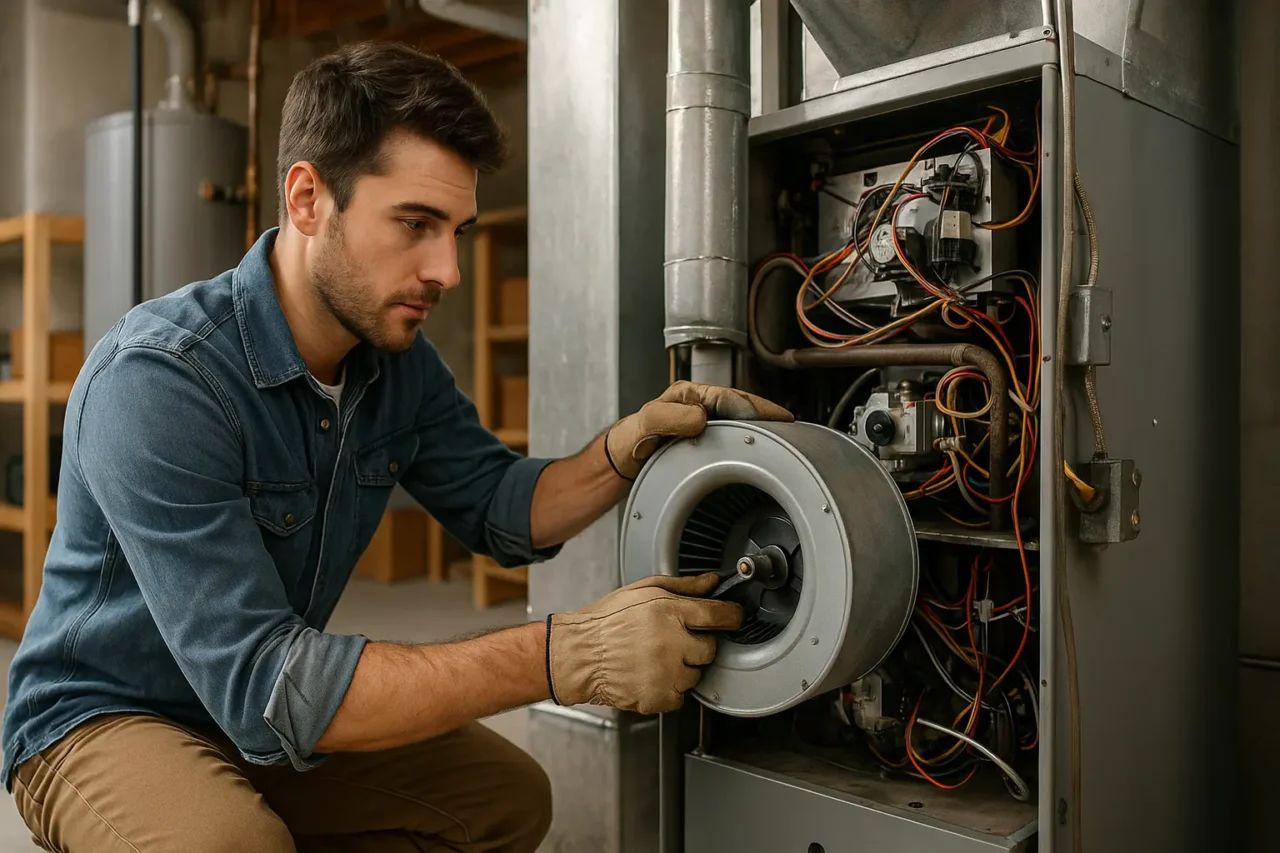
When temperatures drop and your home depends on a steady flow of warm air, one component quietly does most of the hard work: the furnace blower. This motor-driven system is responsible for pushing heated air through your ducts and delivering it to every corner of your home. When it works well, you feel even warmth, steady airflow, and low energy waste. When it struggles, comfort disappears fast: your furnace may short-cycle, run louder than usual, or fail to heat your home evenly.
In South Florida the blower is the hardest-working part of the system and the least considered. It runs through the cooling season, which is most of the year, and drives a heat strip for a handful of nights in January. Everything below is written for that duty cycle rather than for a furnace that rests half the year.
This guide will help you fully understand how the furnace blower works, how to keep it efficient, how to recognize early warning signs, and what to do if it needs service. Everything is written simply, with no complicated engineering terms, so any homeowner, including a teen, can understand how to take control of their indoor comfort without confusion.
If you ever need professional inspection, repair, or system optimization, the technicians at A Customer First AC are always ready to help.
And don’t forget: we offer one full month of free basic features, giving every new customer a risk-free way to experience our HVAC support, scheduling tools, and comfort-improving solutions.
Why the Furnace Blower Matters More Than You Think
The truth is simple: your furnace can generate heat, but only the blower can move that heat into your home. If it slows down, becomes dirty, or fails, your entire HVAC system suffers. Rooms warm unevenly, energy bills rise, and your furnace may work twice as hard to deliver half the results. People often blame the furnace itself, but in most cases, the blower is the hidden cause.
Because the blower operates anytime heated or conditioned air is moving, it’s one of the most active components in your HVAC system. It controls:
-
airflow pressure
-
heat distribution
-
indoor comfort balance
-
noise level
-
energy efficiency
-
system longevity
A single issue, like a dirty wheel or weakened motor, affects everything. That’s why understanding your furnace blower is not just helpful; it’s essential for keeping your home comfortable during the winter season.
How the Furnace Blower Works in Simple Terms
Inside your furnace, the blower assembly consists of three major parts:
The motor: spins the fan and sets airflow speed
The blower wheel: looks like a hamster wheel and pushes air
The housing: directs air into the duct system
When your thermostat calls for heat, the furnace burners turn on. A moment later, the blower motor begins to spin, pushing warm air into your ducts and circulating it throughout your home. This cycle continues until your thermostat reaches the target temperature.
Although this sounds simple, every step plays a critical role. If the blower starts too late, you lose heat. If it runs too slowly, rooms feel cool. If it fails to stop on time, your furnace pushes out cold air at the end of a heating cycle.
This is why proper blower calibration and maintenance can completely transform your home comfort, something our team can help you set up during your free first month of service.
Best Furnace Blower Practices for Long-Lasting Comfort
To get the best performance, homeowners should follow a few important habits. These tips prevent common blower problems and extend your HVAC lifespan. The Department of Energy's cabinet-sealing guide names the blower fan area as one of the points in an air handler where pressure is highest, so unsealed seams near it matter most.
Clean or Replace Filters Regularly
Dirty filters are the number one reason a furnace blower struggles. When the filter clogs, airflow drops dramatically, forcing the blower to work harder than necessary. This causes overheating, reduced airflow, and high energy bills.
Most homes need new filters every 30–60 days. If you use pets, heavy carpeting, or live in a dusty climate, replacing even sooner can make a dramatic difference. ENERGY STAR’s heating and cooling guidance also advises checking the filter monthly in heavy-use seasons and changing it at least every three months, sooner if it looks dirty.
Keep Blower Components Clean
Dust buildup on the blower wheel creates airflow resistance, like mud on a bicycle tire. It throws the system off balance and strains the motor. Professional cleaning once or twice a year can prevent expensive failures later.
Monitor Unusual Sounds
If your blower suddenly becomes louder, develops a buzzing noise, or begins to vibrate, it might indicate:
-
a loose wheel
-
an unbalanced motor
-
worn bearings
-
airflow blockage
The earlier you catch these signs, the lower the repair cost.
Use the Right Fan Speed Setting
Your furnace blower is adjustable. Incorrect settings may cause:
-
weak airflow
-
uneven room temperatures
-
unnecessary energy waste
A technician can match blower speed to your home’s duct system and furnace capacity. This adjustment alone can improve comfort dramatically.
Common Furnace Blower Problems and How to Spot Them
Even a well-maintained blower can develop issues over time. Here are the most frequent ones homeowners face:
Blower runs nonstop
Often caused by thermostat issues, a stuck relay, or incorrect fan mode settings.
Airflow is weak or uneven
This can point to dirty ducts, filter blockage, or a failing motor capacitor. If the pattern looks like a house-wide problem, how air moves through a home’s ducts and rooms is worth reading before you call.
Strange burning smell
Dust on heating components is common, but persistent odor requires immediate professional attention.
Blower won’t turn on
This may indicate a failed motor, damaged wiring, or a broken limit switch.
If any of these symptoms appear, schedule a diagnosis through our AC repair service.
How to Improve Furnace Blower Efficiency Today
Here are simple ways to make your blower work better starting now:
-
keep vents fully open
-
clear furniture blocking airflow
-
close your home’s air leaks
-
maintain clean coils and ducts
-
tune your system seasonally
With professional HVAC tuning, your system can achieve a significantly higher airflow rate, more even heating, and lower energy waste, and this is included in your first free month with A Customer First AC.
Frequently Asked Questions
Furnace blower basics every homeowner should know
What does a furnace blower actually do?
It circulates warm air through your ducts, delivering heat from the furnace to all rooms in your home.
How long does a typical furnace blower last?
On average, 10–15 years, depending on maintenance and how often your heating system runs.
Why does my furnace blower run constantly?
Most commonly due to thermostat settings, clogged filters, or a blower relay that is stuck in the “on” position.
Should I repair or replace a failing furnace blower?
If the repair cost approaches 40–50% of replacement, installing a new blower is often more cost-effective.
Conclusion
Your furnace blower plays a critical role in keeping your home warm, comfortable, and energy-efficient. With proper care, routine inspections, and professional tuning, it can deliver years of reliable performance while reducing system strain and lowering your heating bills.
FAQ
Do Florida homes even have a furnace blower?
The blower is there; the furnace usually is not. In this region the same fan lives in an air handler with electric heat strips, and the older term carries over in conversation and in parts catalogues.
What are the signs of blower trouble?
Airflow that has weakened across every register at once, a rattle or squeal that follows the fan rather than the compressor, and a breaker that trips after the system has been running a while.
Is a variable speed blower worth it here?
It is one of the few upgrades that changes how a house feels rather than only what it costs. Longer, slower run cycles remove more moisture, which is the comfort problem in this climate.