English
  Français
  Español
  Русский


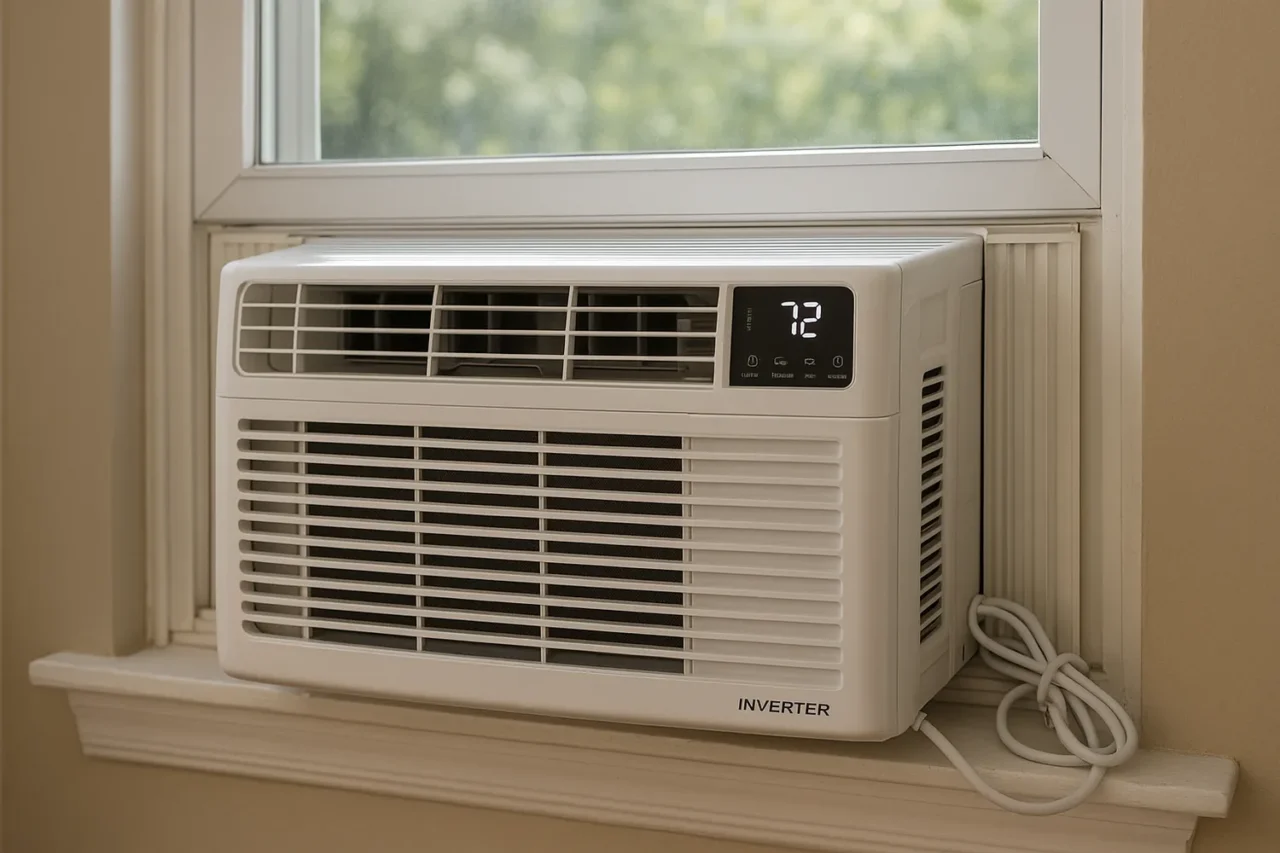
A few years ago, most homeowners thought of window air conditioners as loud metal boxes that simply blew cold air into a room. They weren’t efficient, they weren’t quiet, and they definitely weren’t something you bought for long-term comfort. But technology has changed dramatically. Today’s inverter window ac models don’t behave like old units at all — instead, they offer stable cooling, smarter power management, and noticeably better indoor comfort.
A window unit is a reasonable answer in parts of South Florida and a poor one in others. The deciding factor is humidity: a unit that cycles hard reaches the temperature and leaves the moisture, and in this climate that is the difference between comfortable and merely cool. The comparison below is written with that in mind.
As summers get hotter across the U.S., more people are looking for simple solutions that don’t require expensive ductwork, complicated installations, or full HVAC replacements. An inverter window unit fills exactly that gap. It cools a space faster, adapts to temperature changes in real time, and can significantly reduce your electricity usage.
In this guide, we’ll break down how inverter technology actually works, whether it’s worth the cost, what to look for when buying one, how to install and maintain the system, and how it compares to traditional AC units. By the end, you will clearly understand whether this upgrade fits your home — and if you need professional help, the team at A Customer First AC is always ready to assist with reliable service and maintenance through our main page at https://acustomerfirstac.com/.
How an Inverter Window AC Works and Why It’s Different
To really understand the benefits, you need a clear idea of what makes an inverter window system unique. Traditional AC units operate on one simple principle: on and off. When the temperature rises above the thermostat setting, the compressor starts at full power. When the room becomes cold enough, it shuts off completely. This cycling repeats over and over.
An inverter window ac takes a different approach. Instead of starting and stopping constantly, its compressor changes speed based on the cooling demand. If the room needs a lot of cooling quickly, the compressor increases power. Once the temperature is close to the target, it lowers the power output to maintain a stable climate.
This is similar to driving a car:
-
A traditional AC is like accelerating 0 → 100 → 0 → 100 repeatedly.
-
An inverter AC is like cruising smoothly at 50 mph.
The results are immediate and noticeable:
-
Less noise, because the compressor doesn’t constantly restart
-
Lower energy consumption
-
More consistent room temperature
-
Much longer equipment lifespan
People often underestimate how much strain frequent compressor restarts put on an AC system. Inverter technology solves that problem at its core.
Why the Inverter Window AC Outperforms Traditional Units
If you compare the two technologies side by side, the difference becomes obvious. Here are the most important advantages explained in simple terms:
It Saves a Significant Amount of Energy
Inverter systems reduce electricity usage because they don’t operate in full-power cycles. Even though they cost more upfront, they often pay for themselves through energy savings within 1–3 seasons.
Many homeowners report up to 40% lower consumption, especially during heavy summer months.
It Reaches the Set Temperature Faster
Non-inverter ACs need more time to cool a room because they always start at maximum power from rest. Inverter technology keeps the compressor engaged, so temperature adjustments happen predictably and smoothly.
You don’t get those awkward moments of “wow it’s cold… now it’s getting warm again… now cold…”.
Noise Levels Are Dramatically Lower
Because the compressor rarely runs at maximum load, the unit remains quiet most of the time. This is especially noticeable at night.
Longer Equipment Lifespan
Starting and stopping is the #1 cause of compressor damage. By avoiding this mechanical stress, your unit will last longer — often 2–3 years more than a non-inverter model.
Better Humidity Control
This matters more than most people think. Inverter models operate continuously at low speed, which removes moisture from the air more consistently.
A room with stable humidity:
-
feels cooler
-
smells cleaner
-
reduces allergies
-
protects furniture
-
helps electronics last longer
Real-Time Temperature Adaptation
A traditional AC cannot adjust to:
-
sudden heatwaves
-
direct sunlight
-
many people entering the room
-
cooking or appliance heat
But an inverter window unit automatically increases cooling power when needed and reduces it when demand is low.
Professional Installation or DIY? Your Real Options
Some homeowners install window ACs themselves, but inverter systems are slightly more sensitive. They need precise leveling, correct sealing, and stable electrical connection.
DIY mistakes often lead to:
-
air leaks
-
water dripping inside
-
overheating
-
reduced lifespan
-
louder operation
-
higher energy bills
If you’re unsure, it is safer to request help from a professional HVAC technician. You can schedule service anytime through our installation service page.
How to Maintain an Inverter Window AC Without Breaking It
If you want your system to run efficiently for years, follow this routine:
Clean the Filter Monthly
Dust buildup reduces cooling power dramatically.
Check the Evaporator Coils
If frost forms, airflow is restricted.
Wash the Exterior
Dirt on the outside fins limits heat release.
Inspect the Seal Around the Unit
Small gaps can increase energy costs by 20–30%.
Listen for Unusual Sounds
Rattling may indicate installation issues or worn parts.
Schedule a Professional Tune-Up
At least once per year, ideally before summer, and our maintenance visits can handle it.
When to Replace Your Old AC With an Inverter Window AC
Your current unit probably needs replacement if you notice:
-
loud compressor knocking
-
inconsistent cooling cycles
-
increased utility bills
-
water leaking inside
-
burning or chemical smells
-
the system is older than 8–10 years
-
it uses outdated refrigerants
-
frequent repairs
The difference after upgrading is dramatic. Most people immediately feel a more stable climate, especially during long heatwaves.
Containing the Keyword: Is an Inverter Window AC Worth the Upgrade Today?
The short answer: yes, for most households it absolutely is.
But let’s break it down with clarity.
Cost Savings
Even though inverter models cost more initially, they:
-
save monthly electricity
-
require fewer repairs
-
last longer
-
cause less stress on wiring
Comfort Improvements
You get:
-
no freezing blasts
-
no warm pockets
-
smooth airflow
-
stable temperature
-
quieter operation
Better for Small Apartments, Offices, and Rentals
Inverter units don’t require construction, ductwork, or permanent modifications. To see how a window unit compares with central and ductless systems, a guide to the main types of home AC lays them out side by side.
Environmentally Friendly
They use less electricity and often contain eco-friendly refrigerants.
Real-Life Example
A family using an old 12,000 BTU unit replaced it with an inverter model. The result:
-
weekly usage dropped by 34%
-
temperature stayed constant
-
nighttime noise reduced significantly
Once you try inverter technology, going back is nearly impossible.
Containing the Keyword: Common Myths About the Inverter Window AC
There are many misunderstandings online, so let’s clear them up:
Myth 1: “Inverter units cool slower.”
False. They cool faster because they avoid restart delays.
Myth 2: “They can’t handle big rooms.”
They can — as long as BTU sizing is correct. ENERGY STAR’s guidance on room air conditioners adds that an oversized unit wastes energy and leaves the room damp, because it cools before it removes humidity.
Myth 3: “Repairs cost more.”
Repairs are actually less frequent because compressors don’t fail as often.
Myth 4: “Too expensive.”
Higher upfront cost, lower long-term cost.
Myth 5: “Hard to install.”
If the window fits, installation is simple — and our technicians can help anytime.
Final Thoughts and Strong Call to Action
An inverter window ac is one of the smartest home upgrades you can make this year. It improves comfort, reduces bills, stabilizes humidity, and works quietly in the background without constant cycling. Whether you live in a small apartment, a rented home, or a large house with hot rooms, this solution gives you flexibility without requiring new ductwork.
If you want to compare models, get installation help, or schedule an annual checkup, our technicians can take care of it.
If one room is not enough, ductless mini splits are worth a look.
A comfortable home starts with smart cooling — and inverter technology finally makes that comfort affordable, efficient, and available to everyone.
FAQ
How does an inverter window AC reduce electricity consumption?
It reduces energy use by adjusting compressor speed instead of cycling on and off. By running at low power most of the time, it consumes far less electricity than traditional units, especially during long cooling periods.
Can an inverter window AC cool multiple rooms at once?
It can cool connected or open spaces, but walls block airflow. For multiple rooms, you may need units placed in strategic locations or alternative HVAC solutions.
Is the inverter window AC safe for old home electrical wiring?
Yes. Inverter systems have smoother startup currents and place less stress on wiring than traditional ACs, which draw a sudden spike of power when turning on.
Do inverter window ACs require special maintenance?
Maintenance is similar to regular ACs: clean the filter monthly, ensure proper drainage, check seals, and schedule annual professional service for maximum efficiency.
How long do inverter window AC units typically last?
Most inverter models last 10–15 years, longer than non-inverter units, thanks to reduced compressor stress.
FAQ
Is an inverter window unit worth the extra money here?
For a room used every day in a Florida summer, usually yes. Variable speed means longer run cycles at lower output, which is quieter and considerably better at removing moisture than a unit that only knows on and off.
Can a window unit cope with a Florida summer?
For a single room sized correctly, yes. What it cannot do is cover a house, and an undersized unit asked to try will run continuously without ever getting there.
Do inverter models dehumidify better?
Yes, and in this climate that is the main reason to choose one. Moisture removal is a function of run time.