English
  Français
  Español
  Русский


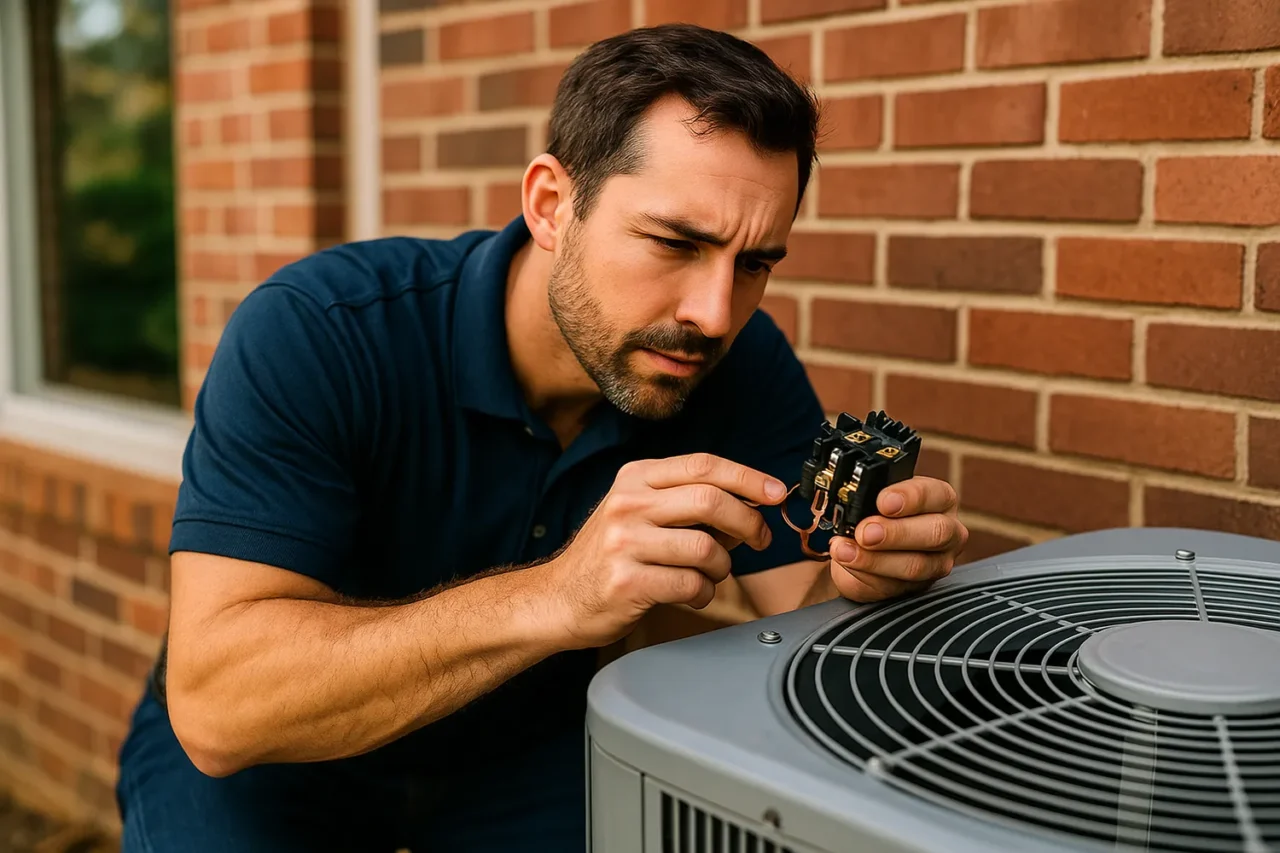
Most homeowners have never heard of an air conditioner contactor, yet it is one of the most important electrical components inside every cooling system. When the contactor stops working properly, your AC may fail to start, click repeatedly, blow warm air, or shut off unexpectedly. In many cases, a faulty contactor is behind the mysterious “my AC just won’t turn on” problem.
A contactor is the part most likely to strand a South Florida household on a Saturday afternoon. It is cheap, it is inside the outdoor unit, and salt-laden air pits the contacts faster here than almost anywhere else in the country. Checking it during maintenance costs minutes; finding it on the hottest day of August costs an emergency call.
Understanding how this part works can help you spot issues early, protect your air conditioner from severe damage, and avoid being stuck in the middle of summer without cooling. This guide explains what the contactor does, what causes it to fail, how to identify symptoms, and the best solutions for long-term system reliability.
If your AC is already showing signs of electrical trouble, you can schedule expert diagnostics through our professional AC service department, available directly from our HVAC services page. A trained technician can test the contactor safely and replace it before the system suffers additional damage.
How the Air Conditioner Contactor Works in Your Cooling System
To understand the role of the air conditioner contactor, imagine it as the switch that determines when your outdoor AC unit can turn on. It acts like a gatekeeper—responding to commands from the thermostat and controlling the flow of electricity to the compressor and condenser fan.
Here is the simplest explanation:
-
You lower your thermostat temperature.
-
The thermostat sends a low-voltage signal to the outdoor unit.
-
The contactor receives the signal.
-
It closes its internal electrical contacts.
-
High-voltage power flows to the compressor and fan motor.
-
The AC starts cooling your home.
Without a functioning contactor, the AC cannot run—no matter how new or expensive the system is.
The contactor sits inside the outdoor condenser unit. It looks like a small electrical block with a plunger that moves up and down, opening and closing the circuit. Because this part handles high voltage and cycles on and off thousands of times a season, it’s more prone to wear than many other AC components.
Common Causes of Failure in an Air Conditioner Contactor
Like any electrical part, the air conditioner contactor can wear out over time. However, several specific factors significantly speed up its failure rate:
Electrical Wear and Tear — The Main Reason Air Conditioner Contactors Fail
Every time the AC turns on, the contactor must close its electrical contacts. Over the years, this repetitive action causes the metal surfaces to wear, pit, and burn.
Signs of this type of wear include:
-
visible dark spots
-
burnt edges
-
buzzing sounds
-
slow or sticky contact movement
Once the contacts degrade enough, the system may fail to complete the electrical circuit, causing the AC to refuse to start.
Insects, Debris, and Outdoor Contamination
The contactor is located outdoors, meaning dirt, moisture, and insects commonly interfere with its operation. Ants—especially fire ants—are a known cause of contactor failure in many regions, as they crawl into the housing and block the movable parts.
Dust or debris buildup can also prevent the plunger from moving freely.
Overheating or Loose Electrical Connections
High current flow through the contactor makes it sensitive to overheating. Loose wiring, damaged terminals, or over-amperage conditions increase temperature and accelerate contactor failure.
If the system has other problems—like failing capacitors, blocked airflow, or compressor issues—they often place more electrical load on the contactor as well.
Low Voltage or Power Fluctuations
A weak signal from the thermostat can cause the contactor to chatter or engage inconsistently. Over time, this vibrating movement burns the contacts and weakens the internal coil.
Voltage drops may result from:
-
thermostat wiring issues
-
low-voltage system faults
-
damaged transformers
-
poor electrical grounding
Any of these can lead to unstable operation.
Symptoms of a Bad or Failing Air Conditioner Contactor
A failing contactor can cause a wide range of AC problems. Homeowners often notice symptoms long before complete failure occurs.
The most common warning signs include:
The Outdoor Unit Won’t Start, Even Though the Thermostat Calls for Cooling
This is one of the clearest symptoms. If the thermostat requests cooling but the outdoor unit stays silent, the contactor may not be closing properly.
Clicking or Chattering Noises from the Outdoor Unit
This sound indicates the contactor coil is energizing, but the contacts cannot close firmly. It may be caused by contamination, burnt metal surfaces, or voltage issues.
Air Blows but the Home Doesn’t Get Cooler
If the indoor blower runs but the outdoor unit doesn’t turn on, the refrigerant cycle cannot begin—leaving you with nothing but room-temperature airflow. If the house stays warm even though the system seems to run, an AC that runs but never cools the house walks through the other usual suspects.
The Outdoor Unit Runs Non-Stop
If a contactor gets stuck in the closed position, the AC may continue running even after the thermostat shuts off. This is extremely dangerous and can burn out the compressor.
Burnt Smell or Electrical Odor Near the Outdoor AC Unit
Electrical burning smells often indicate overheating contactor terminals or melted wiring insulation.
Delayed Starts or Intermittent Operation
The system may start one day and fail the next. This inconsistency is a classic sign of a contactor nearing the end of its lifecycle.
How to Fix Air Conditioner Contactor Problems
While some minor issues can be identified visually, contactor replacement and electrical testing are jobs that must be handled professionally. AC contactors operate at dangerous voltages.
Here’s how professionals handle the repair process:
Visual Inspection of the Contact Assembly
A technician removes the outdoor panel and evaluates:
-
contact wear
-
carbon buildup
-
terminal damage
-
insect intrusion
-
coil integrity
Burnt or pitted contacts are replaced immediately.
Testing the Low-Voltage Signal from the Thermostat
If the contactor is not receiving the correct low-voltage signal, the technician will:
-
inspect thermostat wiring
-
test transformer output
-
examine control boards
-
verify grounding
Low voltage can cause chatter or intermittent engagement.
Checking High-Voltage Circuits to the Compressor and Fan Motor
A weak or failing contactor increases resistance, raising the risk of overheating. Testing ensures that power reaches the compressor and condenser fan correctly.
Replacing the Contactor Safely
A new contactor is installed with:
-
cleaned terminals
-
tightened connections
-
protective coverings
-
correct voltage ratings
Proper replacement restores system reliability and prevents electrical hazards.
If you want fast, safe, and fully certified repair, our team can handle your AC issues quickly through our professional HVAC services.
How to Prevent Contactor Failure in the Future
Routine maintenance significantly increases the lifespan of your air conditioner contactor. Here are the best preventive steps:
-
schedule annual AC tune-ups
-
keep the outdoor unit clean
-
ensure termite or ant control near the condenser
-
replace failing capacitors early
-
prevent overheating of compressor components
-
fix airflow restrictions
-
avoid frequent short cycling
These steps reduce electrical stress and help the contactor operate smoothly for years.
FAQ: Air Conditioner Contactor Questions
What is an air conditioner contactor and what does it do?
It is an electrical switch inside the outdoor AC unit that controls the flow of power to the compressor and condenser fan.
What are the signs that a contactor is failing?
Signs include clicking sounds, the outdoor unit not turning on, intermittent cooling, or the AC running nonstop.
Can I replace an AC contactor myself?
No. The contactor handles high-voltage electricity. Only trained HVAC professionals should perform this repair.
What causes the air conditioner contactor to burn out?
Wear from frequent cycling, electrical overheating, insects, dirt, loose connections, and voltage issues.
How long does an AC contactor typically last?
Typically 5–10 years depending on usage, maintenance, and environmental conditions.
A contactor that closes correctly but leaves the compressor humming before it turns is a different fault: that is a start torque problem, and what a hard start kit does and when one belongs covers how it is measured.
FAQ
What does a failing contactor look like?
The outdoor unit hums but will not start, or it chatters, or the fan spins while the compressor stays silent. Pitted and welded contacts also show up as a system that keeps running after the thermostat has satisfied.
Why do contactors fail so often in Florida?
Because they sit outdoors in salt air with an opening large enough for insects. Ants in particular are drawn to the contactor and bridge it, and corrosion does the slower version of the same damage.
Is this a part a homeowner can swap?
Line voltage on one side, a charged capacitor beside it. The part is cheap and the hazard is not.