English
  Français
  Español
  Русский


Most homeowners don’t think about their outdoor air conditioning unit until the day it stops cooling. But inside that metal box sits one of the most important parts of the entire HVAC system — the condenser coil. If the coil becomes dirty, clogged, or covered in debris, your AC starts to lose efficiency, temperatures rise, energy bills climb, and eventually the system may fail altogether.
A condenser coil in South Florida loads from two directions at once. Inland it is leaf litter and seed from mature canopy; within a mile or two of the water it is salt, which works on the fins from the inside and does not rinse off on its own. Both mean the interval below is shorter here than any manual assumes.
Keeping a clean condenser coil is one of the easiest, fastest, and most impactful ways to protect your AC. This guide explains how the coil works, why it gets dirty so quickly, the early warning signs of trouble, and what you should do to keep your cooling system running smoothly. Whether your AC is brand new or more than a decade old, maintaining the coil directly affects performance, comfort, and the life span of the equipment.
If your system already seems to struggle or you’re not comfortable handling outdoor unit cleaning on your own, our team is here to help through our professional AC technicians available on our HVAC services page, where you can schedule a visit anytime through the A Customer First AC homepage.
How a Clean Condenser Coil Helps Your AC Cool Faster and Last Longer
To understand why a clean condenser coil matters, it helps to know how your air conditioner works. When your AC removes heat from inside your home, that heat must be pushed outdoors. The condenser coil is responsible for releasing that heat. It works like this:
-
Hot refrigerant enters the coil.
-
The outdoor fan pulls air across the coil’s fins.
-
Heat transfers from the refrigerant into the outside air.
-
The refrigerant cools down and returns inside to absorb more heat.
If the coil is clogged with dust, dirt, grass, weeds, hair, tree pollen, cottonwood fluff, or sand, the heat cannot escape. The AC has to work harder, run longer, and consume far more electricity while producing weaker cooling. Even a thin layer of dirt can reduce heat transfer significantly.
A clean condenser coil means:
-
cooler air inside your home
-
shorter AC run times
-
lower energy bills
-
less strain on the compressor
-
reduced risk of overheating
-
fewer breakdowns
Because the condenser coil plays such a critical role in heat transfer, cleaning it regularly is one of the most effective ways to take care of your system.
Why Condenser Coils Become Dirty So Quickly Outdoors
Your outdoor unit faces tough conditions. Weather, landscaping, dust, and airflow patterns constantly push contaminants toward the coil. Even if your home seems relatively clean, your AC may still struggle with buildup.
Common causes of coil contamination include:
Pollen and cottonwood
Spring storms and seasonal blooms create sticky layers of pollen that cling to the coil’s fins.
Grass clippings
If you mow the lawn with the AC running, clippings get sucked into the coil almost immediately.
Pet hair or dryer vent lint
These lightweight fibers float through the air and become trapped inside the fins.
Dust and soil
Windstorms, construction areas, and dry climates push dirt into the outdoor unit.
Leaves and organic debris
Foliage collects around the base of the unit and begins clogging airflow.
Over time, this material packs itself into the fins, creating insulation that blocks heat transfer. This is why professional HVAC technicians check coil cleanliness during tune-ups — it’s one of the most common and easiest problems to fix.
Early Warning Signs You Need a Clean Condenser Coil Right Now
A dirty coil affects performance long before the AC fully stops working. Here are the most noticeable symptoms:
Cooling Takes Longer Than Normal — A Top Sign You Need a Clean Condenser Coil
If your home takes forever to cool down or the AC seems to run constantly without reaching the set temperature, the coil may be restricting heat transfer. Your AC might still produce cool air, but not nearly as effectively.
Your Energy Bills Increase Even Without Temperature Changes
Dirty coils force the system to run longer, consuming more electricity. Homeowners often notice the bills rising months before they notice weaker cooling.
The Outdoor Unit Feels Extremely Hot or Smells Warm
Touch the metal top of the condenser. If it’s much hotter than usual or emits a warm smell, the coil is likely struggling to release heat.
Ice Forms on the Refrigerant Lines or the Outdoor Coil
When the system cannot release heat properly, refrigerant temperatures can drop too low, causing frost or ice buildup.
The AC Makes Strange Noises or Randomly Shuts Off
Overheating triggers automatic safety shutoffs. A dirty coil can cause the compressor to overwork, cycle off, or make grinding noises.
If you notice any of these issues, cleaning the coil is one of the first steps a technician checks — and often the most important.
How Professionals Clean a Condenser Coil Safely and Effectively
While some homeowners wash their outdoor unit with a hose, a proper coil cleaning involves more precise steps and safer techniques. Professionals avoid damage to delicate fins, protect electrical components, and use specialized cleaners designed for HVAC metals.
Here is how a trained technician typically handles the process:
1. Power is disconnected
This prevents electrical hazards and ensures safe access to the equipment.
2. Outer panels are removed
Technicians open the cabinet to expose the coil completely.
3. Loose debris is brushed and vacuumed
Large contaminants like leaves, grass, and twigs are cleared first.
4. Fins are straightened if bent
Bent fins reduce airflow, so technicians use a fin comb to realign them.
5. A professional coil cleaner is applied
The cleaner dissolves oily buildup and embedded dirt.
6. Coils are rinsed with controlled pressure
This ensures dirt is removed without bending the aluminum fins.
7. The unit is reassembled and tested
The system is restarted to confirm proper pressures, cooling strength, and airflow.
Cleaning the coil not only restores efficiency but also reveals hidden issues such as burnt wiring, damaged capacitors, or weak fan motors — problems that are easy to miss without opening the unit.
If you prefer stress-free maintenance, you can have this done by a certified technician through our professional AC service team, available directly on our main A Customer First AC website.
How Often Should You Clean a Condenser Coil?
Professionals recommend cleaning the condenser coil at least once per year, typically during a spring tune-up. However, certain conditions require more frequent cleaning:
-
heavy pollen areas
-
homes near open fields
-
properties next to busy roads
-
regions with cottonwood trees
-
households with pets
-
dusty or windy climates
If you notice the symptoms listed earlier, do not wait for annual maintenance. Cleaning the coil early can prevent compressor failure — one of the most expensive AC repairs. ENERGY STAR’s guide to heating and cooling efficiently also recommends scheduling a yearly tune-up.
Do DIY Coil Cleaning Methods Work?
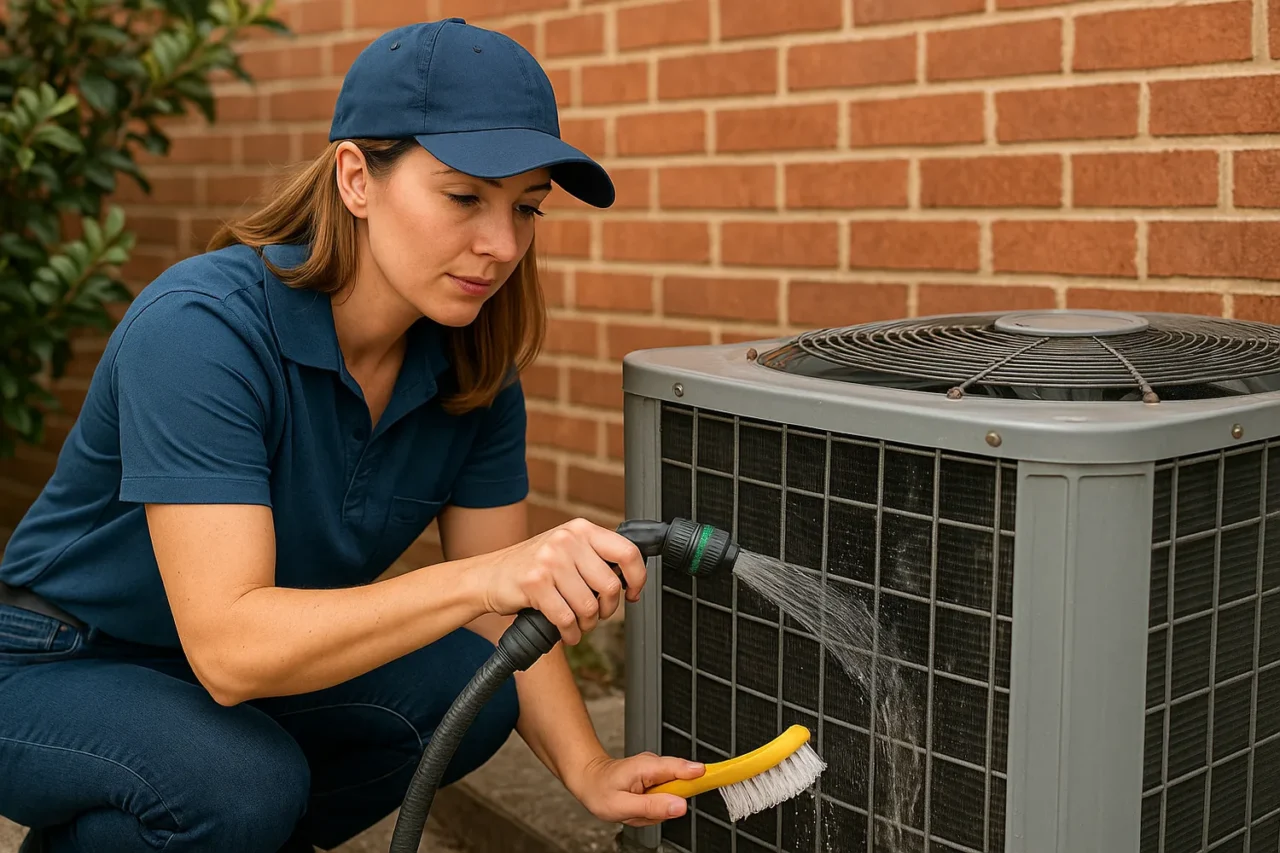
Homeowners can safely remove light debris, but heavy cleaning requires professional equipment. You should avoid:
-
using a pressure washer (it can destroy the coil fins)
-
spraying water into electrical components
-
bending fins with stiff brushes
-
using household chemicals that damage aluminum
If you want to maintain the unit between professional cleanings, you can:
-
keep grass trimmed
-
remove leaves around the unit
-
rinse the exterior gently with a garden hose
-
maintain a 2–3 foot clearance around the system
If you live near the water, that rinse matters even more. Salt builds up between cleanings and eats at the metal, so see how salt air corrodes a coastal Florida AC and what slows it down.
But for deeper cleaning, airflow testing, or performance evaluation, a professional visit is essential.
FAQ: Clean Condenser Coil Questions
Why is a clean condenser coil so important?
Because it allows the AC to release heat efficiently, lowering energy bills and preventing system damage.
How often should I clean my condenser coil?
Once a year is recommended, but homes in dusty or high-pollen areas may need cleaning twice annually.
Can a dirty condenser coil damage my AC?
Yes. It can overheat the compressor, increase energy use, and cause early system failure.
Can I clean the coil myself?
Light rinsing is fine, but internal coil cleaning should be handled by a professional to avoid damage.
What happens if I never clean the coil?
Cooling weakens, bills rise, parts overheat, and eventually the AC may stop working completely.
A fouled coil raises head pressure, and head pressure is part of why a compressor can start cleanly in the morning and hesitate by afternoon. That chain is followed through in what makes starting harder in a Florida summer.
FAQ
How often does a coastal condenser need cleaning?
Twice a year within a couple of miles of the water, once a year further inland. Salt does not wait for dirt; it settles on aluminum fins and corrodes them whether the coil looks dirty or not.
Can I rinse the coil myself?
A gentle rinse with the power off at the disconnect, from the inside out, does no harm. What does harm is a pressure washer, which folds the fins flat, and household cleaners, which attack the aluminum.
What does a dirty coil actually cost?
It raises head pressure, which raises the current the compressor draws and the heat it lives in. The bill goes up first and the compressor life goes down quietly.