English
  Français
  Español
  Русский


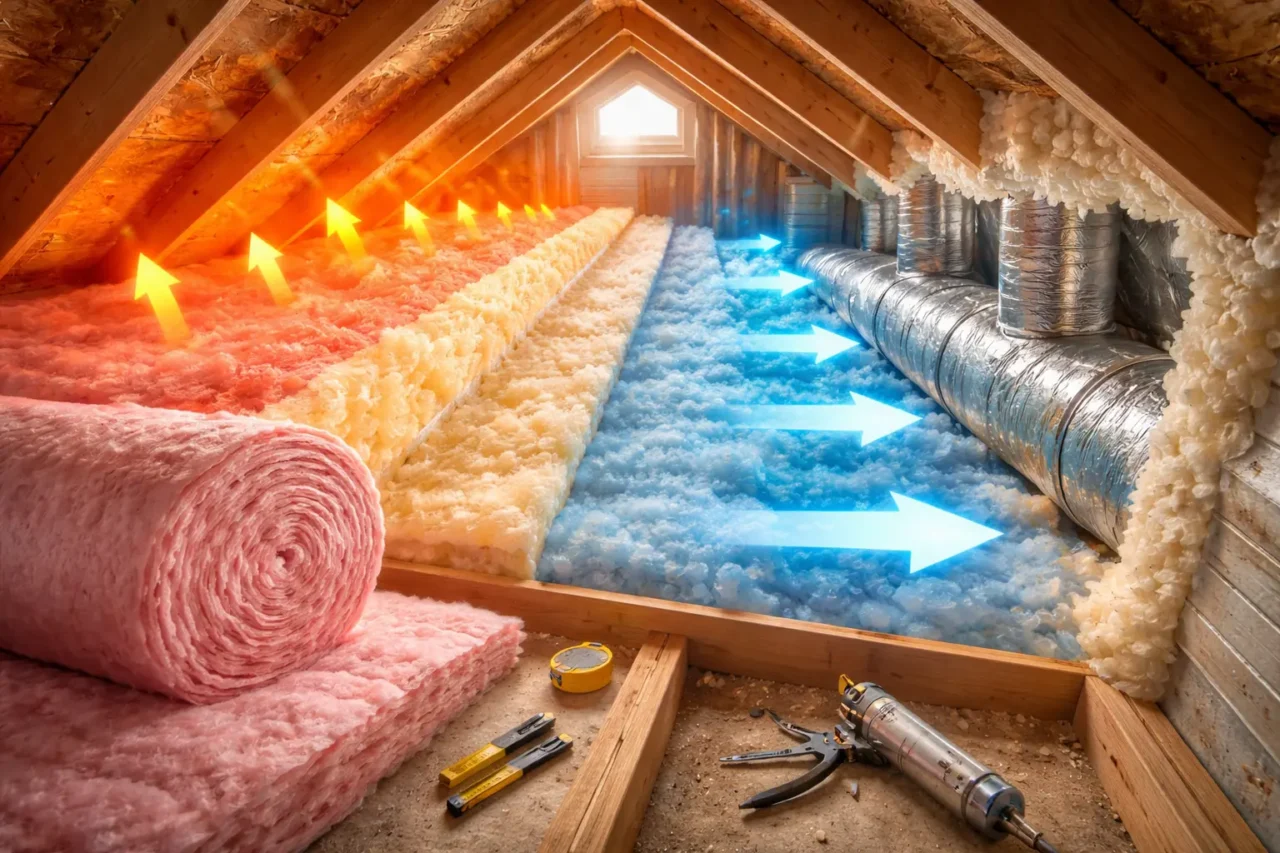
When people think about comfort at home, they usually focus on the thermostat, windows, or HVAC equipment. But one of the most powerful factors controlling temperature, airflow, and energy bills is something hidden behind walls and ceilings — insulation. A properly designed insulation home system quietly keeps indoor air stable, blocks outdoor heat and cold, and allows your HVAC system to work without strain.
Insulation in South Florida does the opposite job to insulation up north: it keeps heat out rather than warmth in. The biggest single gain is usually the attic, which is also where the ductwork lives, and that overlap is the reason insulating alone often disappoints.
Many homes lose a surprising amount of energy every day simply because insulation is outdated, damaged, or incomplete. The result is uneven temperatures, higher utility bills, and HVAC systems that run longer than they should. Fixing insulation problems is not about luxury upgrades — it’s about restoring balance and efficiency to your home.
This guide explains how insulation really works, why it matters more than most homeowners realize, and how improving insulation can instantly change comfort and long-term costs.
How Insulation Home Systems Control Temperature and Energy Loss
At its core, insulation slows down heat movement. In summer, it keeps outdoor heat from entering your home. In winter, it keeps warm indoor air from escaping. A well-sealed insulation home creates a thermal barrier that stabilizes indoor conditions regardless of the weather outside.
Without enough insulation, your HVAC system is forced to compensate nonstop. Air escapes through walls, attics, floors, and ceilings, causing temperature swings and forcing equipment to work harder. Over time, this increases wear on motors, blowers, and compressors while quietly driving up energy costs.
Good insulation does three essential things:
-
Maintains steady indoor temperatures
-
Reduces heating and cooling cycles
-
Protects HVAC equipment from overuse
When insulation works correctly, comfort feels effortless.
Common Signs Your Insulation Home Setup Is Failing
Many insulation problems go unnoticed because they don’t cause sudden breakdowns. Instead, they create slow, expensive damage. A struggling insulation home often shows these warning signs:
-
Rooms that feel hotter or colder than others
-
HVAC system running constantly
-
High energy bills with no clear reason
-
Drafts near walls, floors, or ceilings
-
Uneven comfort between floors
-
Difficulty maintaining thermostat settings
If any of these sound familiar, insulation may be the hidden issue.
Where Homes Lose the Most Heat and Cool Air
Most energy loss doesn’t happen where homeowners expect. Windows get the blame, but they’re rarely the main problem. In many houses, insulation gaps are the real culprit.
The biggest problem areas include:
-
Attics with compressed or missing insulation
-
Exterior walls with outdated materials
-
Crawl spaces and basements
-
Floors above unconditioned spaces
-
Areas around ducts, vents, and wiring
A weak insulation home allows conditioned air to leak out while outdoor air sneaks in. This constant exchange defeats even the best HVAC system.
Insulation Home Materials Explained Simply
Insulation doesn’t need to be complicated. Each material serves the same purpose but works best in specific areas.
Common insulation types include:
-
Fiberglass batts for walls and ceilings
-
Blown-in insulation for attics and retrofits
-
Spray foam for sealing gaps and air leaks
-
Rigid foam boards for basements and exterior walls
Choosing the right material depends on climate, structure, and airflow design. Poor material choice can trap moisture or restrict ventilation — creating new problems instead of solving old ones.
How Insulation Directly Impacts HVAC Performance
Your HVAC system depends on stable indoor conditions to operate efficiently. When insulation fails, airflow patterns change and pressure inside the system becomes unbalanced. This leads to longer run times and higher mechanical stress.
A balanced insulation home allows air to circulate evenly, reducing strain on blowers and coils. This not only improves comfort but extends the lifespan of HVAC components.
If insulation issues are affecting airflow or system efficiency, professional evaluation through trusted HVAC services can identify insulation-related performance problems before repairs become expensive.
Insulation and Indoor Air Quality: The Overlooked Connection
Insulation isn’t just about temperature. It also controls how outdoor pollutants, dust, and humidity enter your home. Poor insulation allows unfiltered air to leak inside, increasing allergens and moisture buildup.
A sealed insulation home helps maintain cleaner indoor air by:
-
Reducing dust infiltration
-
Preventing moisture condensation
-
Supporting balanced ventilation
-
Limiting mold-friendly conditions
Comfort and air quality always go hand in hand.
Insulation Home Upgrades That Deliver the Best Results
Not all upgrades require tearing down walls. Some of the most effective improvements are simple and targeted.
High-impact upgrades include:
-
Adding attic insulation
-
Sealing air gaps before adding insulation
-
Replacing damaged or compressed materials
-
Insulating crawl spaces and rim joists
Even partial upgrades can dramatically improve performance when done correctly.
When Insulation Problems Need Professional Attention
DIY insulation fixes can help, but they have limits. Poor installation can create airflow blockages or moisture issues that worsen conditions. If comfort problems persist, professional evaluation is the safest route.
Certified specialists can assess insulation performance alongside HVAC airflow and duct pressure to ensure everything works together. For complete system optimization and comfort solutions, visit the A Customer First AC home page, where expert guidance is always available.
Insulation Home Questions Answered Clearly
What does insulation home improvement actually do?
It slows heat transfer, keeps indoor temperatures stable, reduces HVAC workload, and lowers energy costs.
How do I know if my insulation is outdated?
High energy bills, uneven temperatures, drafts, and constant HVAC cycling often indicate insulation problems.
Can insulation really lower my energy bills?
Yes. A properly insulated home reduces heat loss and gain, allowing HVAC systems to run less often and more efficiently.
Is attic insulation more important than wall insulation?
Attics are usually the largest source of energy loss, making them one of the most effective places to improve insulation.
Should insulation upgrades be combined with HVAC maintenance?
Absolutely. Insulation and HVAC systems work together, and addressing both ensures maximum comfort and efficiency.
Final Thoughts on Building a Better Insulation Home
Comfort doesn’t come from stronger HVAC equipment alone. It comes from balance. A well-designed insulation homecreates the foundation that allows heating and cooling systems to perform at their best without unnecessary strain.
By addressing insulation gaps, improving material quality, and maintaining airflow balance, homeowners can enjoy quieter systems, healthier indoor air, and lower energy costs year after year.
FAQ
Which insulation matters most in a Florida house?
What is over your head. Attic insulation depth and a radiant barrier do far more here than wall insulation, because the roof takes the sun all day and the attic reaches temperatures that no wall sees.
Should the air sealing come first?
Yes. Insulation slows heat moving through a surface; it does nothing about humid air pouring through a gap. Sealing the penetrations first makes the insulation that follows worth what it cost.
Do concrete block walls need insulating?
The return is modest next to the attic. In the older block housing across this region, attic work and duct sealing go furthest.